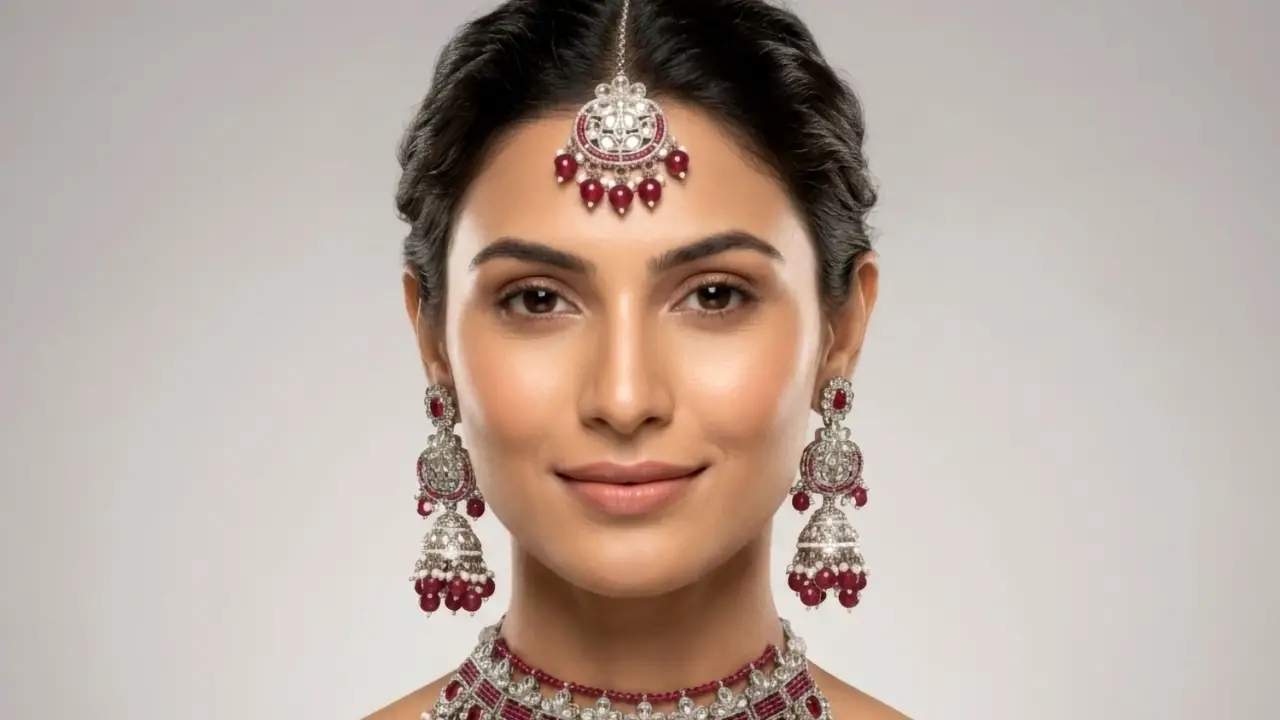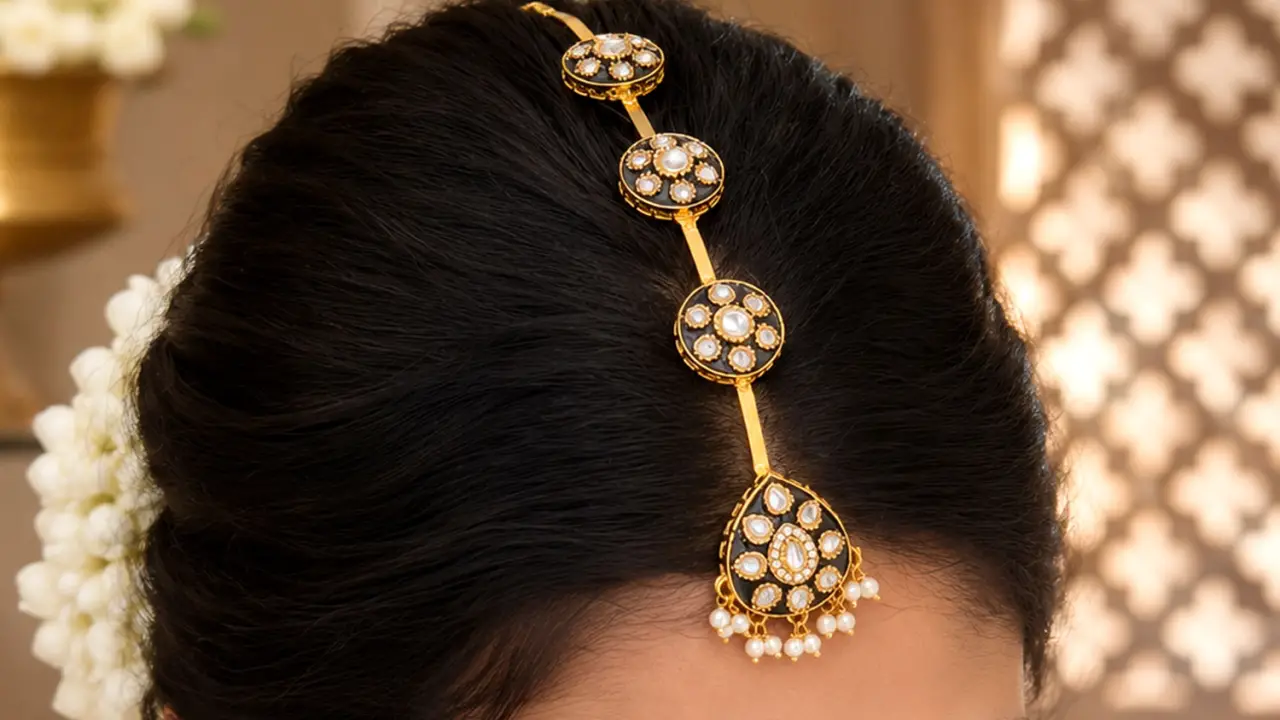
You have a wedding function coming up, you like the idea of a matha patti, and now you are looking at your hair and wondering what to do with it. Will it sit on open hair? Does it need a bun? What holds those side chains?
This guide answers the matha patti hairstyle questions people ask most, from open hair and buns to braids, short or thin hair, and a dupatta or veil. It adds a look table, a plain way to pin the piece, face and forehead options, and a candid note on what we do and do not list. For the single-pendant version, read our guide on how to wear a maang tikka.
Short answer
Wear a matha patti with the centre pendant on the middle of the forehead and the side chains following the hairline. A centre parting, a low bun or a braid holds it most firmly. Open waves work if you pin the chain ends. Short or thin hair suits a lighter piece and extra pins.
Key takeaways
- A matha patti is a tikka with side chains, so it needs three anchor points, the parting and one near each temple.
- Buns and braids give it the firmest base. Open hair works if the chain ends are pinned under the hair.
- Short or thin hair does better with a lighter piece, a mini plait at the parting and crossed pins.
- Face and forehead advice differs between sources, so treat it as options to try in a mirror.
What a matha patti is
The central part works like a maang tikka. A hook fastens into the hair at the centre parting and the pendant falls at the middle of the forehead. The side chains stretch toward the temples and frame the face, so the piece looks fuller and more formal. That extra reach changes how you plan your hair. A single tikka needs one good anchor. A matha patti needs three.
Matha patti or maang tikka
| Question | Maang tikka | Matha patti |
|---|---|---|
| On the forehead | One pendant on one chain | One pendant plus chains along the hairline |
| Anchor points | One, at the parting | Three, the parting and both temples |
| Look | Light, easy to add to any outfit | Fuller, frames the whole face |
| Works well when | The outfit or necklace is already heavy | The outfit is simple, or the look is fully bridal |
Many people use the two names loosely. If a listing has no side chains in the photo, it behaves like a tikka.
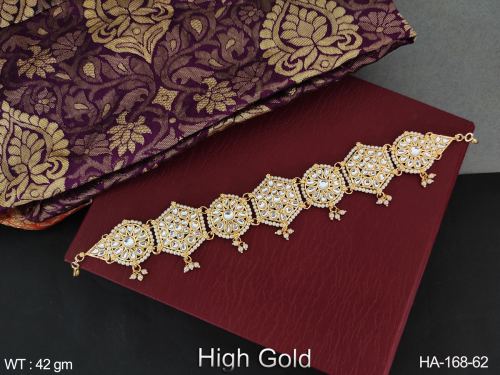
Matha patti hairstyles at a glance
| Hairstyle | Piece that suits it | How to hold it | Think twice about |
|---|---|---|---|
| Centre-parted low bun | Full, heavy, bridal pieces | Hook deep at the parting, a pin near each temple | A tiny pendant that vanishes against the bun |
| High or mid bun | Medium to heavy, with longer side chains | Pin the chain ends behind the temples | Chains too short to reach the hairline |
| Side braid or fishtail | Smaller, lighter piece | Hidden pins under the hair at the temples | Loose wisps that drag the chain |
| Open waves | Light piece, slim pendant | Mini plaits at the temples, chain ends pinned under them | Heavy chains that pull the hair flat |
| Short or thin hair | The lightest pieces, or a single tikka | Light backcomb, crossed pins, mini partition | Long, heavy side chains |
| Dupatta or veil | Medium pieces that stay visible | Fix the piece first, drape after | Pinning fabric through the chains |
Matha patti with open hair
Open hair looks relaxed and photographs well, but it gives the piece the least support. Soft waves with a clear centre parting are the usual match, since an even parting keeps the pendant centred.
Plait or twist a thin strand at each temple and pin the chain end under it. Fix the hook at the parting with a second pin crossed over it, then let your hair fall over the pinned ends so the chains look as if they float along the hairline.
Picture a sangeet where you dance for hours in open waves. A slim matha patti with a small pendant stays calmer than a broad medallion, and a single tikka is a sensible swap if you want the least fuss. Our sangeet guide follows the same logic.
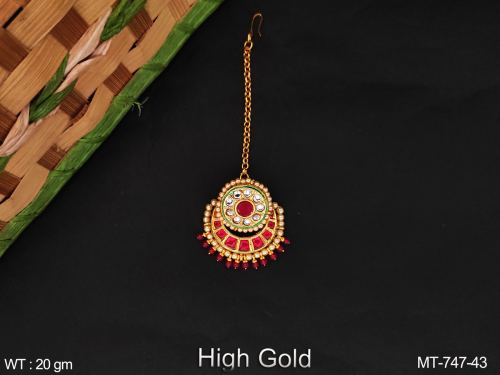
Matha patti with a bun or juda
A bun is the most dependable base. The forehead is clear and the chains have a firm line of hair to rest against. Styling guides commonly pair heavy kundan pieces with a low or mid bun, often with fresh flowers, and a bridal-weight tikka with pearl hangings balances it because both have volume.
Part the hair evenly, fix the hook first, then draw each chain along the hairline and pin it near the temple, with the pins hidden under the hair. For a high bun, check that the side chains are long enough to reach the hairline without tugging the hook forward.
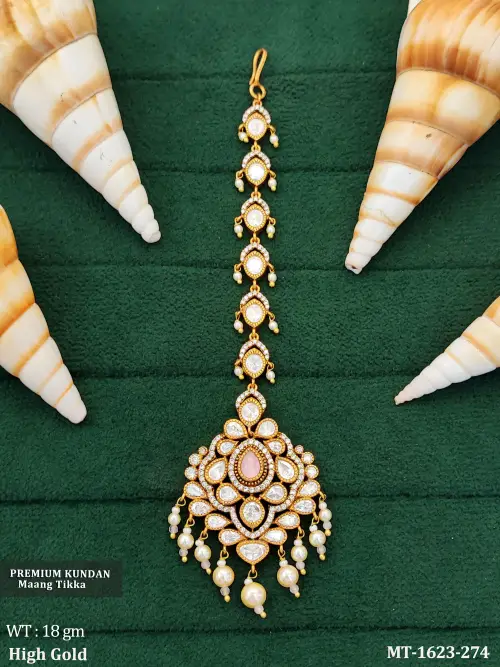
Braids and half-up styles
A side braid, fishtail or soft crown braid gives structure and movement without hiding the forehead. A smaller matha patti is the usual match. A half-up style works the same way. Gather the top section from the temples, treat it as your anchor, fasten the hook into it and pin the chain ends near the temples.
Short or thin hair
Short or thin hair has less to grip, so choose a lighter piece or fall back on a single tikka. Make a mini partition, tease the crown lightly, and cross two pins over the hook. Hidden pins near the temples support the chains, and some guides suggest a detachable forehead chain for bobs and pixie cuts.
Matha patti with a dupatta or veil
Many brides cover the head for part of the ceremony, and some stylists say a matha patti pairs well with a dupatta draped centred behind it. Opinions differ on whether the piece should show over the fabric or sit under it. Try both in a mirror.
Fix the matha patti first, then drape. Pin the dupatta behind the pendant and chains, never through them, and check the chains from the side, because a drape that looks perfect from the front can pull them back.
How to pin a matha patti in six steps
- Finish your hair first.
Style, set and spray before you touch the piece, so that products do not land on the stones.
- Make a firm centre parting.
Look straight into the mirror and mark where the pendant should rest on the middle of your forehead.
- Give the hook something to grip.
Tease the crown lightly or twist a thin section at the parting.
- Fix the hook and add a pin.
Slide the hook in along the parting, then pin through its loop into the twist.
- Lay the side chains along the hairline.
Draw each chain toward the temple and pin the end under the hair with a small U-pin or bobby pin.
- Add hairspray and test.
Turn your head, look down and lean forward. If the pendant slides, add a second pin before you leave.
A decorative juda pin can also act as a visible anchor behind the piece, and our hair accessories range lists juda pins and hair chains.
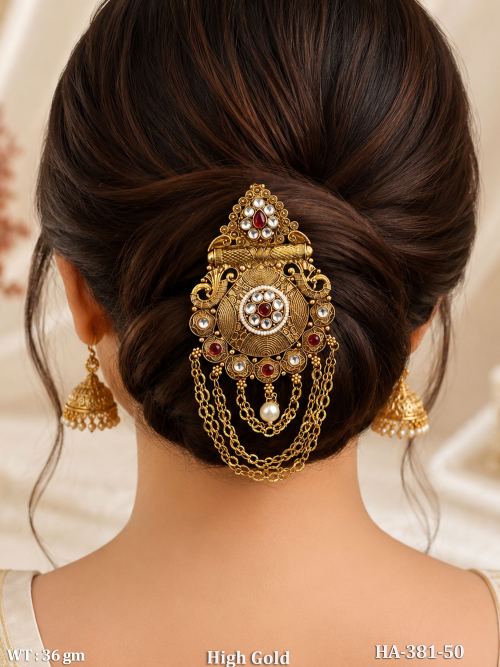
With a side-swept style and no centre parting, the hook has no line to follow. Many people move it to their own parting and let the chains frame the face from there, though the pendant may sit off-centre. Check this in the mirror before the day.
Face shape and forehead: options to try
Sources disagree here. A few wedding guides say a matha patti can make a round face look rounder, while others describe it as a good frame for a broad forehead. Read the table as options, and let the mirror decide.
| Face or forehead | Options to try |
|---|---|
| Round face | Some guides suggest a long, narrow tikka instead. If you love a matha patti, try slim side chains and an upright pendant |
| Long face | Several sources suggest a broad matha patti, since it adds width |
| Square face | Soft curves with pearl drops, or an asymmetrical piece |
| Heart-shaped face | Delicate side chains and a small pendant |
| Small forehead | Subtle side chains and a small pendant, or a single tikka |
Our earrings for face shape guide uses the same approach for the other half of the look.
What goes with a matha patti
A matha patti leads, so the rest steps back. With a heavy necklace, choose simple earrings. With large chandbalis or jhumkas, keep the necklace short or slim. Our bridal jewellery checklist shows how many pieces a full look usually needs. Drop earrings in the same stone colour tie the look together, and our colour guide helps with matching.
A nath is a personal choice. Some brides wear a matha patti and a nath together for a very formal face, and others leave one out so it does not feel crowded. With a saree or an anarkali, a single tikka or a light matha patti is usually enough. A bridesmaid or guest often looks better in the lighter version, and our wedding guest guide and engagement and reception guide cover those events.
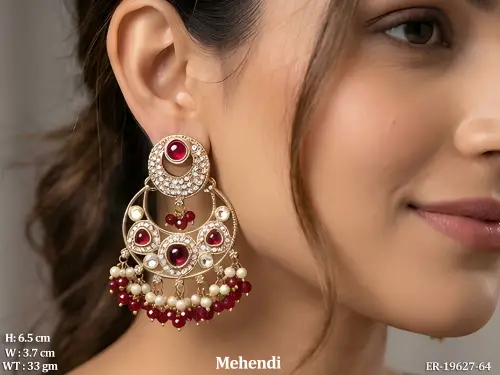
What we actually list, and what we do not
At the time of writing, OyeKudiye lists seven products with matha patti in the name. All are kundan-style and all sit in our hair accessories range. Check each photo for the side chains and the width, because the name alone does not tell you.
- Our maang tikka range is far larger, with kundan, antique, American Diamond, pearl and minimal styles. One listing carries side chains and a bead fringe.
- Hair accessories also include juda pins, hair chains, hair bands, and pieces named passa or sheeshphool.
- We do not list a borla, a damini or a multi-layer crown-style patti under those names. If one of them is what you want, ask through our contact page.
Stock changes, so check the product page. If a piece does not suit your hair or outfit, our returns policy allows returns within 2 days.
Where to start looking
Start with maang tikka for a single pendant, and browse hair accessories for matha patti pieces.
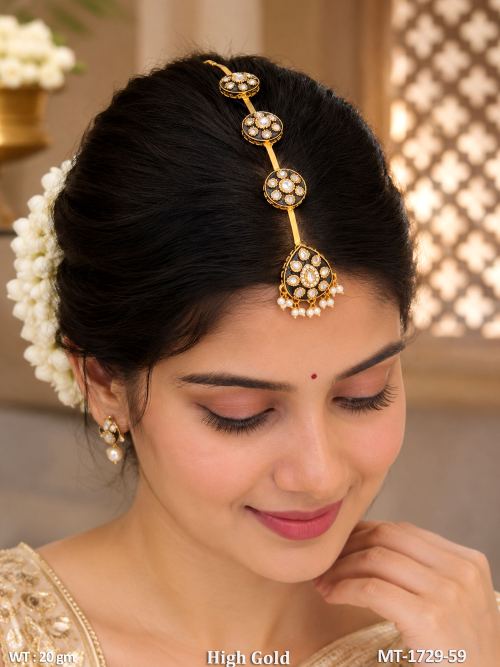
Frequently asked questions
What is a matha patti?
A matha patti is a forehead ornament with a central pendant and two side chains that follow the hairline. It is worn at the centre parting like a maang tikka, but the side chains frame the face. It is common at weddings, and lighter versions suit parties.
What is the difference between a matha patti and a maang tikka?
A maang tikka has one pendant on one chain. A matha patti has the same pendant plus chains along the hairline on both sides, so it looks fuller and needs more pins. Many people use the names loosely, so check the photo for side chains.
How do I wear a matha patti with open hair?
Use soft waves and a clear centre parting. Plait or twist a thin strand at each temple, pin the chain ends under those strands and fix the hook at the parting. Let your hair cover the pins. A lighter matha patti sits better than a heavy one.
Can I wear a matha patti with a bun?
Yes, and a low or mid bun is one of the steadiest bases. Fix the hook at the parting first, draw each chain along the hairline and pin it near the temple under the hair. For a high bun, check that the chains are long enough.
How do I wear a matha patti with a veil or dupatta?
Pin the matha patti into your hair first, then drape the dupatta or veil behind the pendant and chains. Do not pin the fabric through the chains. Try the piece both over and under the cloth in a mirror, and keep whichever looks better.
Can a matha patti be worn with thin or short hair?
Many people with thin or short hair choose a lighter piece or a single tikka. Tease the crown lightly, make a mini partition and cross two pins over the hook. Hidden pins near the temples help the chains. If it feels heavy, switch to a smaller one.
Which matha patti suits a round or long face?
Sources disagree, so treat it as options. Some guides say a matha patti can make a round face look rounder and suggest a long, narrow tikka. For a longer face, several suggest a broad matha patti for width. Try both in a mirror.
How do I stop a matha patti from sliding?
Give it grip. Tease the crown a little, fix the hook at a firm parting with a second pin crossed over it, and pin each chain end near the temple under the hair. Add hairspray, then turn your head and lean forward to test. Add a pin if it moves.
Can I wear a matha patti with a saree?
Yes. With a heavy silk saree, a full kundan-style piece looks balanced, and with a simple saree a lighter one is enough. If you cover your head with the pallu, fix the matha patti first and drape the pallu behind it.
How many hair pins do I need for a matha patti?
There is no fixed count. A common plan is two crossed pins at the hook and one small pin at each temple, and a hairdresser adds more if the hair is slippery. Add more for heavy pieces or fine hair. Choose pins close to your hair colour and carry spares.
Sources
- BlueStone: How to wear a matha patti (definition, side chains, pendant placement, bobby pins)
- Tyaani: Styling a maang tikka with hairstyles (open hair, bun, braids, short hair, pinning)
- Tyaani: Maang tikka vs matha patti (differences, face shapes, securing side chains)
- WedMeGood: Mathapatti or maangtikka, what to wear and why (forehead and face guidance)
- Urban Company: Picking a maang tikka or mathapatti for your face shape
- DESIblitz: Matha patti designs for bridal headwear (meaning of the name, one-sided styles)
- Wikipedia: Maang tikka (hook at the centre parting, jhoomar and paasa)