You have the lehenga, or at least you have a swatch of it, and now one decision is left. Which bridal jewellery set for the wedding? A set saves you from matching ten loose pieces, but it locks you into one necklace, one style and one weight.
This guide is about choosing the set, not listing every piece a bride may wear. It compares set styles with lehenga colours and necklines, explains what usually comes inside a set, and ends with a checklist for reading a product page. For the head-to-toe list of pieces, our bridal jewellery checklist is the companion read.
Short answer
To choose a bridal jewellery set, start with the outfit. Let the lehenga's embroidery decide how heavy the set can be, its neckline decide the necklace shape, and its colour decide the stones. Then pick one style family, check what the set includes, and buy the rest as separates.
Key takeaways
- A heavily worked lehenga takes a simpler set. A plain or lightly worked one can carry a full set.
- The blouse neckline decides the necklace shape before the style does.
- Pick one style family for the set, such as kundan, temple or American Diamond, and keep the separates in the same family.
- Read the title, photos and weight on the product page to find out which pieces are really in the set.
- Try the full look at home, with the dupatta and hairstyle, before the week of the wedding.
Start with the outfit, not the set
Almost every lehenga jewellery guide we read begins in the same place. Weaver Story advises matching the jewellery to the embroidery, with heavier fabrics taking sturdier pieces and lighter fabrics taking delicate ones. The Panache bridal guide says jewellery should complement the embroidery and not copy it, and it suggests lighter earrings when the dupatta is heavily embellished.
So before you open a single product page, write down four things about the outfit. These are the lehenga colour, how dense the embroidery is, the blouse neckline and how the dupatta will be draped.
Which set for a heavy lehenga, and which for a simple one
A lehenga covered in embroidery already gives the eye plenty to look at. In that case, many guides suggest one lead piece and quieter support. Weaver Story puts it as a bold necklace or striking earrings, not both at full volume. We would read that as permission to choose a set where the necklace is the lead and the earrings are modest.
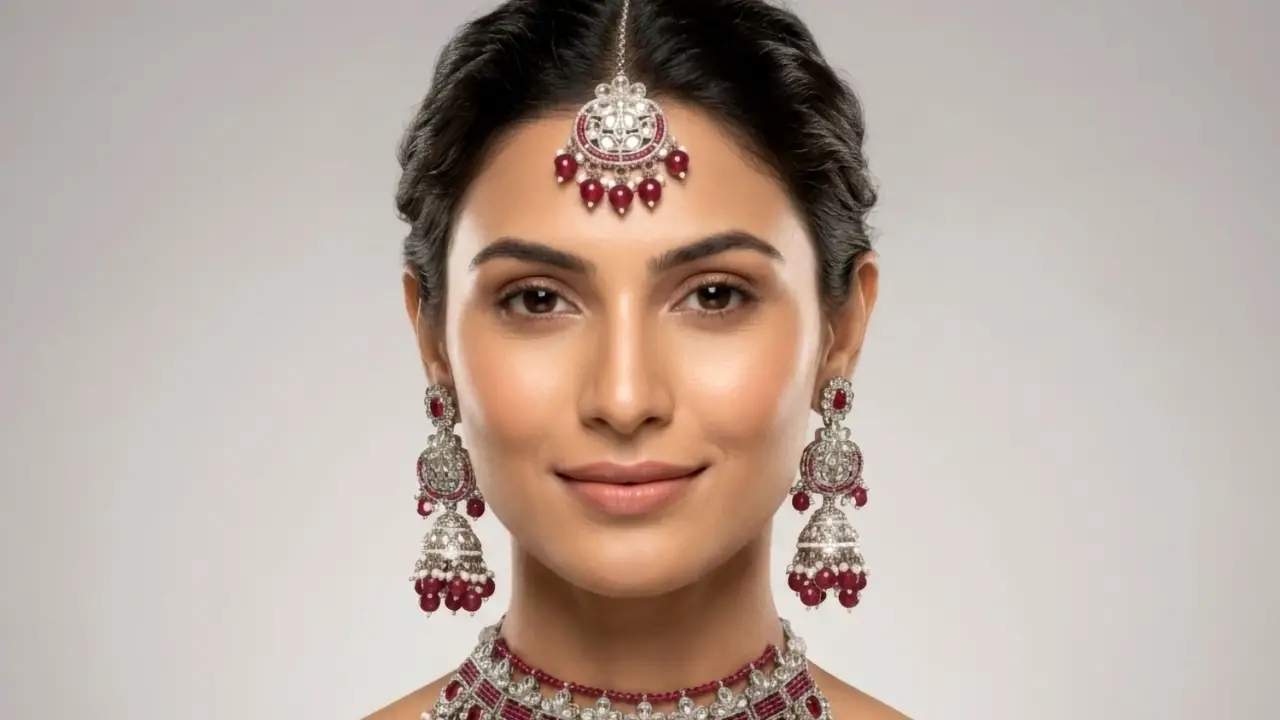
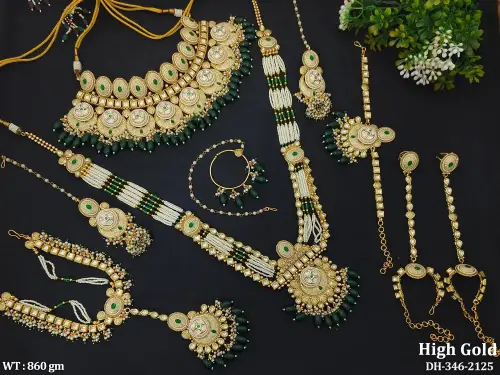
Picture a bride in a richly embroidered maroon lehenga with a lightly worked dupatta. A full kundan set that includes a choker, a long haar, a tikka and a nath is one way to complete it, as long as the pieces share one finish.
The decision matrix: outfit against set style
This table is a starting point, built from the guides above and our own reading of the catalogue. It gives options, not rules, and your family's preferences come first.
| Your outfit | Set styles to look at first | Why it works | Keep an eye on |
|---|---|---|---|
| Red or maroon lehenga, heavy embroidery | Kundan, antique | Weaver Story and Aurus both suggest kundan or antique looks for red, and a green accent adds contrast | Earrings and tikka kept lighter than the necklace |
| Green lehenga | Kundan with ruby or white stones, antique | Panache suggests contrast over an exact match for green | Too many stone colours competing with the fabric |
| Pastel lehenga (pink, mint, lavender, peach) | Pearl accents, light kundan, American Diamond | Weaver Story and Aurus both lean towards pearls and soft finishes on pastels | Very shiny white stones against heavy antique embroidery |
| Ivory or cream lehenga | Layered kundan, pearl, temple | Ivory leaves the jewellery as the focal point | Choosing a set so light that it vanishes |
| Blue or navy lehenga | American Diamond, white or pearl accents | Weaver Story pairs blue and navy with cool, clear stones | Checking a warm finish against the fabric in daylight |
Our colour guide for sarees and lehengas and the guide for green, blue, maroon and pastel lehengas go deeper on colour.
Set styles compared
Kundan sets
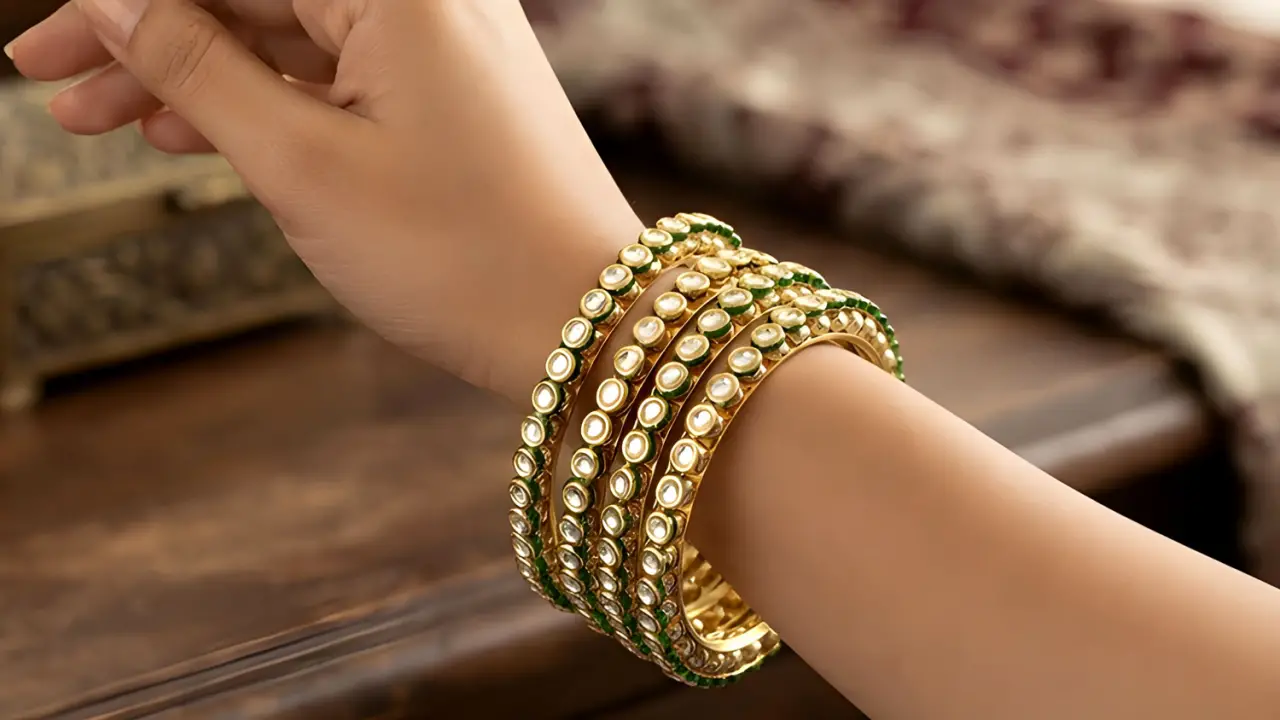
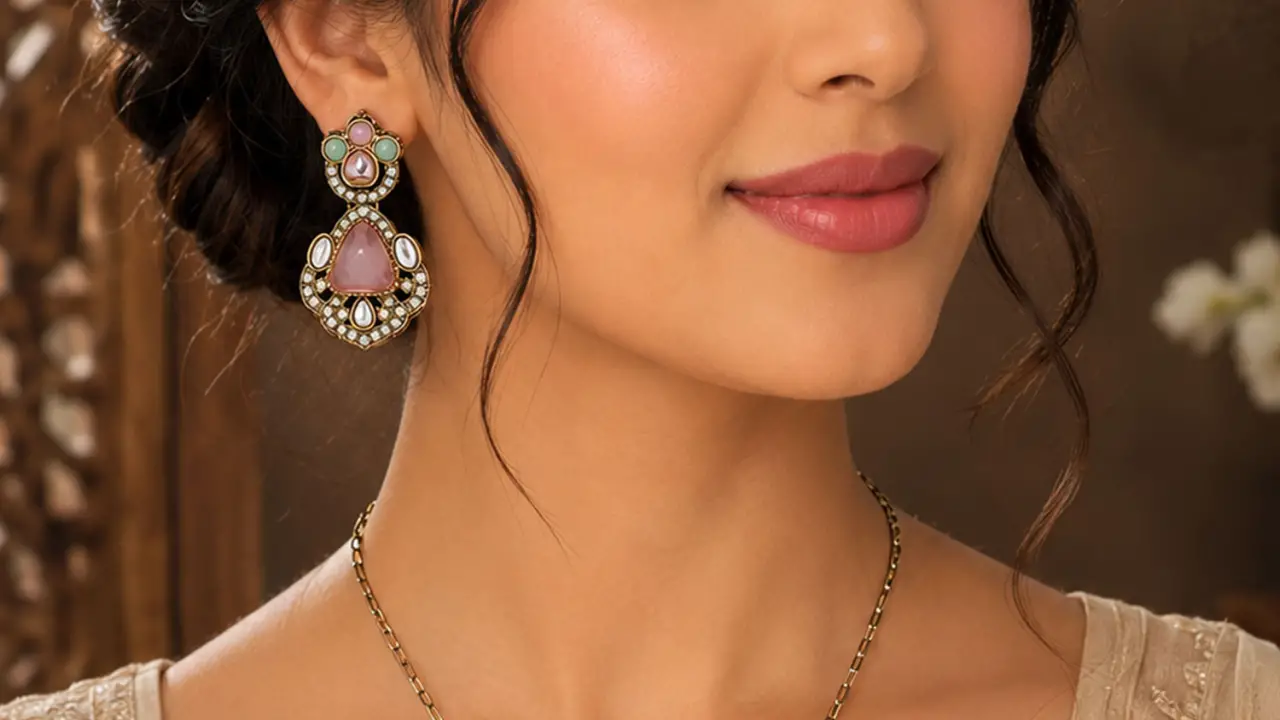
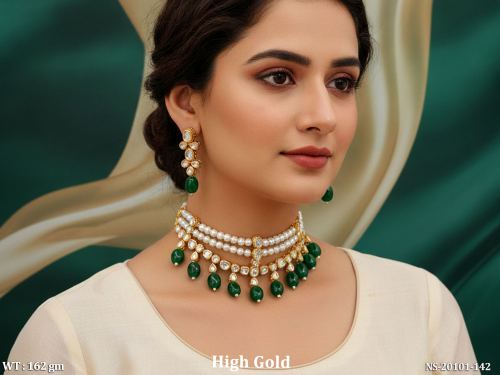
In artificial jewellery, kundan describes the look of that style, with flat stones framed in raised settings and often a pearl or bead fringe. Panache labels kundan a medium-weight style, lighter than the heaviest bridal looks. For a bride who wants a full, classic look, a kundan set is the style most guides mention first. Our guide on cleaning kundan, pearl, AD and antique jewellery covers care.
Temple sets
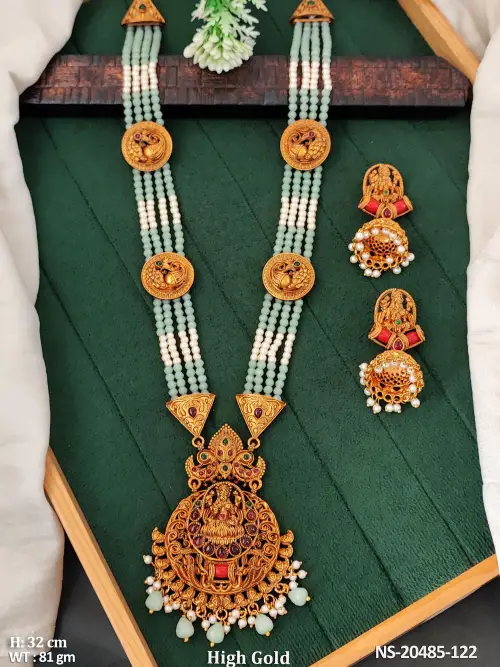
Temple jewellery uses motifs such as deities, peacocks and lotus petals, often on a long haar. It suits a South Indian style of dressing and a saree, though it can also go with a lehenga when the colours agree. Our guide to temple, kemp and antique jewellery explains the differences between the three.
American Diamond sets
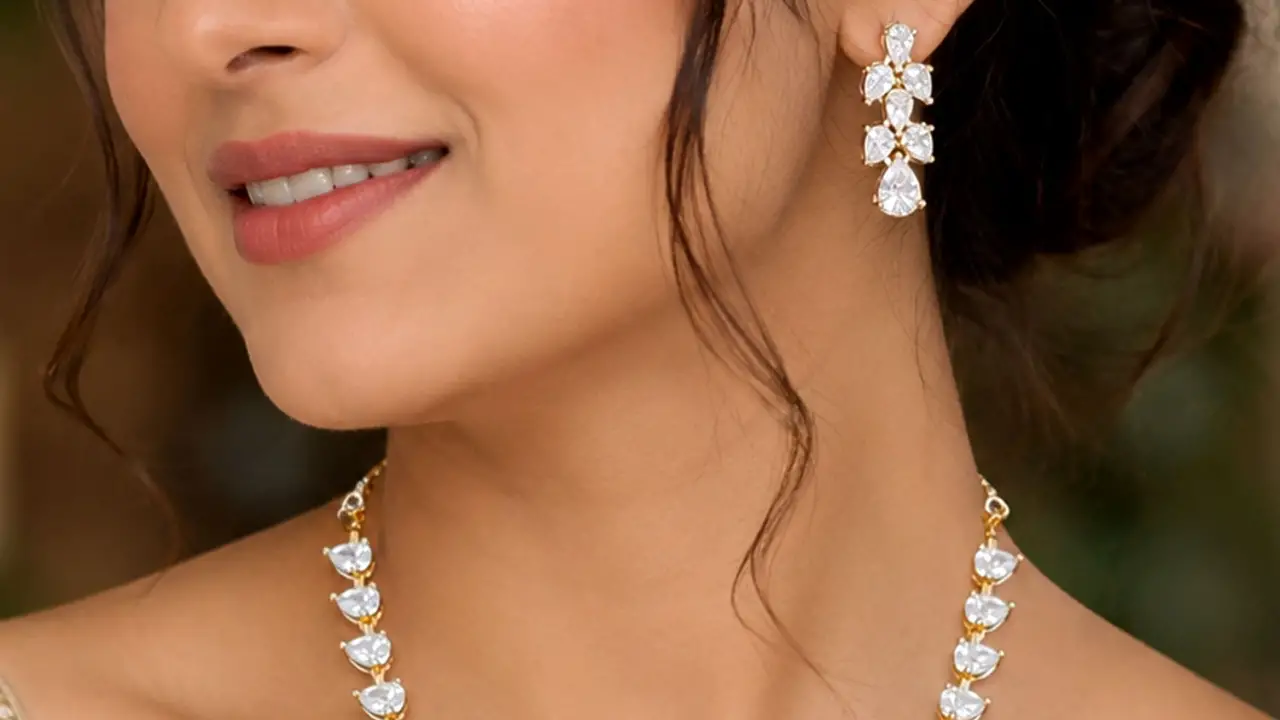
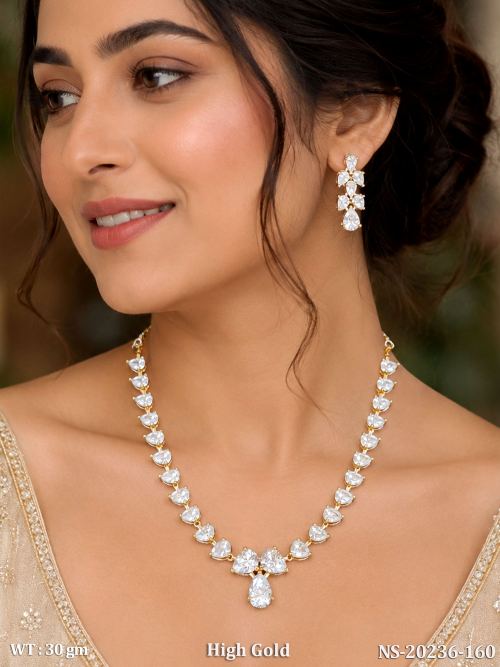
American Diamond, or AD, is the style name for clear, cut-looking stones set in a clean line. These sets are lighter in look and usually shorter, so they suit a reception, an engagement or a bride who wants a modern outfit. Our guide to engagement and reception jewellery covers those looks.
Antique finishes and pearl accents
Antique and Rajwadi finishes look aged and rich, and they pair well with deep colours. Pearl accents soften any of the styles above. You can browse our antique jewellery, kundan jewellery and temple jewellery pages to compare finishes side by side.
Neckline and necklace length
The blouse neckline decides the necklace shape. Weaver Story says deep necks and sweetheart necks take chokers or layered necklaces, while high necks do better with statement earrings than a necklace. Panache pairs a sweetheart neckline with a choker and a rani haar and recommends a collar necklace for a boat neck.
We cover this in detail in our guide to necklaces for boat necks and other necklines. If the neckline and necklace clash, wear the long piece or leave the choker out. A set does not have to be worn in full.
Choosing the colour of the stones
An exact match with the lehenga is not required. Both Weaver Story and Panache say contrast often looks richer than an exact match. A green or ruby accent against a red lehenga is a common choice, and a white or pearl set is a calm choice for pastels. Choose one warm or cool finish for the whole set, then let one or two stone colours repeat something in the outfit.
Picture a bride in a deep green lehenga. A set with ruby and white stones gives contrast, while a green kundan set with pearls repeats the outfit's colour and stays gentle.
What is normally in a set
There is no standard. Panache lists a necklace or choker, earrings, a maang tikka, bangles and rings as essentials, with a passa, nath, layered haar, hathphool and waist belt as optional. In our catalogue the range is wide. The photo of one full kundan set in the Dulhan Set range shows a choker, a long haar, a tikka, a nath, earrings and a pair of haath phool together.
| Piece | Usually inside a bridal set? | If it is not |
|---|---|---|
| Necklace (short or choker) | Almost always | Check the photo for the length |
| Earrings | Usually, but not always | Buy matching earrings or a different pair |
| Long haar or rani haar | In larger sets | Add a long necklace separately |
| Maang tikka | In some full sets | See our maang tikka range |
| Nath | Occasionally, in the largest sets | Choose a nath by nose size and side |
| Bangles or kada | Rarely | Buy bangles separately |
| Bajuband, haath phool, kamarpatta, payal | Rarely, and only in the very large sets | Decide with your family whether you want them |
A matha patti and a maang tikka are different pieces. A tikka is a single pendant at the parting and a matha patti adds side chains along the hairline, so check which one a set lists. Our guide on how to wear a maang tikka explains the difference.
Set or separates?
| Question | A set suits you if | Separates suit you if |
|---|---|---|
| Match | You want one finish across pieces | You want to repeat the outfit's colours |
| Re-wearing | You plan to wear the set whole | You want to wear the pieces on their own later |
| Comfort | The set weight feels fine when tried | You would like lighter earrings than the necklace asks for |
Our own suggestion is a mix. Choose a set for the necklace and its matching earrings, and buy the head piece, bangles and anything else separately, in the same style family.
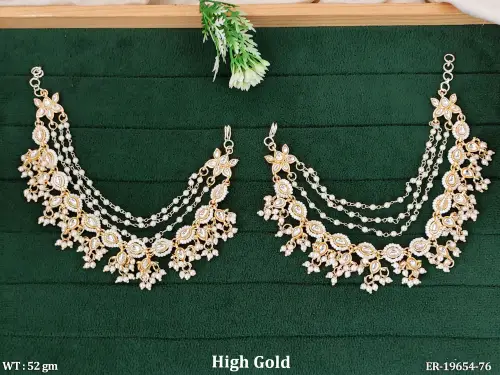
How heavy is too heavy?
There is no single figure. A full bridal kundan set in our catalogue can list several hundred grams, while a light American Diamond necklace and earrings can list about thirty. Treat the listed weight as a comparison tool, and choose lighter if the dupatta is pinned near the neck.
What to look at on a product page
Before you add a set to your bag, run through this list.
- Title and photos. Count the pieces in the photos and check the title for "with earrings" or "set". Do not assume anything that is not shown.
- Weight. Compare the listed weight across sets. The unit is shown in the photo or the details.
- Finish name. Names such as Rajwadi, Mehendi and matte describe the surface colour. Keep one finish across the set.
- Length and fastening. These are often not written on the page. Look closely at the photos for a drawstring or hook back, or write to us through the contact page.
If a set does not suit you after it arrives, our returns policy allows returns within 2 days, so try the full look as soon as it is delivered.
Where to start looking
Begin with the dulhan sets, which are the full bridal sets, then move to necklace sets and earrings to build around a lighter choice. The Dulhan Set range is smaller than the other categories, so look early.
Frequently asked questions
How do I choose a bridal jewellery set for a lehenga?
Start with the lehenga. Check how dense the embroidery is, the blouse neckline and the dupatta drape. Heavy embroidery takes a simpler set, and the neckline decides the necklace shape. Then pick one style family and one finish, and check the stones against the outfit's colours.
Which bridal jewellery set suits a heavy lehenga?
Choose one lead piece and lighter support, such as a statement necklace with modest earrings. Weaver Story says a heavily embellished outfit calls for minimal jewellery, so avoid stacking several bold pieces. A lighter tikka and earrings also keep the face calm.
Which bridal jewellery set suits a simple lehenga?
A plain lehenga can carry a fuller set, such as a choker, a long haar and a tikka. Keep one finish across the pieces so the look feels planned. If you prefer a lighter style, a short necklace with drop earrings is also a complete option.
Should a bridal set come with a maang tikka?
It depends on your outfit and family custom. Some full sets include a tikka, and many necklace sets do not. If you plan to wear one, choose it in the same style family and finish. Our maang tikka guide explains how a tikka differs from a matha patti.
How many pieces are in a bridal jewellery set?
There is no fixed number. A necklace set may be a necklace and earrings, while a larger bridal set may add a long haar, tikka, nath and haath phool. Read the title and count the pieces in the photos, and ask us if something is unclear.
Kundan, temple or AD for a bride?
Kundan is the style bridal guides mention first, temple suits sarees and South Indian looks, and AD suits modern and reception outfits. Pick the one that agrees with your outfit and family tradition. Many brides use different styles for different functions.
Which stone colours suit a red, maroon, green or pastel lehenga?
Guides often suggest green or ruby accents for red, ruby or white for green, and pearls or soft stones for pastels. Contrast is usually richer than an exact match. These are options, and the final choice depends on the shade of your fabric, so hold a stone against it in daylight.
Should the set match the bride's mother's saree?
It does not have to. The set is chosen for the bride's own outfit. If the families will be photographed together, it helps to know the main outfit colours and keep the finish similar. Beyond that, the mother's choice is her own.
How heavy is too heavy for a bridal set?
It depends on you, the hours of the function and where the dupatta rests. Compare the listed weights across sets, and try the full look at home with the dupatta. If earrings pull or the necklace feels tiring after half an hour, choose a lighter pair.
How can I check a bridal set when buying online?
Read the title and count the pieces in the photos, compare the listed weight, check the finish name and the colour option, and look for the length and fastening in the photos. If something is missing, write to us before ordering. Returns are available within 2 days.
Can I wear the same set at the sangeet or reception?
Yes, if you plan for it. A necklace and earrings can be worn again with a different outfit, and a lighter pair is easier to re-wear. A full set with a nath and haath phool is harder to repeat, so decide which pieces you will use again.
Is artificial jewellery a sensible choice for a bride?
Many families choose it for the look and for the freedom to match outfits for each function. It is made for appearance and wear. If your family also wishes to give or receive other jewellery, plan that separately.
Sources
- Weaver Story: What jewellery to wear with a lehenga (colour, neckline, embroidery, one statement piece)
- Panache Haute Couture: Indian bridal jewellery guide (essential and optional pieces, matching by embroidery and neckline)
- Aurus: How to choose a bridal jewellery set for your lehenga (harmony over exact matching, red, pastel and ivory)
- Wikipedia: Kundan (technique and origin)