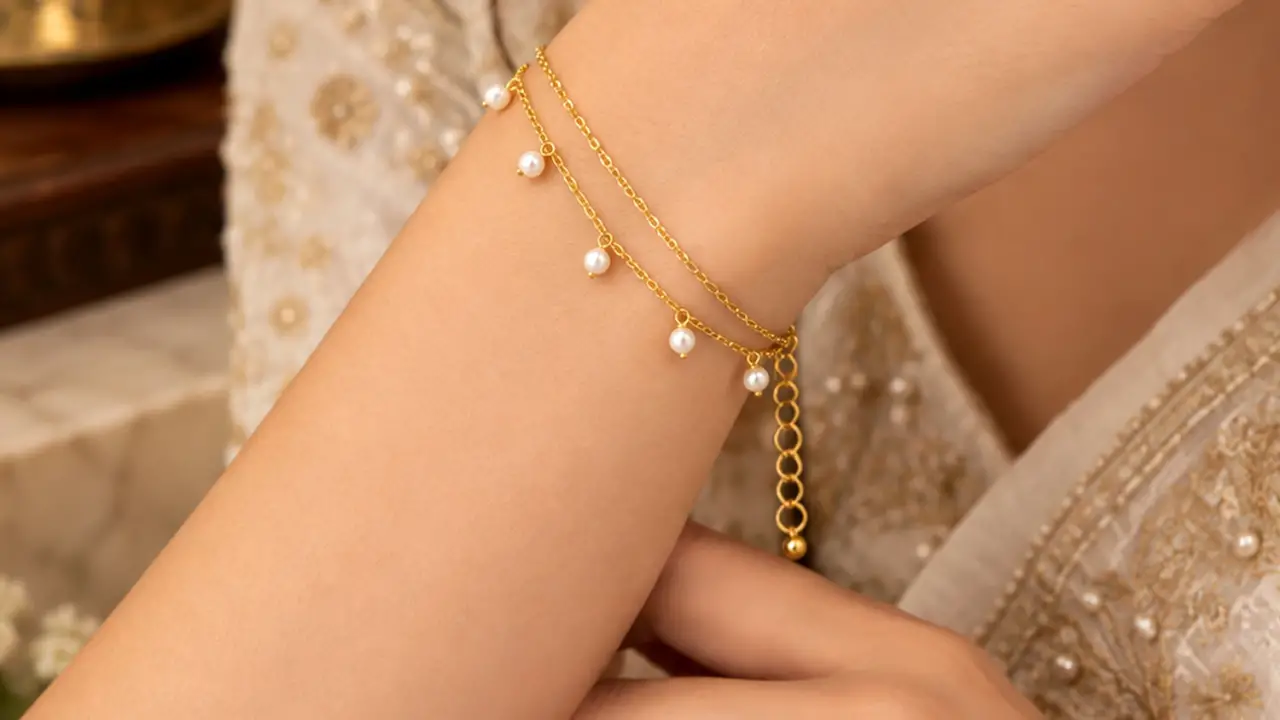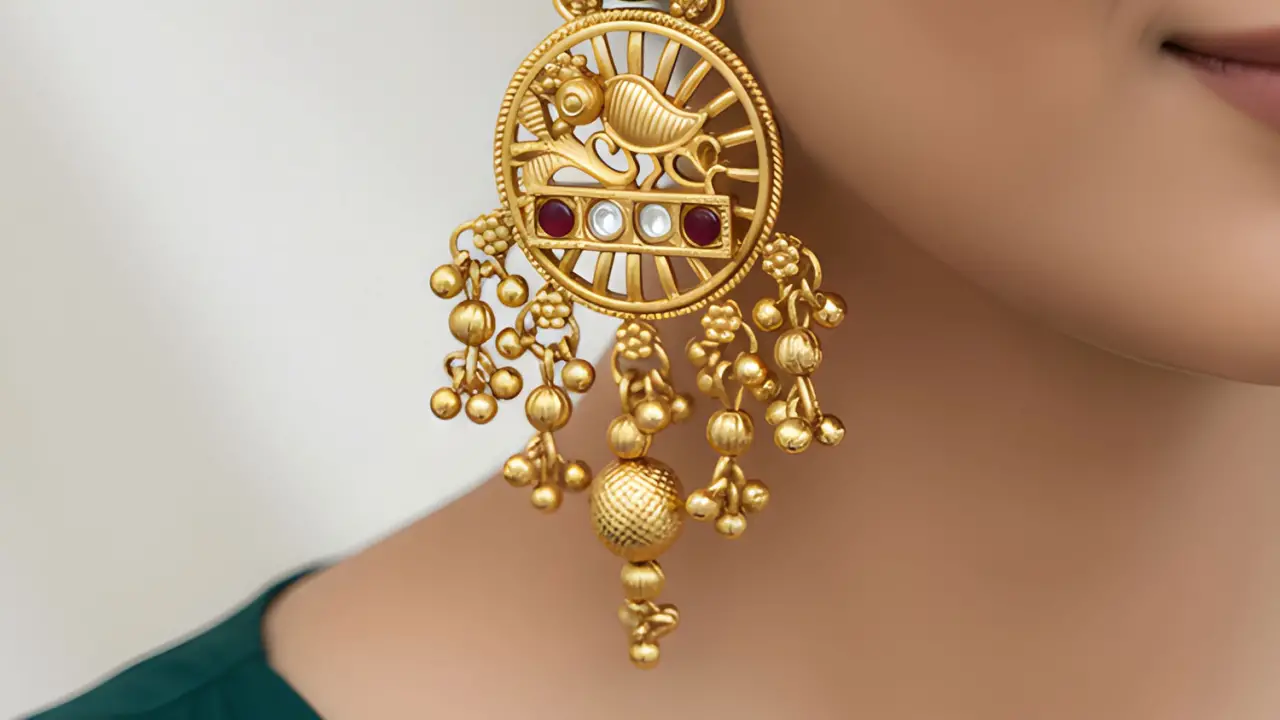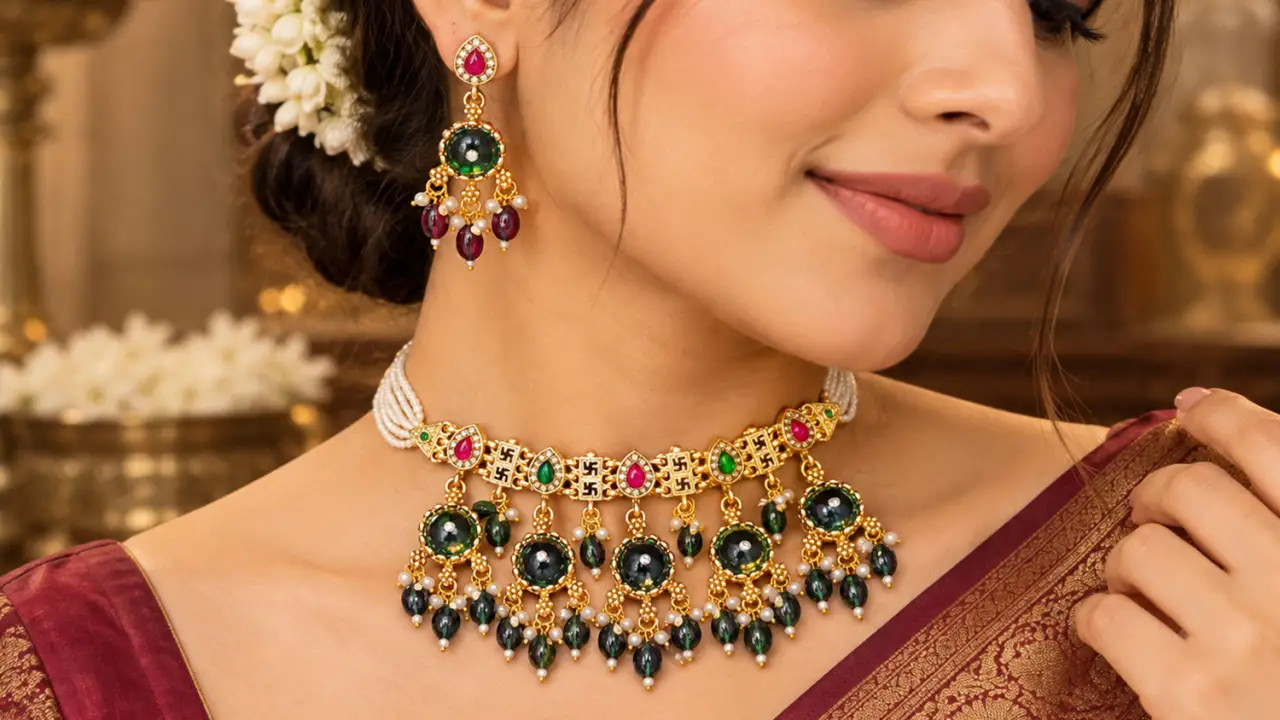
Most of the advice on how to clean kundan jewellery starts with a bowl of warm water, and that is exactly where things go wrong. Kundan, pearls, American diamond stones and antique finishes each react differently to water, and a method that suits one can quietly damage another.
This guide goes material by material. For each one it says what to do, what to avoid and why, in plain steps that need nothing more than a soft cloth. It covers everyday care for fashion and artificial jewellery. It does not cover re-plating or polish restoration, which are jobs for a professional.
Short answer
Clean kundan jewellery without soaking it. Wipe it with a soft dry cloth after each wear, use a barely damp cloth on stubborn marks, dry it completely and store it in a dry pouch. Stones in many kundan-style pieces are backed with foil and held with adhesive, and water can loosen or spoil them.
Key takeaways
- Start dry. A soft, lint-free cloth after each wear does most of the work for every material in this guide.
- Avoid soaking pieces with foil-backed or glued stones, which includes most kundan, polki-style and many pearl and stone-set designs.
- Pearls and their coatings dislike perfume, hairspray and rubbing. Put them on last and take them off first.
- Never use toothpaste, vinegar, bleach, steam or an ultrasonic cleaner on artificial jewellery.
- Test any method on a hidden spot first, and stop if the stones, glue or finish react.
Before you clean anything
Two questions decide the method. First, what are the stones and pearls made of and how are they held? Second, what is the finish on the metal?
We cannot tell you how every piece in your collection is made, so treat the advice below as a careful default. If the piece came with a care note, follow it. If you are unsure, the wipe-down at the end of this guide is the safest start.
The material table at a glance
| Material | What to do | Never do |
|---|---|---|
| Kundan | Wipe with a dry, soft cloth. Use a barely damp cloth only on marks, then dry | Soak, scrub, use a brush on the stone backs or put it in an ultrasonic cleaner |
| Polki-style stones | Same as kundan: dry wipe, barely damp for marks | Soak or use abrasive cleaners |
| Pearls and pearl beads | Wipe after each wear with a soft cloth, and keep them away from sprays and perfume | Steam, ultrasonic cleaning, chemicals or heat |
| American diamond (AD) and CZ stones | Soft dry cloth, then a barely damp cloth for film or oil, and dry again | Toothpaste, bleach, abrasive powders or long soaks |
| Antique and temple finishes | Dry wipe only, with light pressure | Polishing cloths or scrubbing that rubs the darker areas bright |
The sections below give the reasoning for each row.
How to clean kundan jewellery
Kundan is the material that most needs a gentle approach. Antique-jewellery dealers advise that foil-backed stones should stay out of liquids, because soaking can permanently damage the coloured foil behind them. The same logic applies to kundan-style fashion pieces, even though their construction may differ.
The routine is simple.
- After every wear, wipe the front and the metal with a soft, dry, lint-free cloth. Use light strokes and avoid pressing on the stones.
- For a mark or a film of makeup, use a cloth that is barely damp, not wet. Wipe around the stone and not under it, then dry the piece straight away with a clean part of the cloth.
- For crevices, use a clean, dry, soft brush such as a baby toothbrush that is only used for jewellery. Do not push bristles under the edge of a stone.
Say you have worn a kundan necklace set to a wedding and want to put it away the next day. A dry wipe is enough. If there is makeup on the back where it rested on your neck, wipe that part with a barely damp cloth, dry it, and let it air for a few minutes before it goes in the pouch.

Polki-style pieces follow the same rules. If a stone looks loose, cloudy at the back or has started to lift, stop. Do not try to push it back. A jeweller who works on kundan or traditional settings is the right person for that.
How to clean pearl jewellery
The Gemological Institute of America advises wiping cultured pearls with a very soft cloth after each wearing. It also says pearls should never be cleaned in an ultrasonic or steam cleaner, and should be kept away from acids and many chemicals, including hairspray, perfume, cosmetics and even perspiration.
That advice is for real cultured pearls. Many pearls on fashion jewellery are imitation, with a coating over a bead, and the product page tells you which you have. Coatings can be sensitive too, so the careful reading is the same: wipe, do not soak, and keep sprays away.
- Put pearls on last, after hair, makeup and perfume.
- Take them off first, and wipe them with a soft cloth before they go away.
- Check the string or the setting. If it feels stretched or loose, have it restrung or repaired rather than wearing it.
If pearls are strung, make sure they are completely dry before wearing, as GIA notes. For pearl sets, a pouch of their own is better than a shared box, because hard stones and metal edges can scratch a pearl surface.
How to clean American diamond jewellery
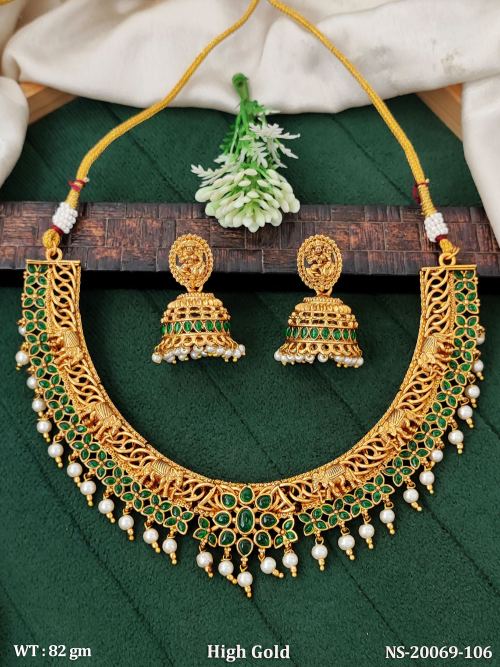
American diamond, often shortened to AD, is the Indian trade name for cubic zirconia stones, which are lab-made. Cubic zirconia is hard, about 8 to 8.5 on the Mohs scale, but it still collects oil, soap film and powder, and that is what makes it look dull.
GIA's general advice for cleaning jewellery is mild soap, a soft brush, and no chlorine, abrasives or toothpaste, and it urges caution with ultrasonic cleaners because they can loosen stones. For artificial jewellery we go one step more careful, because many AD pieces have stones fixed with adhesive, and long soaking can weaken it.
- Wipe with a soft dry cloth first. Often that is all the piece needs.
- For film or oil, use a cloth that is barely damp, with at most a tiny amount of mild soap, then wipe again with a damp cloth that has no soap, and dry.
- Use a dry, soft brush to reach between stones.
Skip toothpaste, bleach, vinegar, baking-soda pastes and steam. They are popular suggestions, and each can scratch, strip the finish or loosen a setting.
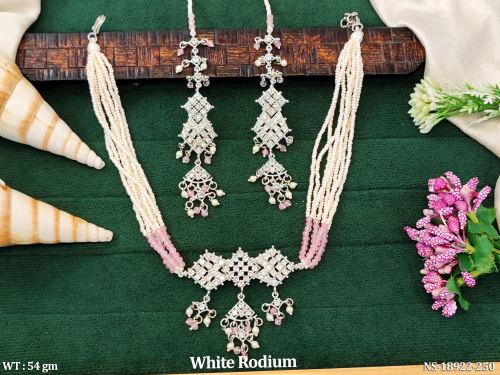
How to clean antique and temple jewellery
An antique finish is meant to look aged. The darker areas in the engraving or the recesses are part of the design, and an aggressive clean polishes them away, leaving a flat, shiny patch that looks wrong. Temple jewellery often has deep carving and carved figures where dust collects.
- Use a dry, soft cloth with light pressure, following the direction of the carving.
- Use a dry, soft brush for dust in the carving.
- Avoid polishing cloths and abrasive pastes, which can strip a finish or change it unevenly.
If your antique-finish piece has stones or pearls, treat those parts by the rules above. When a piece has a mix of materials, follow the gentlest rule among them.

Popular cleaning tips we leave out
Search for how to clean artificial jewellery and you will meet the same tips repeatedly. We do not recommend them for pieces with foil-backed or glued stones, for these reasons.
| Popular tip | The concern |
|---|---|
| Soaking in warm water with baking soda, salt and foil | Water can reach the backs of stones, discolour foil and weaken adhesive |
| Rubbing with toothpaste | GIA lists toothpaste among abrasives to avoid, because it can scratch stones and metal |
| Vinegar or lemon juice | Acids are on GIA's list of things pearls should avoid, and they may affect finishes and adhesives |
| Ultrasonic or steam cleaners | Both can shake stones loose, and GIA says to never use them on pearls |
| Rubbing hard with a cloth | It can wear a finish unevenly and loosen small stones |
A three-step wipe-down for any piece
- Wipe dry.
Use a soft, lint-free cloth and light strokes over the front, the metal and the clasp.
- Treat marks with a barely damp cloth.
Wring the cloth until it feels almost dry, wipe the mark, and avoid wetting the backs of stones.
- Dry and air.
Pat the piece dry with a clean part of the cloth, leave it open to the air for a few minutes, then store it.
How often should you clean it?
A dry wipe after each wear is enough for most pieces. A barely damp wipe is for visible marks, not for a routine. For pieces you wear rarely, check them before you put them away and before you wear them again. A good habit is to put jewellery on last and take it off first, so that perfume, hairspray and lotion do not touch it.
When you store a piece, make sure it is fully dry, and give each one its own soft pouch so stones and metal edges do not rub together.
When to stop and ask a jeweller
Stop cleaning and take the piece to a jeweller in these cases.
- A stone is loose, tilted or has fallen out.
- The adhesive looks sticky, cracked or discoloured.
- A pearl string has stretched or the clasp feels weak.
- The finish has worn through in a patch and you want it restored.
Re-plating and restoration are outside this guide, and a professional can tell you if the piece is worth the work. If you are looking for a replacement or a new piece, see the shop links below, and our returns policy allows returns within 2 days.
Where to look
The pieces in this guide are mostly in a few collections. Necklace sets include kundan and pearl styles, pendant sets include antique and temple finishes, and earrings include AD and pearl designs. If you are building a bridal look, our guide to jewellery for haldi, mehendi and sangeet shows how the pieces come together.

Frequently asked questions
Can I wash kundan jewellery with water?
We advise against it. Kundan-style stones are often foil-backed or glued, and water can seep behind them, discolour the foil or loosen the setting. Wipe with a dry cloth, and use a barely damp one only for a mark, then dry the piece fully.
How do I clean a pearl necklace at home?
Wipe it with a very soft, clean cloth after each wear, as GIA advises for cultured pearls. Keep it away from perfume, hairspray and cosmetics, and never use steam or an ultrasonic cleaner. If the pearls are strung, let them dry fully before you wear them.
How do I clean American diamond jewellery?
Start with a soft dry cloth. For oil or film, use a barely damp cloth with a trace of mild soap, wipe again with a plain damp cloth, and dry. Avoid toothpaste, bleach, abrasive powders and long soaks, because they can scratch the stones or weaken adhesive.
How do I clean antique or temple jewellery?
Use a dry, soft cloth with light pressure, and a soft dry brush for dust in the carving. The darker recesses are part of the antique look, so avoid polishing cloths and scrubbing, which can rub those areas bright and leave the finish patchy.
Can I use toothpaste or vinegar to clean artificial jewellery?
We do not recommend either. GIA lists toothpaste among abrasives to avoid, and acids are on its list of things to keep away from pearls. Both may also affect finishes and adhesives on artificial pieces. A soft dry cloth is the safer first step.
How do I clean polki-style jewellery at home?
Follow the same cautious method as for kundan. Wipe with a soft dry cloth, treat marks with a barely damp cloth, and dry at once. Do not soak or scrub. If a stone looks loose or cloudy at the back, stop and ask a jeweller to look at it.
How often should I clean my jewellery?
Wipe each piece with a soft dry cloth after you wear it. Use a barely damp cloth only when you can see a mark. For pieces you wear rarely, check them before storing and again before wearing. Cleaning more often than that is not usually needed.
How should I store jewellery after cleaning?
Make sure it is fully dry, then keep each piece in its own soft pouch in a dry place. Separate pouches stop stones, chains and metal edges from rubbing. Keep pearls apart from harder pieces, because pearl surfaces scratch easily.
Can I use an ultrasonic cleaner on artificial jewellery?
No. GIA cautions that ultrasonic cleaners can shake stones loose even from fine jewellery, and it says never to use them on pearls. Artificial pieces often have glued stones and coatings, so the vibration and the liquid are both a risk.
What if my jewellery has got wet?
Pat it dry straight away with a soft cloth and leave it open to the air before storing it. Do not use a hairdryer, as heat can affect adhesives and pearls. If a stone looks cloudy or loose afterwards, have a jeweller look at it.
Does this guide cover oxidised jewellery or re-plating?
No. This guide is about kundan, pearl, American diamond and antique finishes. Restoring a worn finish or re-plating a piece is specialist work, so ask a jeweller. If you are unsure which method suits your piece, start with a soft dry wipe.
Sources
- GIA: Pearl Care and Cleaning Guide (wiping, chemicals, ultrasonic and steam cleaners, drying strung pearls). Read 13 October 2026
- GIA: Holiday buying guide, how to clean jewelry (soft brush, mild soap, avoid chlorine, toothpaste and abrasives, ultrasonic caution), published 3 December 2015
- Antiques in Oxford: Looking after antique jewellery (foil-backed stones and liquids), posted 28 December 2020
- Robertson, Spencer, Levey and Williams: Confirming the cold diffusion bonding of gold in 19th century kundan settings, Historical Metallurgy Society, 2025
- Wikipedia: Cubic zirconia (composition and hardness)