It is Monday morning, the saree is pressed, the meeting is at ten, and the jewellery box is full of things that were made for weddings. You want something that looks put together, does not jingle through a presentation and does not need adjusting every half hour.
This guide is about jewellery for office wear in artificial and fashion jewellery: which pieces to reach for, how to pair them with sarees, kurtis, shirts and blazers, and how to build a small work set that you can rotate through the month. It starts with three simple tests you can run on any piece before you wear it to work.
Short answer
For office wear, choose small, light, quiet pieces: studs or small drops, a fine chain or short pendant set, and one slim bracelet. Stay in one metal tone, wear one focal piece at a time, and run the three office tests (no clink, no snag, still right for dinner) before you leave home.
Key takeaways
- Three tests decide office jewellery: it does not clink, it does not catch on hair or sleeves, and it can go on to an evening plan.
- Small studs, a fine chain and one slim bracelet are the usual starting point, and more can be added from there.
- Stay in one metal tone and let one piece lead, so the outfit still does the talking.
- A capsule of five pieces, rotated through the month, covers sarees, kurtis, shirts and blazers.
- Dress codes differ between workplaces, so use these as options and watch what your own office wears.
The three office tests
Most office jewellery advice comes down to "keep it simple", which is hard to act on at seven in the morning. Three quick tests are easier.
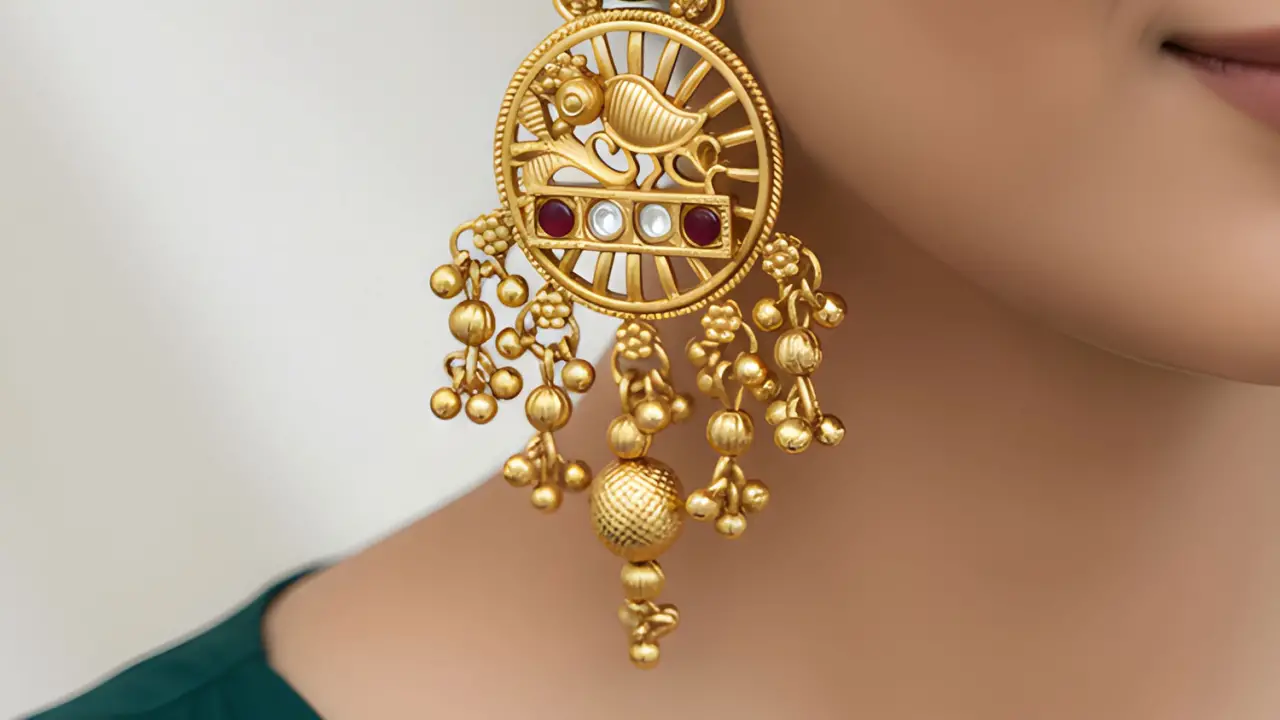
- The clink test. Shake your wrist and turn your head. If you hear a jingle, a laptop and a quiet meeting room will make it louder. Bangle stacks, ghungroo drops and charm bracelets are lovely, and are better saved for other days.
- The snag test. Run a finger along the piece and ask what it could catch on. Open hair, a saree pallu, a knitted sleeve and a bag strap are the usual culprits. Pieces with loose chains, hooks and long fringes snag more than smooth ones.
- The dinner test. Ask whether the same piece could go to a dinner after work with a small change, such as a different necklace or a pair of drops. If yes, you have a flexible piece. If it would only suit a wedding, leave it for the wedding.
One jewellery brand's office guide suggests a similar idea: a piece that suits work is one you forget you are wearing by the afternoon. Use it as a way of thinking about weight and scale, and trust your own comfort over any rule.
Office jewellery at a glance
| Piece | What tends to work | Go easy on |
|---|---|---|
| Earrings | Small studs, tiny stones, short pearl drops | Long, loud jhumkas, ghungroo drops |
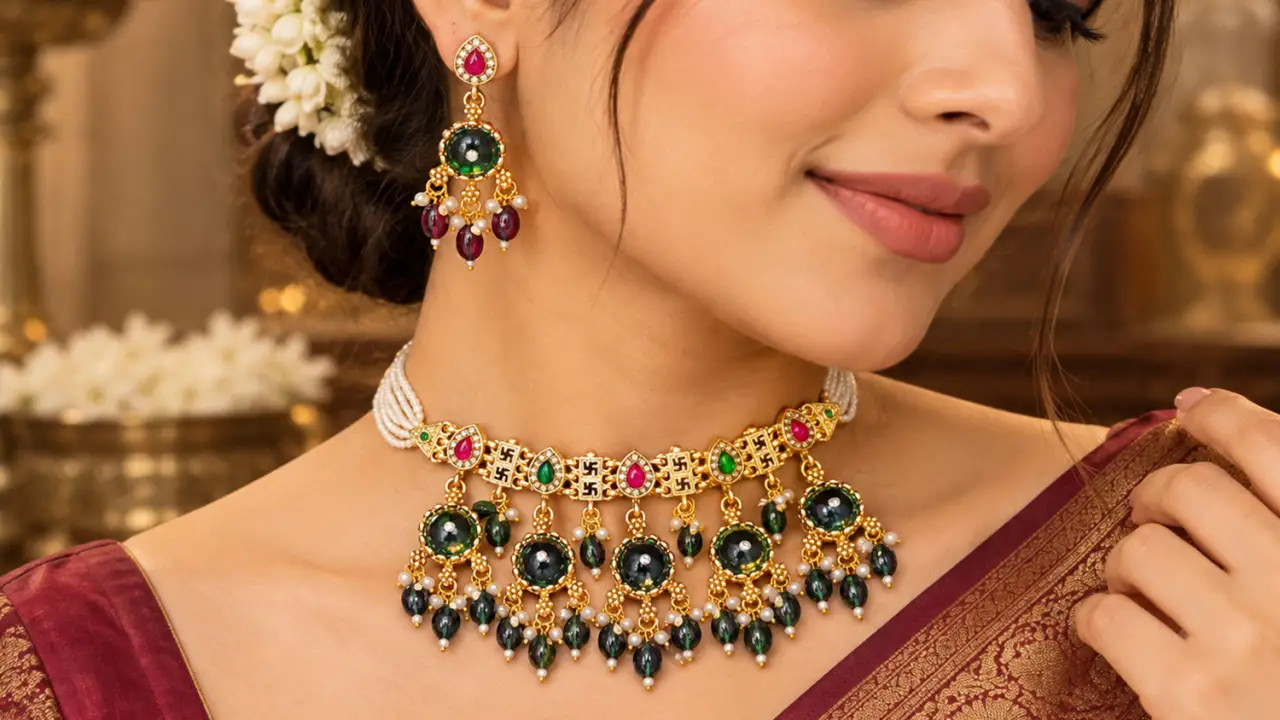
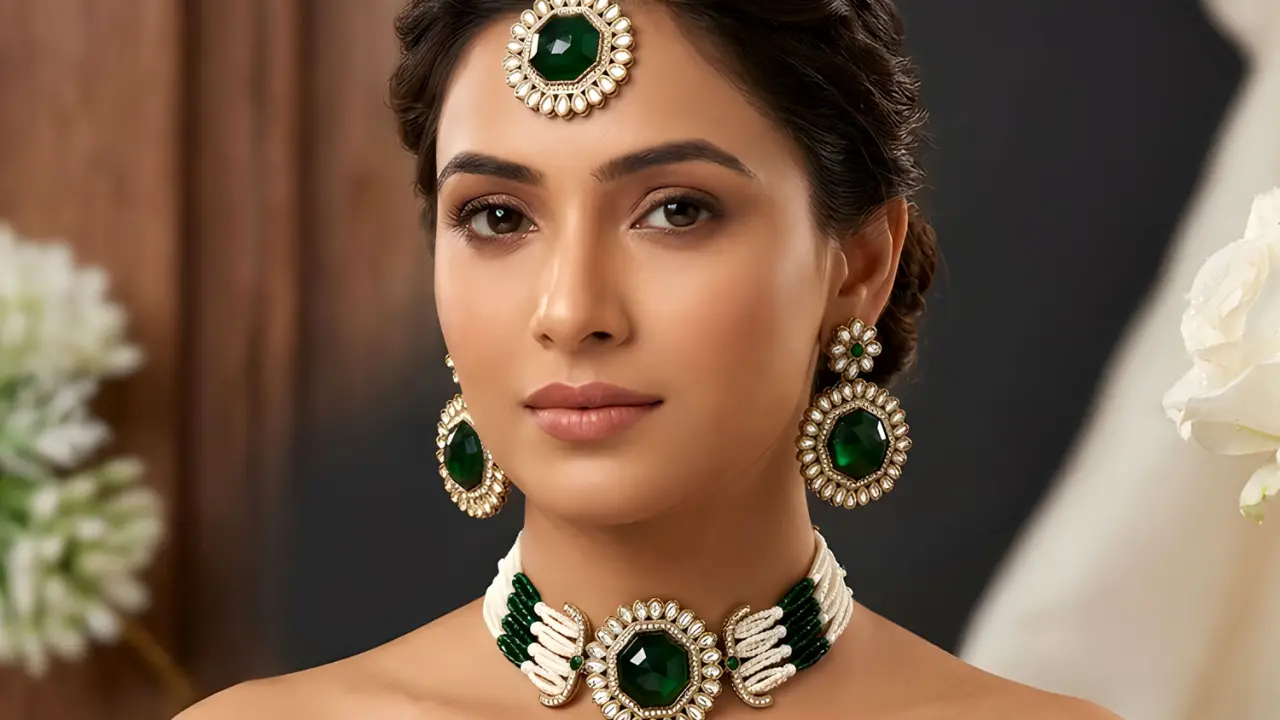
| Necklace | A fine chain, a short pendant, a single strand | Broad collar necklaces, several layers |
| Bracelet | One slim bracelet or a thin set of three | Stacks of bangles |
| Rings | One simple ring, on one hand | Many rings or oversized cocktail rings |
| Finish | One metal tone throughout | Mixing gold-tone and silver-tone in one outfit |
Studs and small earrings
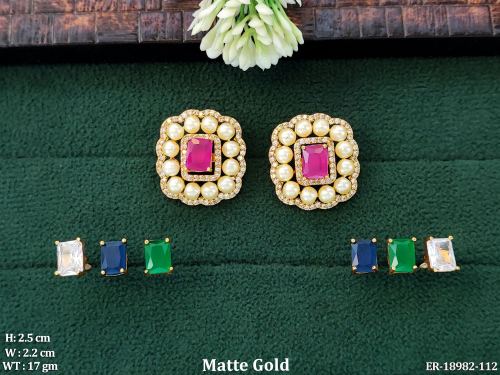
Studs are the most recommended starting point in nearly every office guide, because they sit close to the ear, do not move when you type and do not pull on your hair. Small stone studs, pearl-edged studs and short pearl drops are the usual picks.
Can you wear jhumkas to the office? Many people do, especially with sarees and kurtas, so the dress code at your workplace decides. A small, light jhumka is a softer option than a full bridal one. If you are unsure on your first week, start with studs and observe.
For colour, a pair with one small stone in a soft shade adds interest without looking festive. If you want to try a drop, keep it short, so it ends near the jaw and stays clear of your collar. Our stud earrings and pearl earrings pages are good places to start.
Fine chains and pendant sets
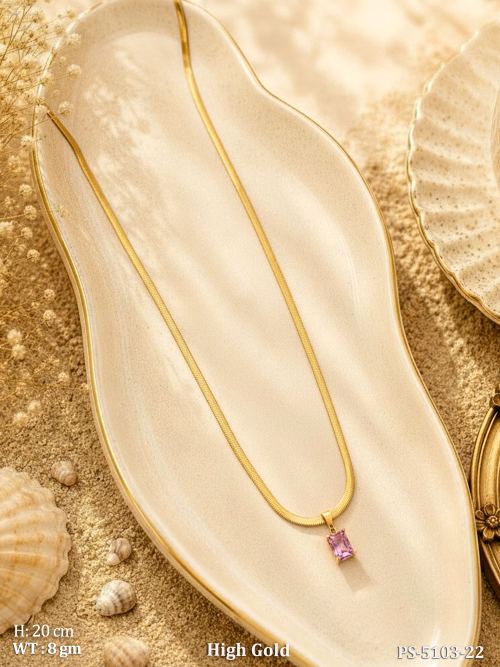
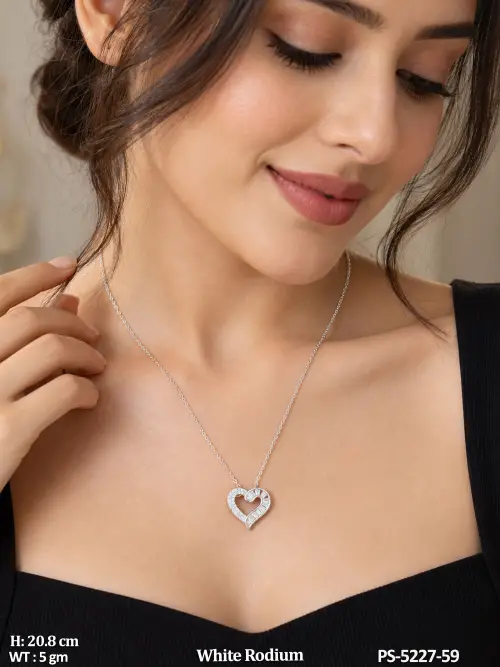
A thin chain with a small pendant adds a line at the neckline and makes a plain top or blouse look finished. A short pendant set (a pendant, a chain and matching earrings) takes the guesswork out of matching, because the pieces were made to go together.
Choose a pendant that sits on the breastbone and does not swing wildly when you lean forward. If you wear a shirt with a collar, a pendant on a fine chain fits under the collar line, or sits just above it for an open neck. For a V-neck, an open neckline or a boat neck, our guide to necklaces for different necklines shows how to match the length to the cut.
Bracelets and slim kada-style pieces
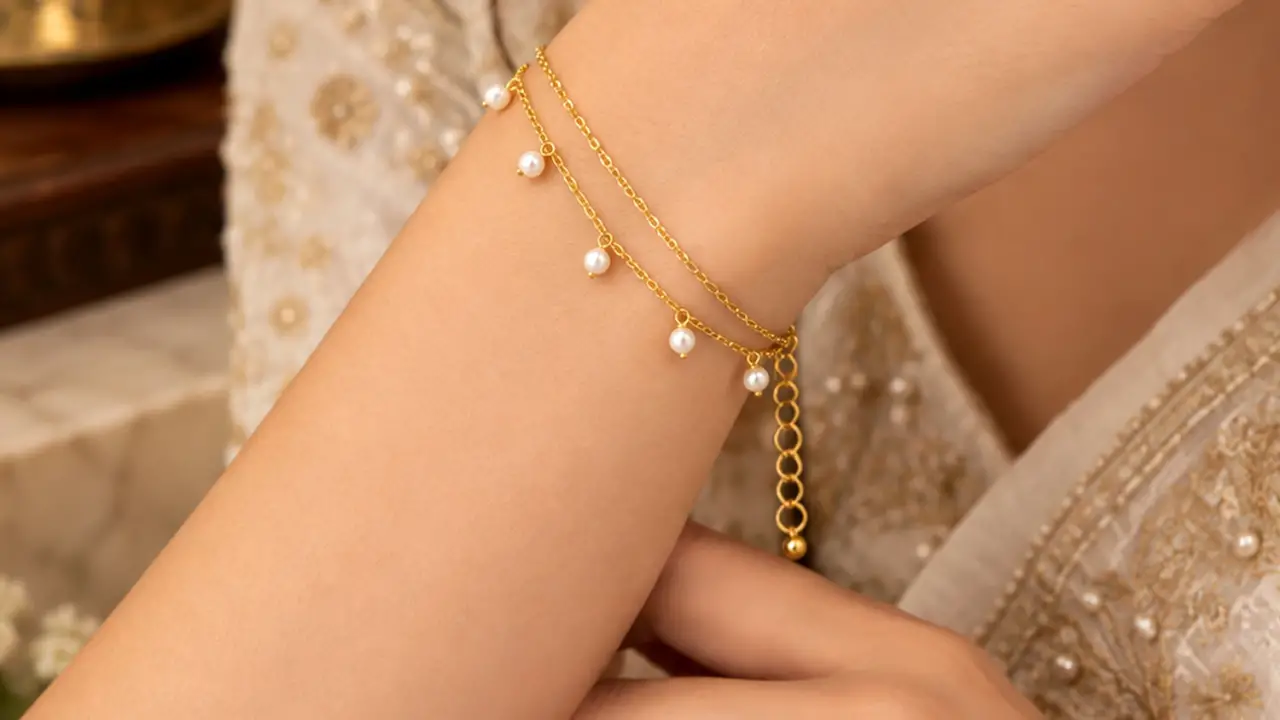
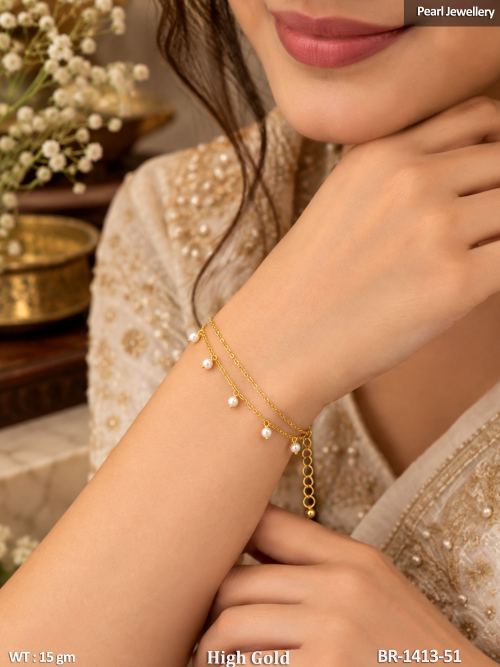
The wrist is the part of the body in constant motion at work: typing, writing, pointing at slides. A heavy bangle stack sounds on every desk and every keyboard. One slim bracelet, or a thin set of three, lets you keep a touch of shine without the noise.
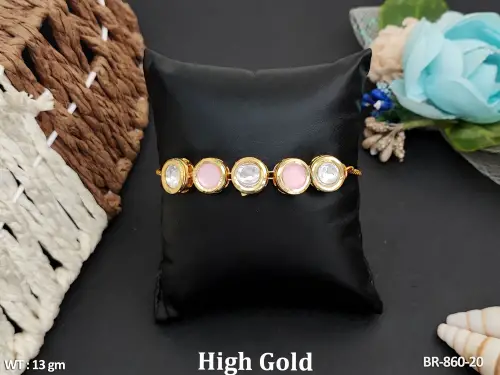
Look for bracelets that sit flat against the wrist, close with a secure clasp and are not wide enough to hit the edge of a laptop. A bracelet with small pearls reads quietly against a kurta sleeve. A wider kundan bracelet is a better choice for the evening, which makes it a good dinner-test piece to keep in your bag.
Pearls and soft colour
Pearl-look pieces are a staple for office wear in many guides, because the soft shine reads as polished without being showy. A pearl stud, a short pearl drop or a thin strand of pearls works with a saree, a kurta and a shirt alike.
If your pieces have pearl-look beads, store them away from perfume and sprays, and put them on last. Our care guide for kundan, pearl, AD and antique jewellery has the full routine.
Oxidised pieces for casual Fridays
Many offices relax a little on Fridays. An oxidised-finish pendant or a pair of small oxidised studs gives a more casual, artistic look with a kurti and jeans. The finish is darker and matte, so it sits quietly against denim and cotton. Keep the same rule as everywhere else, which is one focal piece at a time.
What to wear with what
| Outfit | Earrings | Neck | Wrist |
|---|---|---|---|
| Cotton or silk saree | Small studs or short drops | A fine chain or a short pendant, because the blouse neckline frames it | One slim bracelet |
| Kurti or kurta set | Studs, small jhumkas | A pendant set, or a single strand if the neckline is high | One bracelet or none |
| Shirt and trousers | Studs | A fine chain at the collar or none | One slim bracelet |
| Blazer | Studs or tiny drops | A short pendant under the lapel line | A slim bracelet that fits under the cuff |
| Co-ord set or indo-western | Stone studs | A pendant on a fine chain | A thin bracelet set |
With a saree, the pallu is where snagging happens, so choose smooth bracelets and keep the necklace close to the neck. If the saree is colourful, our colour guide for sarees and lehengas lists which metal tones and stone colours sit well with each shade.
A capsule of five office pieces
A capsule is a small set of pieces that all work together, so you stop deciding every morning. Here is one way to put five together.
- One pair of small studs in a stone or pearl style you like.
- One pair of short drops for days when you want a little more.
- One fine chain with a small pendant, or a short pendant set.
- One slim bracelet, or a thin set of three.
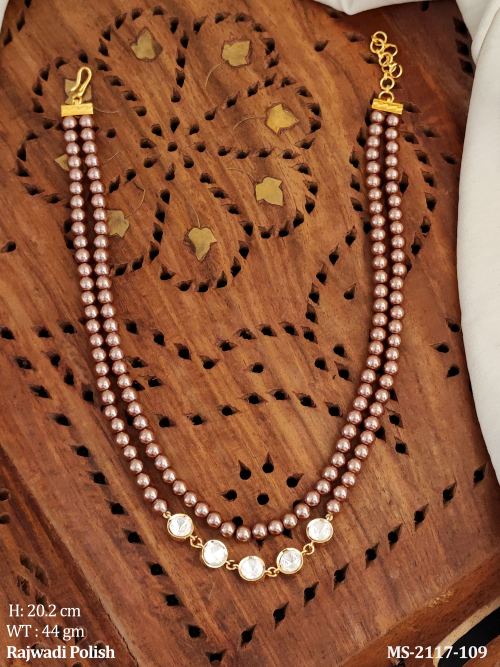
- One evening piece such as a layered mala or a wider bracelet, kept in your drawer or bag for plans after work.
Picture a week where you wear studs and the pendant with a shirt on Monday, the drops with a kurti on Tuesday, the bracelet with a saree on Thursday, and swap in the evening piece on Friday for dinner. Five pieces, and five different looks.
A simple monthly rotation
| Week | Focus | Try |
|---|---|---|
| Week 1 | Studs and a pendant | The quietest version of your capsule |
| Week 2 | Add the bracelet | Check the clink and snag tests at your own desk |
| Week 3 | Swap in drops | Use them with a kurti or saree |
| Week 4 | Add the evening piece | Wear it to a dinner or a team event |
Rotating keeps each piece fresher in your mind and lets you notice what you reach for. The ones you never choose can go back into the box.
From the desk to the evening
A good office piece should survive a change of plan. A short pendant stays, and you swap the studs for drops. A bracelet stays, and you add a kundan one on the other wrist. If you keep a small pouch in your bag, five minutes in the washroom changes the whole look. Our beaded malas are a simple way to add length and colour after hours, and pendant sets are the easiest base for the day.
Mistakes to avoid
- Wearing a bridal piece to be "dressed up". Scale matters more than shine.
- Layering too many chains. Chains of different lengths can tangle under a collar or lanyard.
- Forgetting the lanyard or ID card. A long pendant and an office lanyard tangle quickly, so choose one.
- Mixing metal tones in a hurry. One tone from earrings to bracelet looks calmer.
Where to start looking
Start with pendant sets and stud earrings, add a slim piece from bracelets and keep a mala from beaded malas for the evening. If a piece does not work for your workplace, our returns policy allows returns within 2 days.
Frequently asked questions
What jewellery should I wear to the office?
Small, light, quiet pieces: studs or short drops, a fine chain or a short pendant set, and one slim bracelet. Keep to one metal tone and let one piece lead. Then check your workplace, because dress codes differ between a bank, a school and a start-up.
Can I wear jhumkas to the office?
Many people do, especially with sarees and kurtas, so it depends on your workplace. Pick a small, light jhumka over a full bridal one, and check that it does not ring loudly in a quiet room. If you are new, begin with studs and watch what colleagues wear.
Are pearl or stone studs better for office?
Both work, so choose by outfit. Pearl studs read soft and classic with sarees and kurtas. Small stone studs add a bit of colour or sparkle with shirts and blazers. If you can only buy one pair, pick the colour that matches more of your wardrobe.
What necklace length is good for office wear?
A short to medium length that sits at or just below the collarbone is a common choice, because it stays visible and does not swing. With a collar, a fine chain at the collar line works. With a V-neck, a slightly longer pendant fills the opening.
Can I wear a kada or bangles to the office?
A slim bracelet or one thin bangle is easier to work in, because a stack clinks against the desk and laptop. If your workplace likes traditional looks, a single plain kada may be fine. Do the clink test at home and trust what you hear.
How many pieces of jewellery are right for office wear?
Three is a comfortable number: earrings, one neck piece and one wrist piece. A ring is a fourth, on one hand. Add more only if your outfit is very plain. If you are unsure, take one piece off before leaving the house.
What jewellery goes with a saree for office?
Small studs or short drops, a fine chain or short pendant that the blouse neckline frames, and one slim bracelet. A saree pallu can catch on rough or open designs, so smooth bracelets and a close necklace work better. Keep the metal tone the same.
What jewellery goes with a shirt or blazer?
Studs, a fine chain at the collar or a short pendant under the lapel line, and a slim bracelet that fits under the cuff. Skip dangling earrings and broad collar necklaces, which fight with the lines of a shirt. A single ring is optional.
What jewellery should I avoid at work?
Anything loud, heavy or snag-prone: ghungroo drops, bangle stacks, long fringes and bridal-scale necklaces. Many people also skip very large statement pieces for video calls and meetings. This is about your comfort and your office culture, so there are no fixed rules.
Can I wear a mangalsutra to the office?
That is a personal and cultural choice. Many women wear a short, light mangalsutra to work, and our listings include lighter pendant-style designs. Choose a length that stays tucked in or sits neatly, so it does not catch on a lanyard or a collar.
Is minimal or fashion jewellery better for office?
Minimal is a style, and fashion jewellery is a category, so you can choose both. Minimal pieces in fashion jewellery suit most offices, because they are small and quiet. Pick what matches your workplace and your clothes, and keep the metal tone consistent.