BEST
No recent searches
Start typing to search the collection.
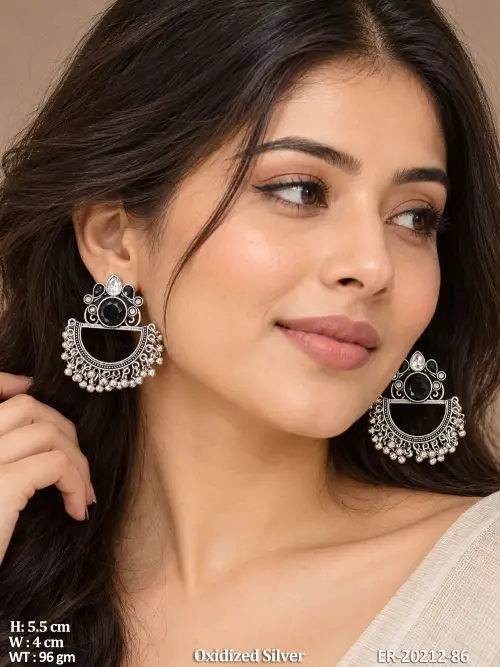
Oxidised jewellery has a darkened, dusky finish that looks bold against both ethnic and western outfits. This page lists oxidised jewellery for women, from an oxidised jewellery set to oxidised bangles, jhumka, payal, kada and finger rings, many with floral, bird or peacock motifs and stone detail. Oxidised describes the finish and not a particular metal. Every piece is artificial jewellery made in India on a metal alloy base with artificial stones. Looking for one type only? The guide below links each one, from earrings to kada.
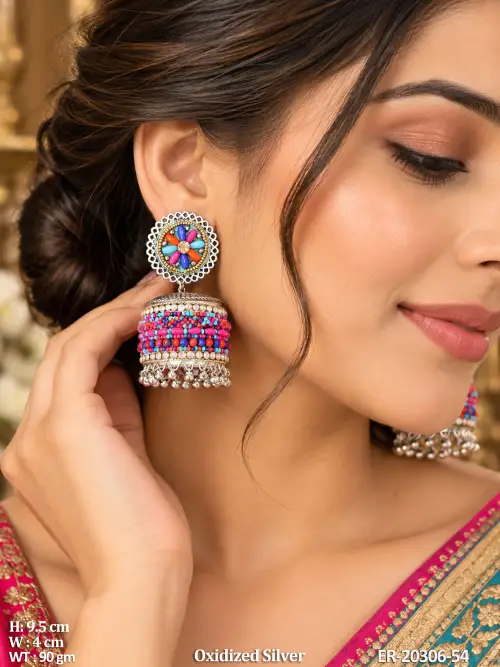
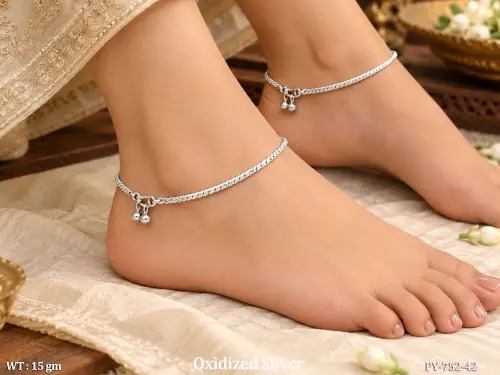
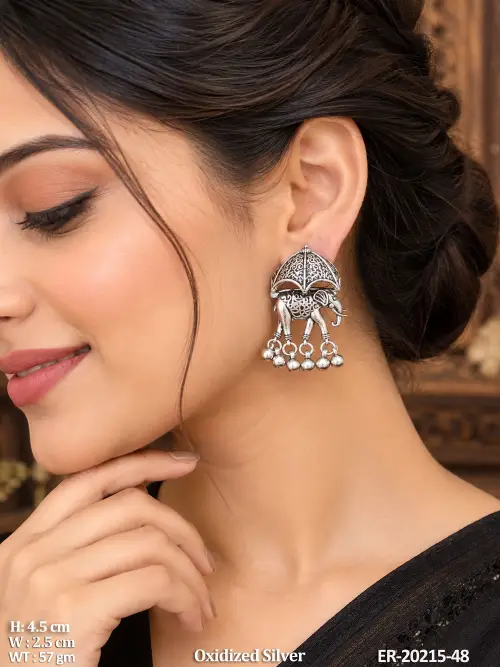
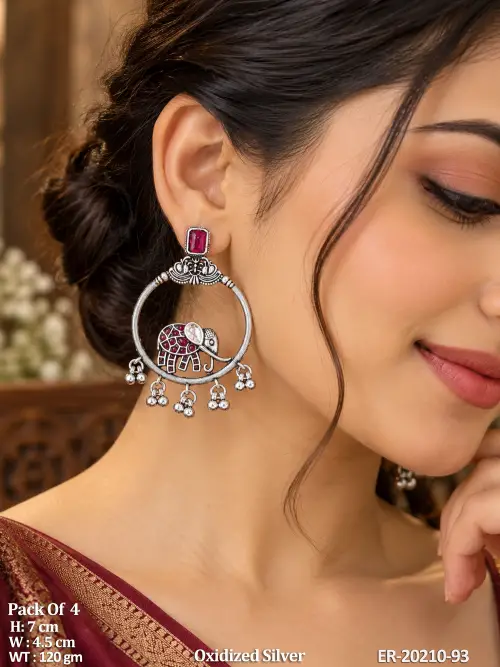
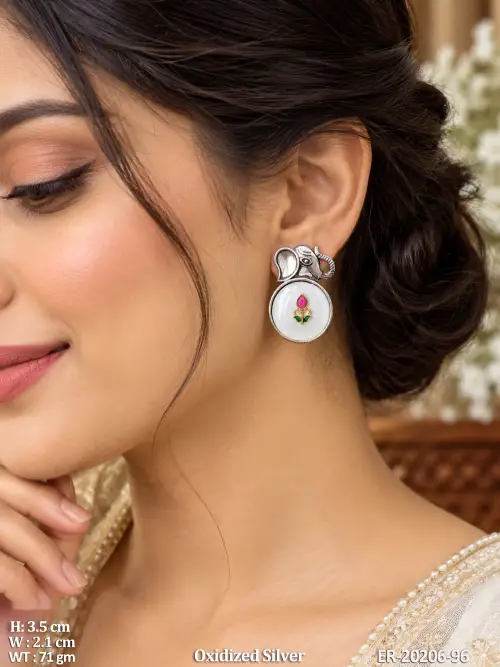
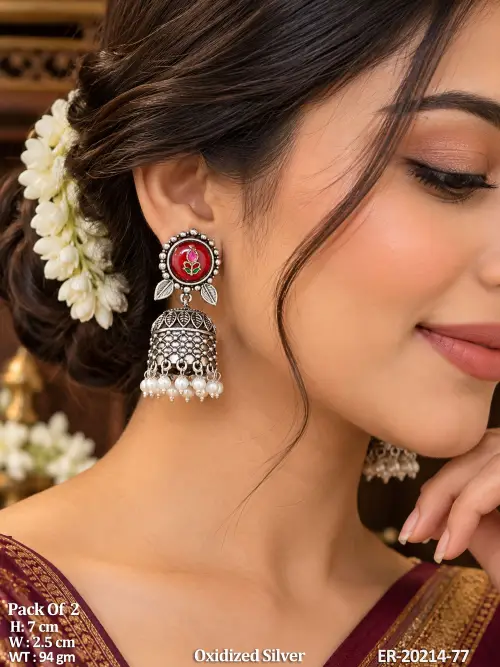
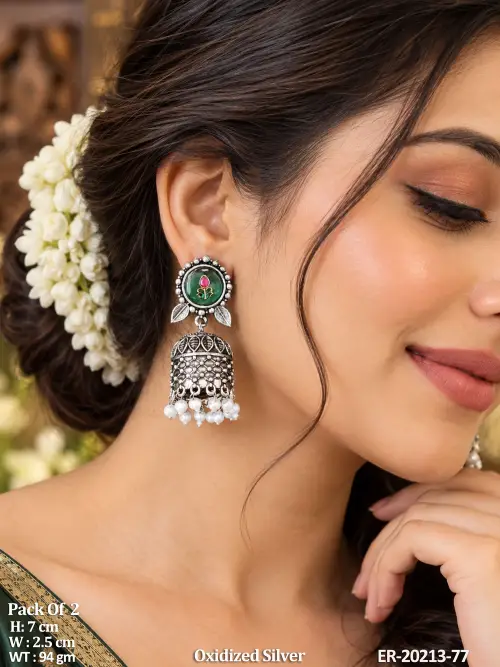
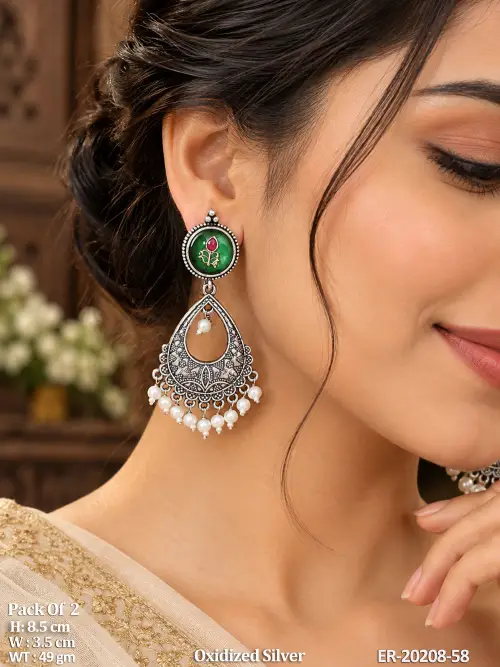
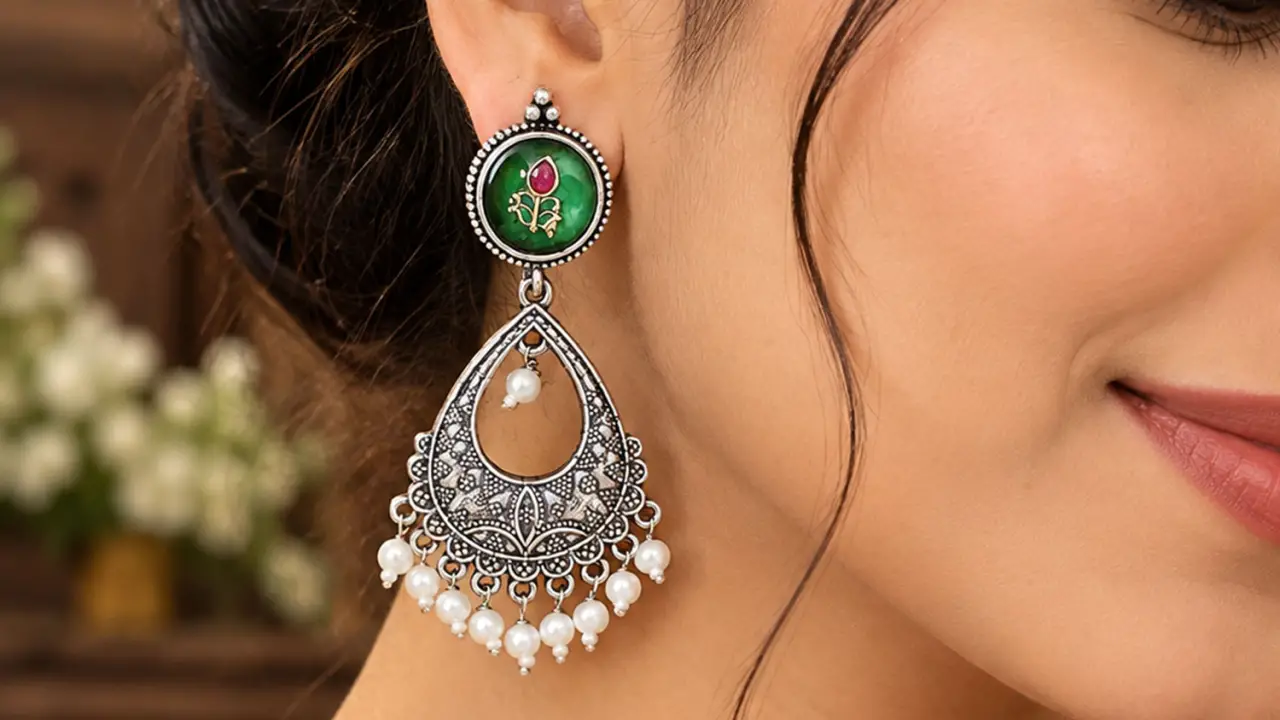
Oxidised jewellery works well with jeans, shirts and dresses when the outfit is plain and one piece leads: a pair of earrings, a ring, a cuff or a…
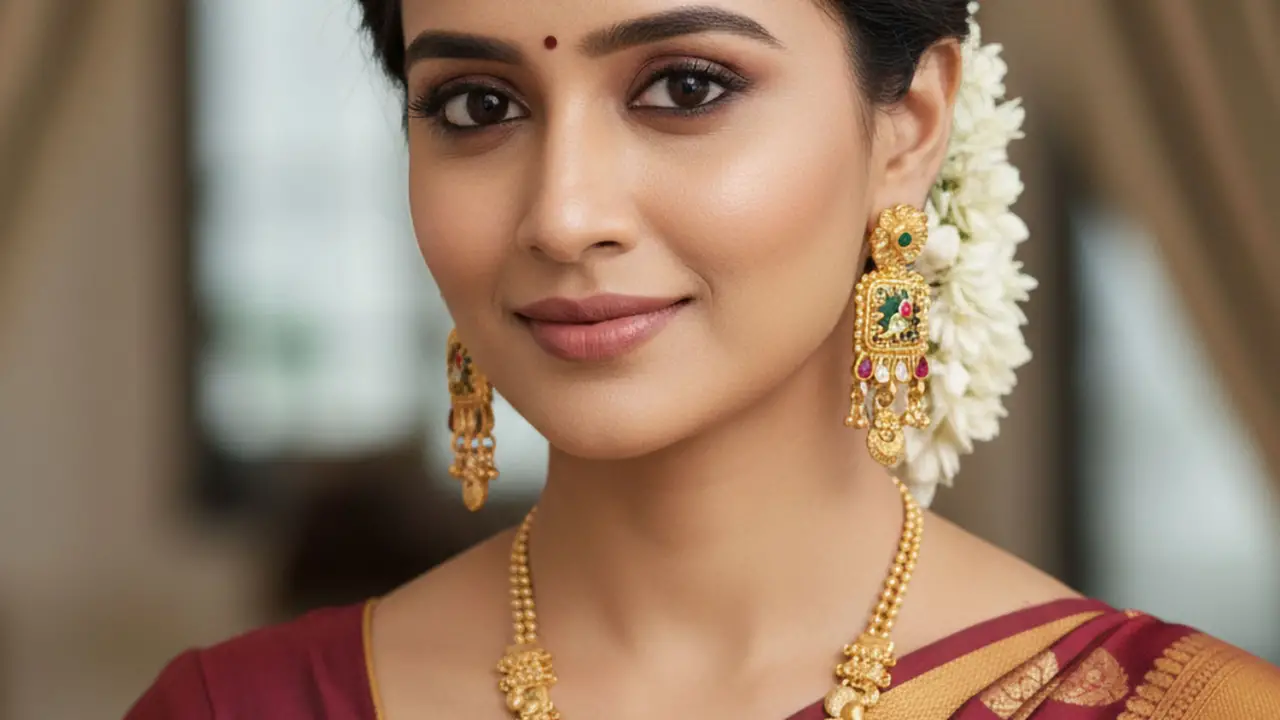
Temple jewellery is a South Indian look built on motifs such as Lakshmi, peacocks and lotus petals. Kemp jewellery is named for its red stones…
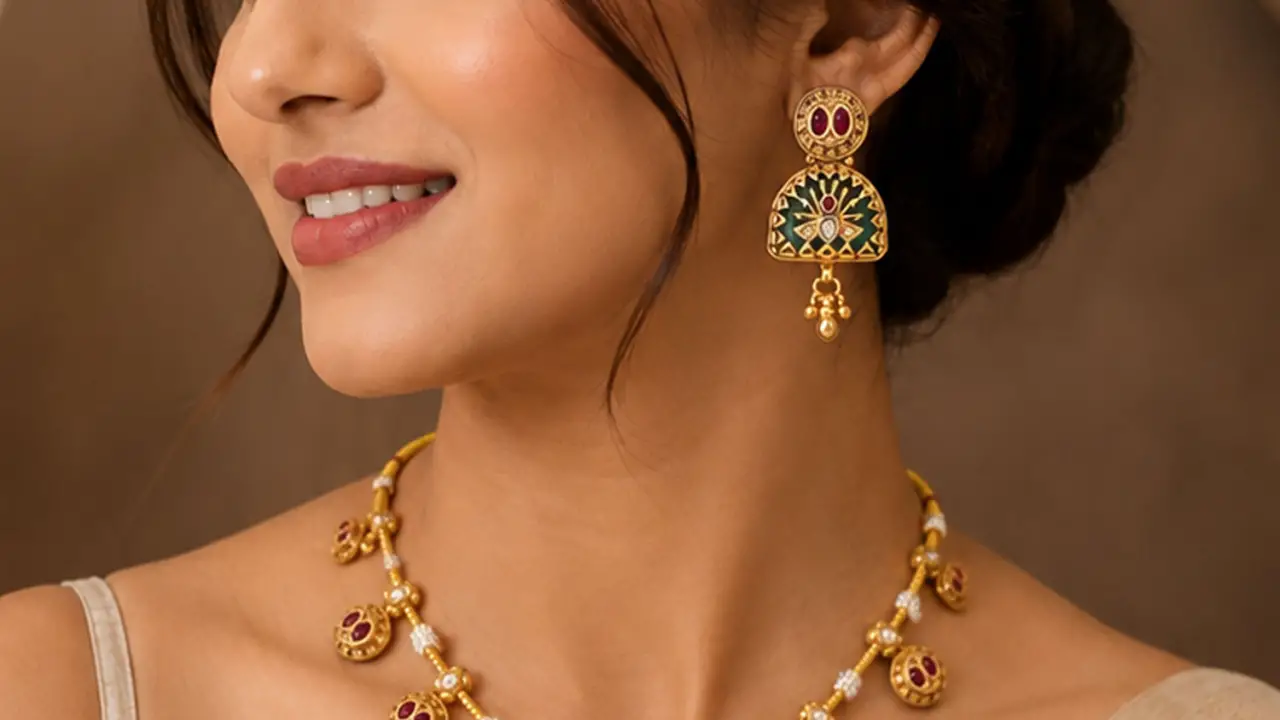
For a green lehenga, wear gold-tone with a warm contrast such as pink or ruby. For blue, choose white-toned stones, pearls and an emerald touch. For…
Oxidised jewellery: jewellery whose metal surface has been given a darkened, blackened finish, usually with the raised parts left lighter, so patterns stand out.
The word names a finish and not a material. Here, the base is a metal alloy with an oxidised surface, and the stones, where present, are artificial. You may also see the spelling oxidized with a z in titles and menus. It means the same thing, and this page uses the Indian English spelling oxidised.
Earrings are the largest group, but the page also carries bangles, payal, finger rings, kada and a smaller number of necklace sets. Use this table to reach the type you need.
| Type | What to expect | Where to go |
|---|---|---|
| Earrings | Studs, jhumka, ear cuffs and multi-pair packs | Oxidised earrings |
| Bangles | Sets of two, four or six, some with stone work | Further down this page |
| Payal | Anklets, some with small bells | Payal |
| Rings | Bold, adjustable-style rings with motifs | Finger rings |
| Kada | Thick single bangles with square or round stones | Kada |
| Necklace sets | A small group of statement necklaces with earrings | Oxidised necklace set |
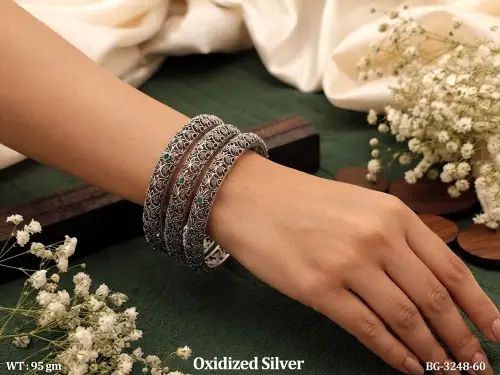
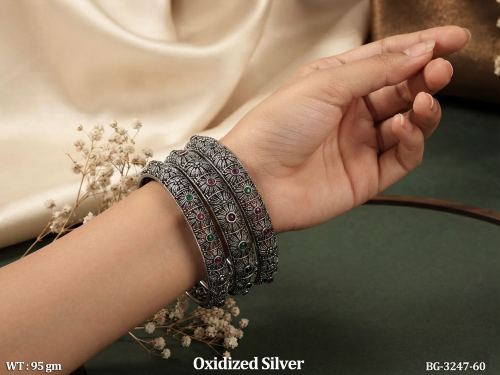
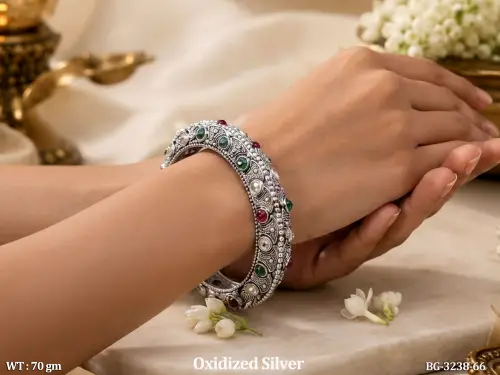
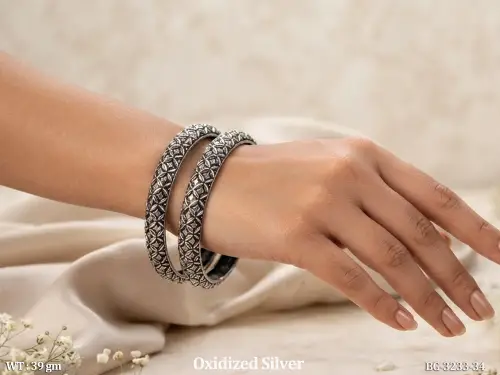
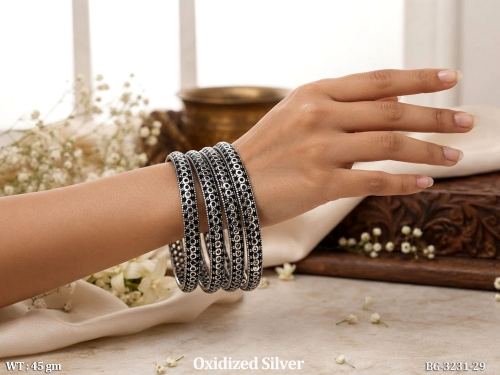
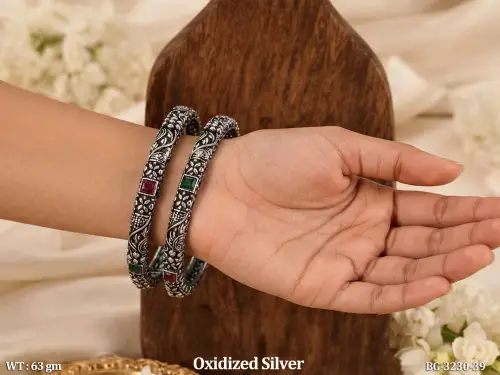
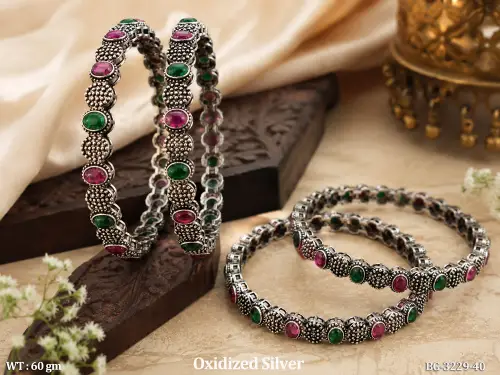
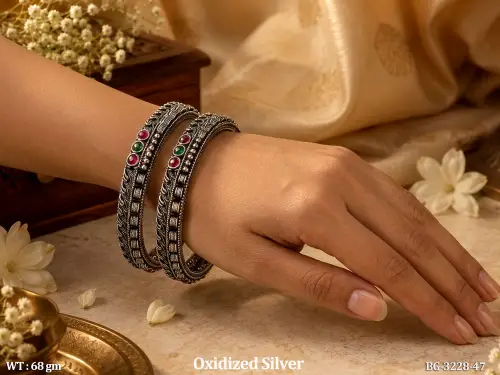
Oxidised bangles are one of the most searched pieces, and the listings here come in sets of two, four or six, with plain bands, carved patterns or stone work. Check the size options on the product page, because a bangle that is too tight is as awkward as one that slides off. Measure a bangle that fits your hand well and compare it with the listing. A set of four or six stacks into a wide, jangling look that suits a kurta or a festive outfit. A single kada makes a quieter statement and sits well with a watch or a thin bracelet. If you mix oxidised bangles with plain glass bangles, keep the finish dark and the stack uneven for a casual look.
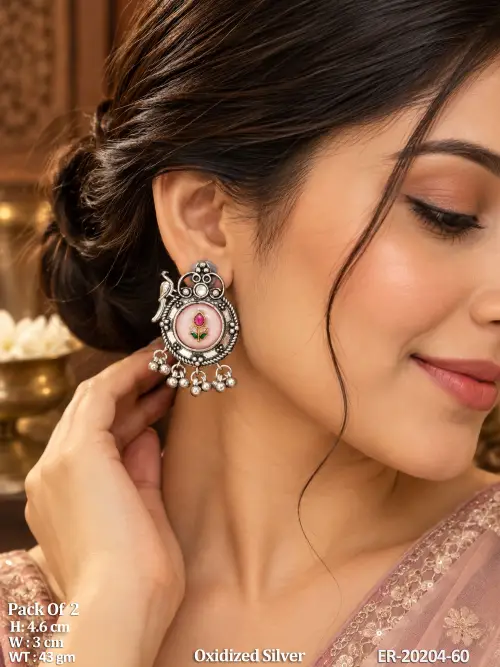
The jhumka is a bell-shaped earring that hangs below the ear, and the oxidised jhumka is the version with a darkened surface and often a stone or floral top. Size matters more than most people expect. A long jhumka reaches the jawline and suits a high neckline or tied-up hair, while a short one works with open hair. Look at the drop length in the photo and the weight where it is printed, because a heavy pair can pull on the ear. Many listings sell several pairs together, so read the title for the pack size.
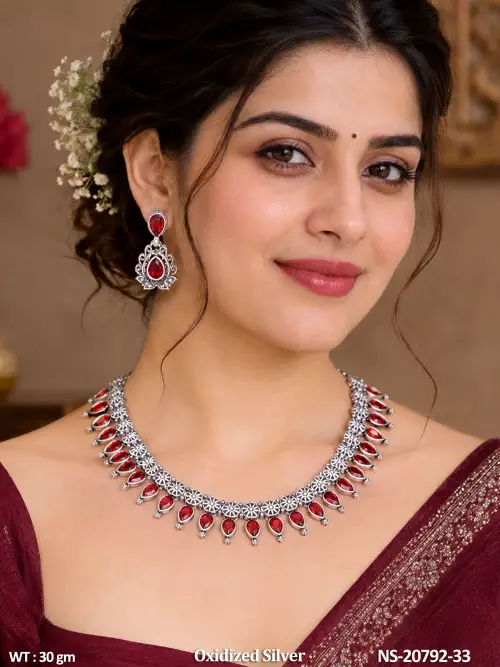
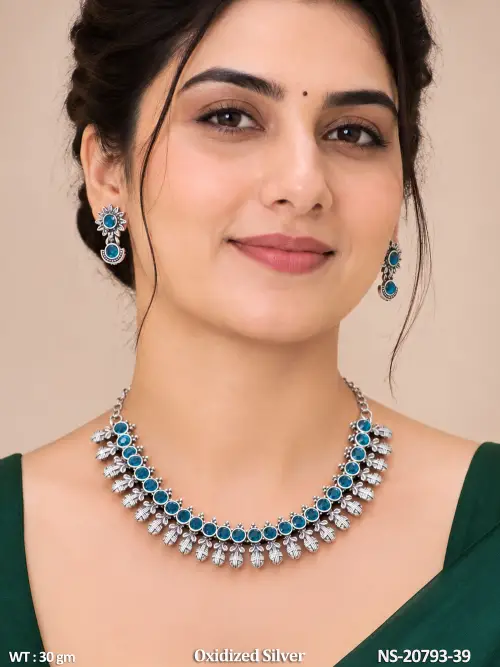
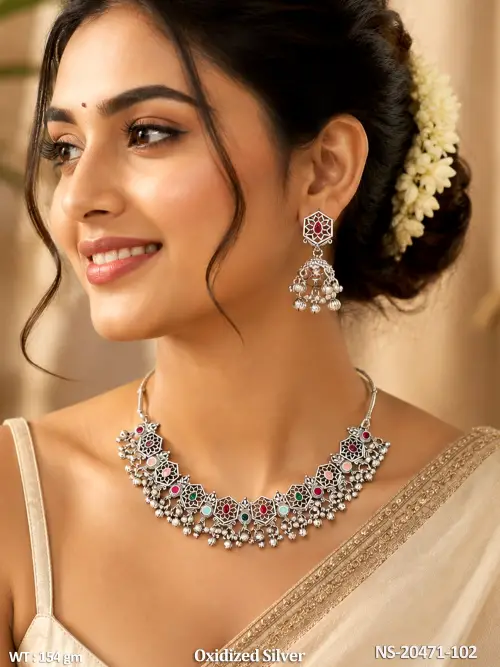
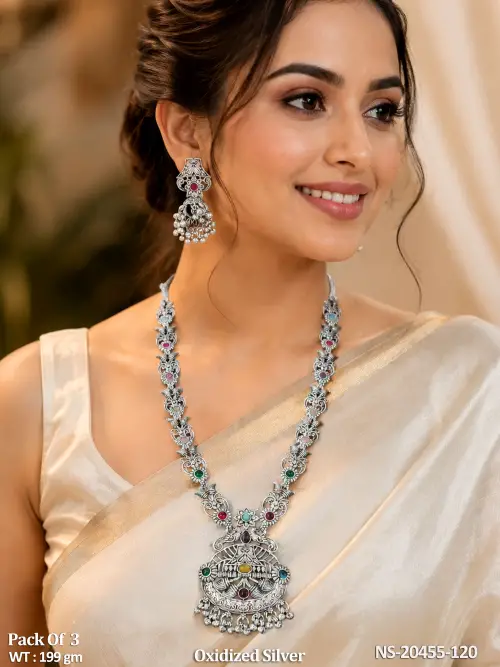
An oxidised jewellery set is a necklace with matching earrings, and a few include a ring or a maang tikka. Because the finish is dark, sets suit simple, solid-colour outfits where the pattern is the focus. Choose a short set for a deep neckline and a long set for a plain one. The group is small compared with earrings and bangles, so browse it with the filters if you are after a full set.
Oxidised pieces are popular for Navratri and garba, because a bold, dark finish looks striking against bright chaniya choli colours and the earrings and bangles are easy to match. They also work for college, work and travel. The table lists a few choices by occasion. These are styling ideas and not advice about comfort during dance.
| Occasion or outfit | A sensible choice |
|---|---|
| Navratri or garba look | Statement jhumka, a stack of bangles and payal |
| College or daily wear | Small studs, a light ring, a thin kada |
| Kurta with jeans | A bold ring and long earrings |
| Saree for a festival | An oxidised necklace set with jhumka |
| Plain western top | One large earring or ear cuff |
The dark finish is strong, so a little goes a long way. A useful rule is one bold piece and two quiet ones. If you wear a big jhumka, keep the neckline bare and the rings small. If you wear a stack of bangles, choose studs. Oxidised pieces also blend well with each other because the finish matches, so a ring, a kada and earrings from different listings can look like one set. Mixing them with brighter stone sets is harder, so keep to the oxidised family when you want a calm look.
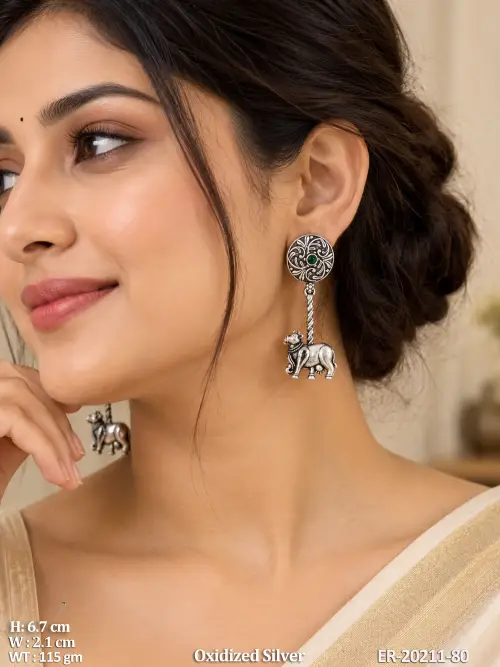
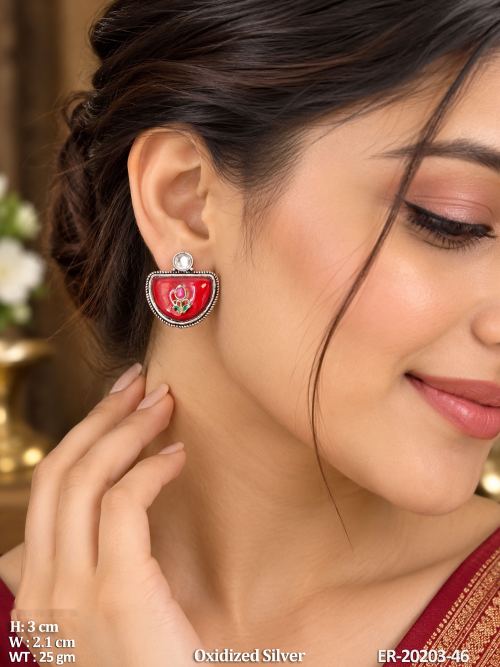
Many oxidised designs are built around nature and animals. Peacocks and birds are common, followed by flowers, leaves, elephants and tortoises. You will also see temple-style motifs, hearts, tassels and small ghungroo bells on payal. Stone-studded designs add coloured or white artificial stones to the dark surface, while others stay purely metal for a simple look. The photo shows how the stones sit, so look closely at the setting.
These words describe different things. Oxidised and antique are both finishes, but oxidised is darker and more blackened, while antique has a warmer, aged-looking tone. Temple and kundan describe a design or a stone setting rather than a surface.
| Style | What the name describes | Where to browse |
|---|---|---|
| Oxidised | A darkened, blackened surface finish | This page |
| Antique | A warmer, aged-looking surface | Antique jewellery |
| Temple | Designs inspired by temple sculpture | Temple jewellery |
| Kundan | Stones set close together in a bold setting | Kundan jewellery |
Shoppers search for oxidised pieces under several other names. Afghani jewellery and tribal jewellery are labels used for bold, chunky designs with discs, coins and bells. We use them only as search words and do not claim the origin of any design. Ear cuffs and ear climbers are earrings that follow the edge of the ear, and each listing shows in its photos how the piece is worn. A payal is an anklet, and a kada is a thick, solid bangle.
Use the filters above the products to narrow by type, and sort by price. Then read each photo and title.
| On the product page | What it tells you |
|---|---|
| Stone-studded in the title | Artificial stones are set into the dark surface |
| Set of 2, 3 or 4 or a pack | How many pieces arrive together |
| Weight in grams, where printed | How light or heavy the piece is |
| Drop length in the photo | How far an earring hangs |
| Product code on the photo | The reference to quote when you contact us |
Keep each piece dry and away from water, sweat, perfume and hair spray, and put it on after you dress. The dark finish can lighten where it rubs against skin or other pieces over time, so wipe gently with a soft dry cloth and avoid scrubbing. Store each piece in a pouch so patterns do not scratch each other. No finish can be promised to stay the same forever.
For other types, visit earrings, bangles and bracelets. Questions about a design? Contact us with the product code, read about OyeKudiye or check the shipping policy. Orders outside India are handled on request.
Oxidised jewellery has a dark, dusky finish, and a dark surface reacts strongly to light. The same earring can look charcoal in one photo and noticeably lighter at the edges in another. That comes from the finish and does not mean you are looking at a different product.
Say you are comparing two pairs of earrings in this finish that look nearly the same on screen. Open every photo of each pair, not only the first. Look at the raised parts, where the finish shows its lighter tone, and at the recesses, where it stays deep.
The colour field on a product page names the stones, so read it together with the photos instead of relying on one image. A phone screen set to a bright mode will also lift the dark tones and flatten the detail you are trying to judge.
If you plan an oxidised jewellery set, check the necklace and the earrings side by side. For a gentle first piece, a pair from Oxidized Earring is an easy start.
Oxidised jewellery has a darkened, blackened finish on the metal, usually with the raised parts left lighter so patterns show. The pieces here are artificial jewellery made in India on a metal alloy base, with artificial stones on some designs.
Yes. Oxidised is the Indian English spelling and oxidized is the US spelling. Some menus and titles use the z version. Both describe the same darkened finish, and this page lists them together, so you can use either word when you search the site.
It is usually a necklace with matching earrings in one dark-finish design, and some add a ring or a tikka. The group is smaller than earrings and bangles, so use the filters and read the photo to see what is included in each set.
Oxidised bangles are bangles with a darkened finish, in plain, carved or stone-set designs. The listings here come in sets of two, four or six, and as thick single kada. Check the size options on each product page before choosing.
Measure a bangle that fits your hand well and compare it with the size options on the product page. A bangle should pass over the widest part of the hand without forcing. If you are unsure, contact us with the product code for help.
It is a bell-shaped earring with a darkened finish, often with a stone, flower or bird at the top. Check the drop length in the photo and the printed weight, and read the title for the pack size, as many listings sell several pairs together.
Statement jhumka, a stack of bangles and payal are the usual choices, because the dark finish stands out against bright chaniya choli colours. Pick lighter pieces if you will be dancing for hours, and check the printed weight. This is styling advice only.
Oxidised pieces suit kurtas, sarees, chaniya choli and plain western tops. Choose one bold piece, such as long earrings or a ring, and keep the other jewellery small so the outfit does not look crowded. Plain fabrics let the pattern show off the pattern, while heavy prints compete with it.
No. Both are finishes, but oxidised is darker and more blackened, while antique has a warmer, aged-looking tone. You can browse antique jewellery for the second look, and the pieces on this page show the darker one. Compare the photos of both finishes in daylight if you are unsure which tone you prefer.
They are search labels shoppers use for bold, chunky designs with discs, coins and bells. We use them only as keywords and do not state the origin of any design. Browse the page and read each photo to find a look you like.
Yes. Oxidised payal come in bell and plain styles, and oxidised finger rings come in bold motif designs. Open the payal or finger rings page for the full range and check the size or adjustment note on each product page.
The dark finish can lighten where it rubs against skin or other pieces over time. Keep each piece dry, away from perfume and water, and wipe gently with a soft dry cloth. No finish can be promised to stay the same forever.
Store each piece in a separate pouch or a lined box so patterns, stones and bells do not scratch each other. Put jewellery on after dressing and take it off before bed. Keep it dry and away from water and perfume.
Open the product page for photos and details, or contact us with the product code printed on the photo, and we will help you compare designs, sizes and finishes before you choose. International orders are handled on request through the contact page.
SIGN IN OR JOIN
Enter your mobile number or email. We will send a one-time code, no password needed.
You will be asked to accept our Terms and Privacy Policy when you create an account.
VERIFY
We sent a 6-digit code to .
ONE MORE STEP