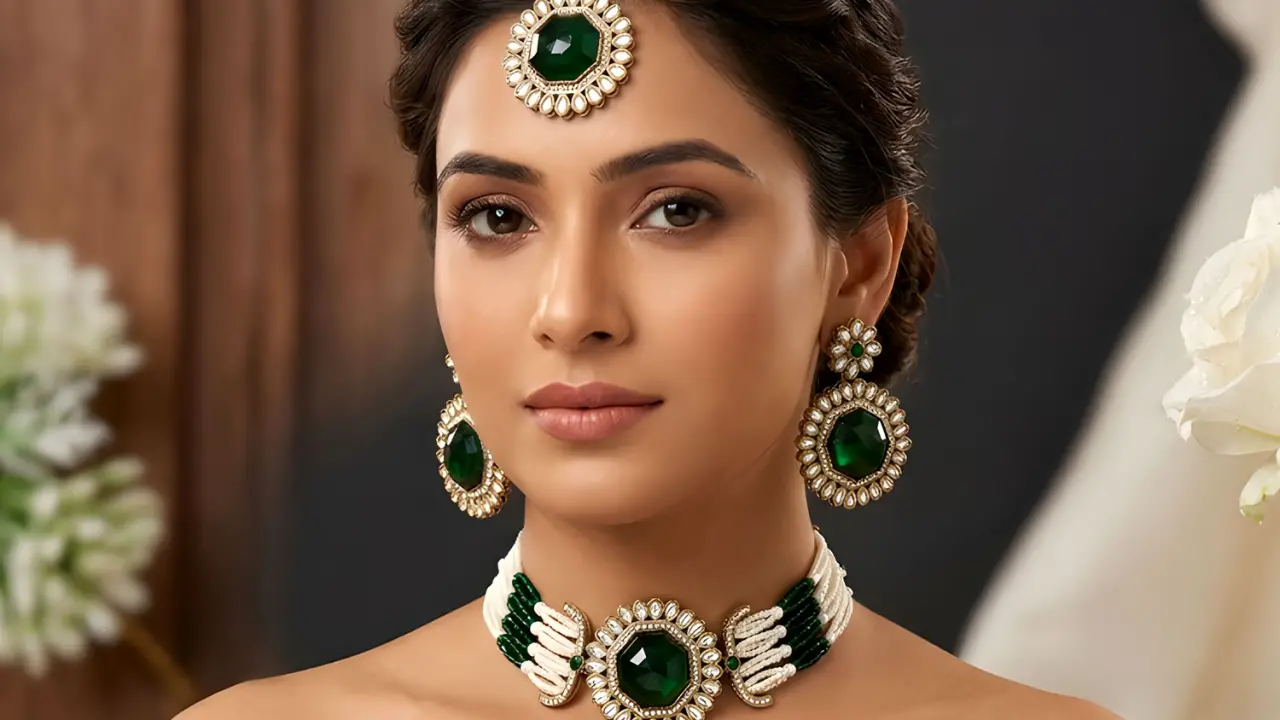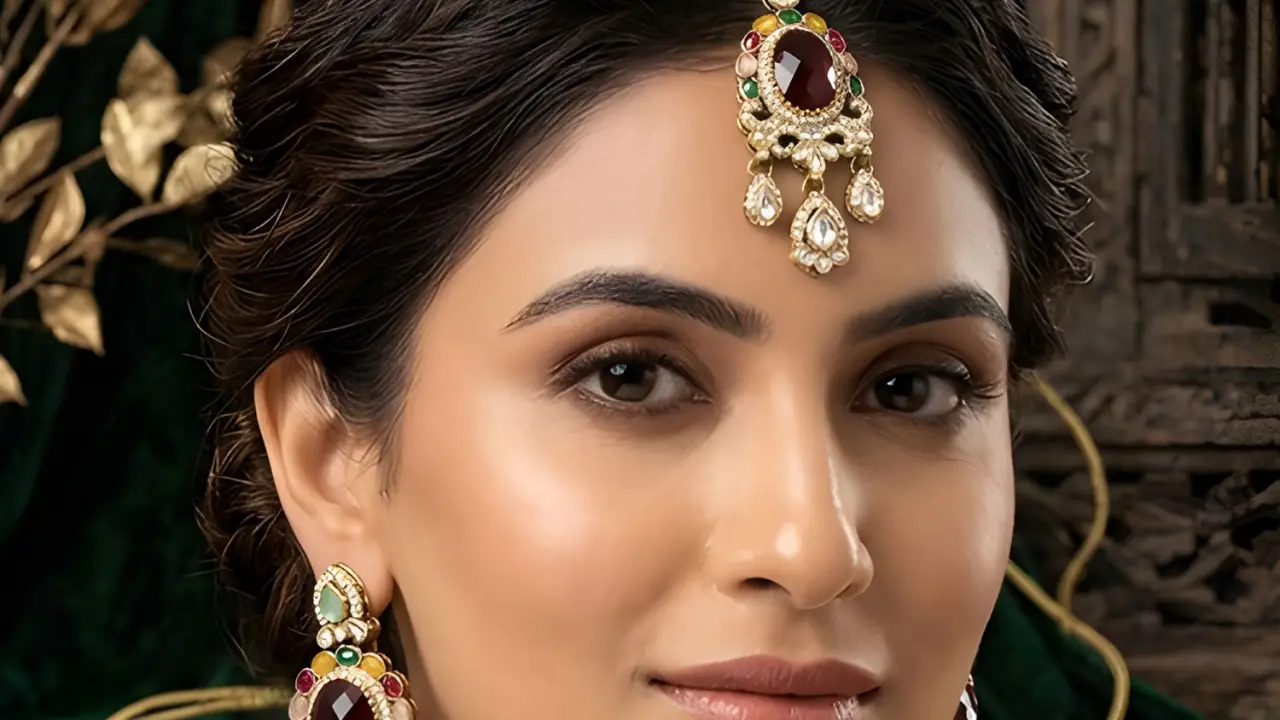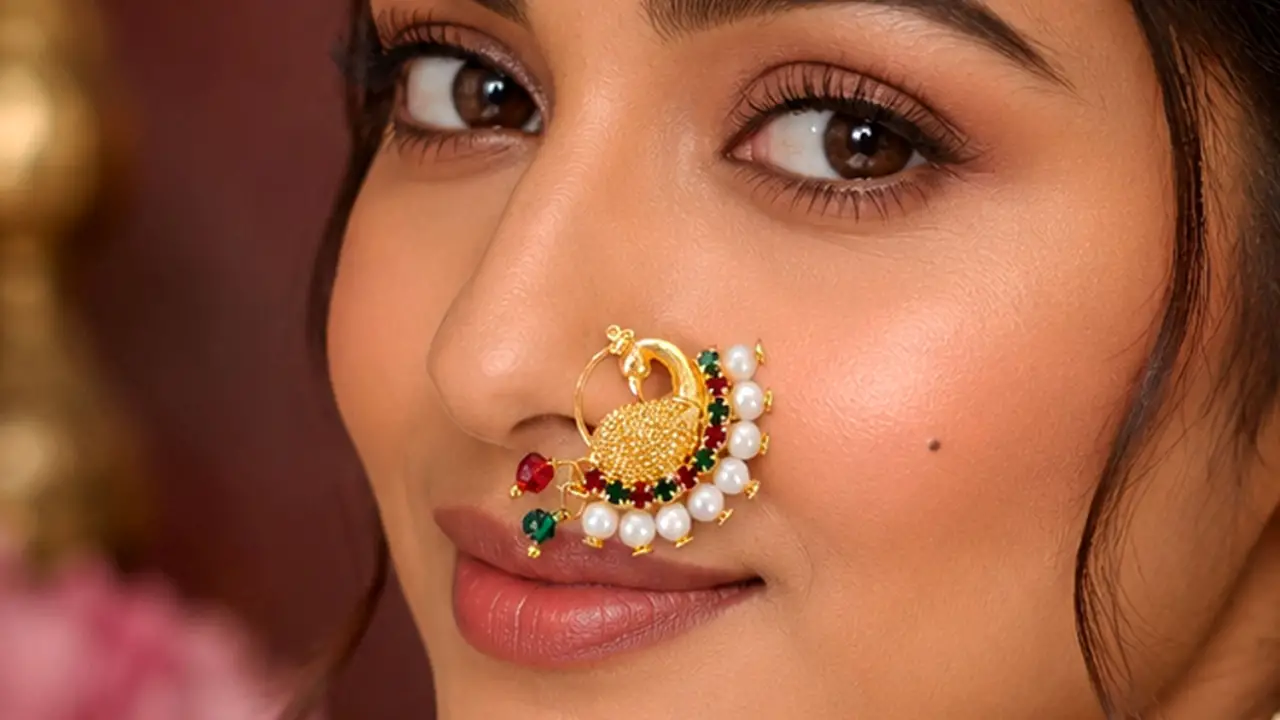
The wedding is three weeks away, the lehenga is stitched, and the nath is the one thing you have always wanted to wear. Your nose has never been pierced, and you do not plan to do it for a single function. Or it is your ears, and a jhumka is on your mind while the lobes are bare.
This guide explains how to wear a nath without piercing, how the different fittings hold, which one suits which piece, and how to test a piece at home before the big day. The nose and ear sections each stand on their own.
One thing to say early. The fitting decides whether this works, and it should be stated on the product page. If a listing does not say how a piece holds on, ask before you order. The pieces linked here are styles to pair with your outfit, so check the fitting on each page first.
Short answer
Yes. A nath can be worn without a nose piercing if it is a press-on (clip-on) design that grips the nostril edge, and jhumkas can be worn without ear piercing if they have clip-on, magnetic or screw-back fittings. Choose light pieces, try them at home first and keep event wear to a few hours.
Key takeaways
- A press-on nath rests on the nostril edge instead of passing through it, so the fitting matters more than the design.
- Light pieces stay put. Heavy jhumkas and big bridal naths need a support chain (sahara) tied into the hair.
- Clip-on, magnetic and screw-back earrings each hold differently, so pick by how long you will wear them.
- Do a home test of at least an hour before the event, and keep a spare plan for the day.
- If you decide to pierce later, ask a professional piercer, not a salon shortcut or a friend.
Can you wear a nath without a nose piercing?
Yes, with the right fitting. A traditional nath is made for a pierced nostril and hangs from a ring or a stud that passes through it. A press-on nath is built differently: a small curved clip or a spring-style grip holds the piece against the edge of the nostril, so nothing goes through the skin.
Press-on nath (also called a pressing nose ring or clip-on nath) is a nose ring with a small clip or grip that rests on the nostril edge instead of passing through a piercing.
Because the piece depends on a light grip, size matters. A small Maharashtrian nath with a few pearls sits comfortably for hours. A very large bridal nath is heavy, and the grip alone will not carry it, which is where the chain comes in.
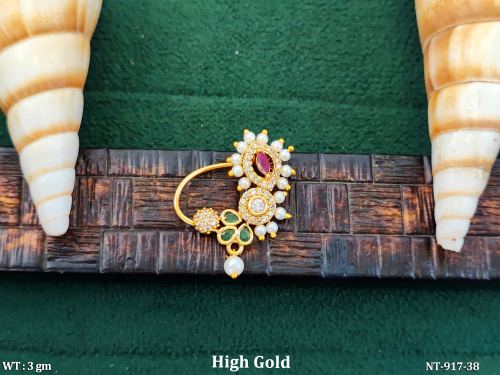
The four fittings: press-on, clip-on, magnetic and screw-back
Almost every piercing-free piece uses one of four ways of holding on. Knowing them helps you read a product page and ask the right question.
| Fitting | How it holds | Best for | Watch out for |
|---|---|---|---|
| Press-on (pressing) | A small curved grip rests on the nostril edge | Nath and nose pins for a few hours | Too tight pinches, too loose slips |
| Clip-on | A padded or plain clip closes around the earlobe | Jhumkas and earrings for a function | Weight pulls the clip down the lobe |
| Magnetic | Two small magnets hold from either side of the lobe or nostril | Light studs and small drops | Heavy drops can swing the magnet off |
| Screw-back | A tiny screw tightens a clip against the lobe | Longer wear, more weight | Over-tightening is uncomfortable |
The lighter the piece, the more fittings will hold it. As weight goes up, a firmer grip and a support chain become necessary. Screw-back designs are the most adjustable, which is why people reach for them for heavier jhumkas.
How to keep a heavy nath from falling
This is the question brides ask most, and the answer is rarely the clip itself. A heavy nath stays on when its weight is shared with something else. In the traditional Maharashtrian style, a fine chain runs from the nath over the cheek to the hair near the ear, where it is pinned. That chain, often called a sahara, takes the weight so the nostril does not.
Picture a bride-side cousin who wants a wide, pearl-heavy nath for the wedding day. Her hair is in a bun, so she anchors the chain with two bobby pins behind the ear, hidden under a loose strand. The nath looks as if it floats, and the clip only has to hold its position, not its weight. If she wore her hair open, she would pin the chain into a small plait first.
A few extra habits help:
- Choose the lighter nath. Of two designs you like, the lighter one stays put longer.
- Pin before you pose. Fix the chain after the hair and dupatta are done, so nothing tugs it.
- Do not stick it on. We do not recommend using glue or tape on skin to hold any jewellery.
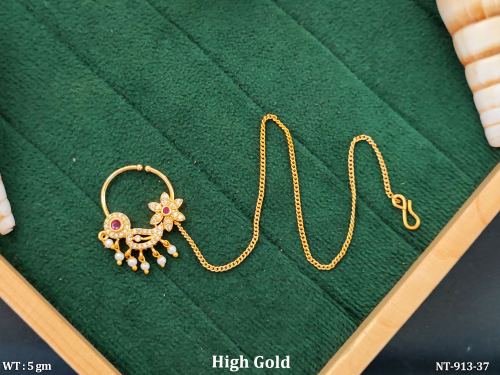
How to put on a press-on nath in six steps
- Finish hair and makeup first.
Oil and powder on the nostril area make a clip slip, so wipe the skin clean and dry before the nath goes on.
- Open the grip slightly.
If the clip has a spring or a screw, loosen it a little. Do not force a tight clip open, because it can bend out of shape.
- Place it on the nostril edge.
Set the curved part on the side of the nostril where a piercing would normally be, and look in the mirror to check the angle.
- Close the grip gently.
It should feel snug and steady. If it pinches, take it off and adjust it. Never push through discomfort.
- Pin the chain.
Take the chain over the cheek to the hair above the ear and fix it with two small pins so the weight is shared.
- Do a quick movement test.
Turn your head, smile, and lift your dupatta. If the nath shifts, repin the chain.
Nose pins and everyday nose jewellery without piercing
A small nose pin is the lightest option and the easiest to try. Press-on and magnetic versions are the common ones. They suit a festival evening or a photo, and they are less suited to a full day of work, because the grip loosens as you talk, eat and move.
For a nose pin you wear all day, a piercing is what holds it, and that is a personal decision. If you are thinking about it, ask a professional piercer. The Association of Professional Piercers has a member locator and aftercare guides on its website.
Can you wear a jhumka without ear piercing?
You can, as long as the jhumka has a clip-on, magnetic or screw-back fitting. A jhumka is a bell-shaped drop, and the bell carries weight at the bottom of the earring. That weight is what pulls on a clip, so the right question to ask is not "will it fit" but "how heavy is it".
Consider a friend of the bride who has never pierced her ears. She picks a medium jhumka with a screw-back clip for the sangeet, and she wears it for three hours. She also keeps a small lobe pad, a soft silicone dot sold with many clip-ons, to spread the pressure. She would not choose a long chandbali with a large bell, because the extra length is more likely to tug.
| Earring style | Weight feel | Better fitting | Good for |
|---|---|---|---|
| Small stud or tops | Very light | Magnetic or clip-on | Daily wear, office |
| Medium jhumka | Light to medium | Screw-back or clip-on | Festive evenings, sangeet |
| Chandbali or large jhumka | Medium to heavy | Screw-back with a support chain | Short wedding functions |
| Ear-cuff style | Light | Grips the ear curve | Party looks |

Clip-on earrings are not meant for all-day wear. The pressure sits on one spot, so take them off between the ceremony and the dinner and put them back on for photos.
Earrings without piercing for everyday looks
For daily wear, magnetic and clip-on studs are the easiest, and a small stud with a soft clip suits a family lunch.
When you shop, check three things on the product page: how the earring fastens, how heavy it is, and whether there is a pad for comfort. If the page does not say, contact us and we will tell you what we know about the piece before you order.
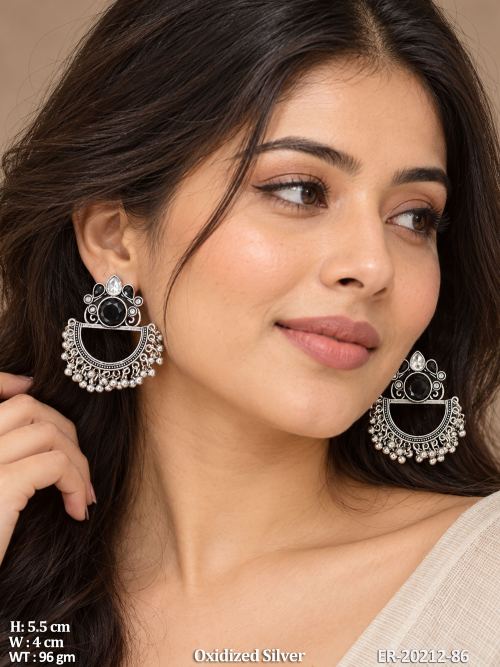
Do not forget the maang tikka and the hair
A maang tikka needs no piercing at all. A hook or a pin holds it in your hair, which makes it a natural companion for a press-on nath. A tikka that echoes the nath, with the same stone colour or pearls, ties the face together.
A nath, a tikka and big jhumkas together can compete, so choose a hero piece. If the nath is the star, keep the tikka slim and the earrings small.
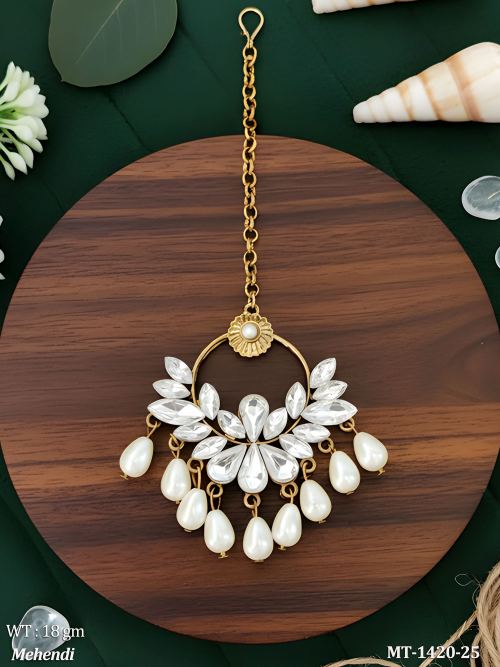
The home test: do this a week before the event
Do not meet a new fitting for the first time on the wedding morning. A short home test will tell you almost everything you need.
- Put the piece on in front of a mirror, exactly as you plan to wear it, with the chain pinned.
- Wear it for an hour of ordinary things: walk, sit, talk, laugh and take a selfie.
- Check for slipping, pinching and marks. A light mark that fades is common, but sharp discomfort is a sign the fit is wrong.
- Try it with your dupatta, which can catch on a nath.
- Keep a backup, such as a smaller pair of earrings in your bag.
If anything feels wrong, do not wear it. For any concern about your skin or ears, speak to a doctor.
Shop the styles to pair
If you are planning a bridal or festive look, these are the places to begin. Check the fitting on each product page, and ask us if it is not clear.
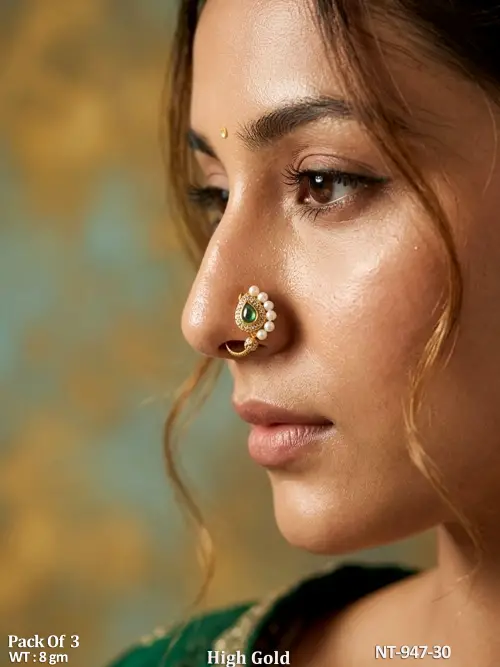
If you are still deciding the outfit first, our guide to the Karwa Chauth look shows how a tikka, earrings and necklace are balanced against a saree, a lehenga or a suit. For international buyers, shipping is available on request, so please write to us.
Frequently asked questions
Can you wear a nath without piercing?
Yes. A press-on nath has a small clip or grip that rests on the nostril edge, so it needs no piercing. Choose a light design, check that the fitting is stated on the product page, and test it at home for an hour before the day.
Will a clip-on nath hurt or fall off?
It should feel snug, not sharp. A clip that pinches is the wrong size or too tight, so take it off and adjust it. A light nath rarely falls off, while a heavy one needs a chain pinned into the hair to share the weight.
How do I stop a heavy nath from falling?
Share its weight. Run the chain over the cheek and pin it into the hair above the ear with two small pins, or into a plait if your hair is open. Wipe the skin dry first, and avoid touching the nath during the function.
Can I wear a jhumka without ear piercing?
Yes, if the jhumka has a clip-on, magnetic or screw-back fitting. Medium jhumkas work best. Large, long jhumkas pull on a clip, so keep them for short functions, add a lobe pad for comfort, and take them off for a rest between events.
What is the difference between press-on, magnetic and screw-back fittings?
A press-on grip rests on the nostril edge. A magnetic fitting uses two small magnets on either side of the lobe or nostril. A screw-back fitting tightens a clip against the lobe with a tiny screw, which makes it the easiest to adjust for heavier earrings.
How long can I wear clip-on earrings or a press-on nath?
Plan for a few hours at a time. Pressure sits on one spot, so most people want a break after a short while. Take the pieces off between the ceremony and the dinner if you can, and remove them at once if they feel uncomfortable.
Can children or first-timers wear clip-on jewellery?
Many first-timers do, for short functions. Pick very light pieces with a soft pad and supervise young children, since small parts can come loose. If you have any concern about skin or ears, ask a doctor before wearing anything new.
Can I get my nose pierced later and use the same nath?
That depends on the design. A press-on nath has a clip, not a stem, so it usually cannot be worn through a piercing. If you decide to pierce, speak to a professional piercer first and choose a nose piece suited to a new piercing.
Which nath suits a round face?
Many people with a round face like a medium nath with a short drop, because it adds a little length. Very wide naths can look broader. These are leanings, not rules, so try the piece in a mirror under the same light as your photographs.
Can I wear a nath and a maang tikka together?
Yes. A tikka needs no piercing and goes well with a nath. Keep one hero piece. If the nath is the star, choose a slim tikka and small earrings, and echo one stone colour across all three so the face looks balanced.
Is artificial jewellery a good choice for piercing-free styles?
Artificial jewellery comes in many designs, so you can find light pieces to try for an event. What matters is the fitting and the weight, not the material. Always check the product page for how it holds, and ask us if the page does not say.