You have a saree with a heavy border, a plain gold-tone blouse and a kamarpatta in the box, and no clear idea of where the belt goes or when to put it on. People tend to guess, and the usual results are a belt that rides up, pleats that shift, or a clasp that digs in by the time the photographs start.
This guide explains how to wear a kamarpatta with a saree and a lehenga: where it sits, the order of dressing, how to choose a style, how to check the size, and a few ways to wear it with other outfits. It is about the jewellery, and not about medical hip belts, which are a different thing.
Short answer
Drape the saree or settle the lehenga first, pin the pleats, and put the kamarpatta on last, over the fabric at your natural waist, snug enough to hold the pleats but loose enough to sit down. Match its weight to the fabric and keep the other jewellery in balance.
Key takeaways
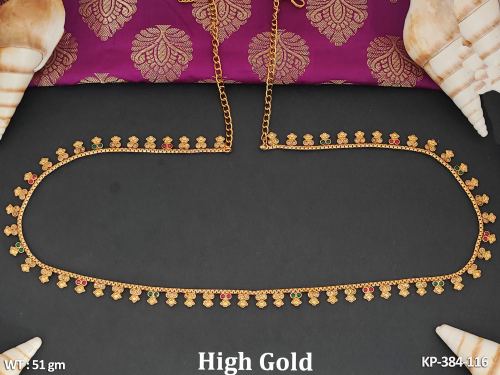
- A kamarpatta is a waist or hip ornament, also called a kamarbandh, and it is worn over the outfit, not under it.
- Dress first, pin the pleats and pallu, then fasten the belt as the last step.
- Sources place it at the natural waist, and with a low-slung lehenga some people wear it lower on the hips, so try both in a mirror.
- A heavy saree suits a bold belt, and a light fabric suits a slim chain or a pearl belt.
- There is no standard size, so measure with a string, add ease and check the product page.
What a kamarpatta is
The kamarbandh has long been worn in India to accentuate the waist and add one more layer of decoration to the outfit, and fashion magazines have recently been showing it again, in traditional and relaxed forms alike. Because it sits at the centre of the body, it is a good choice when you want the outfit to look finished from the front and the back.
Where it sits: waist or hips?
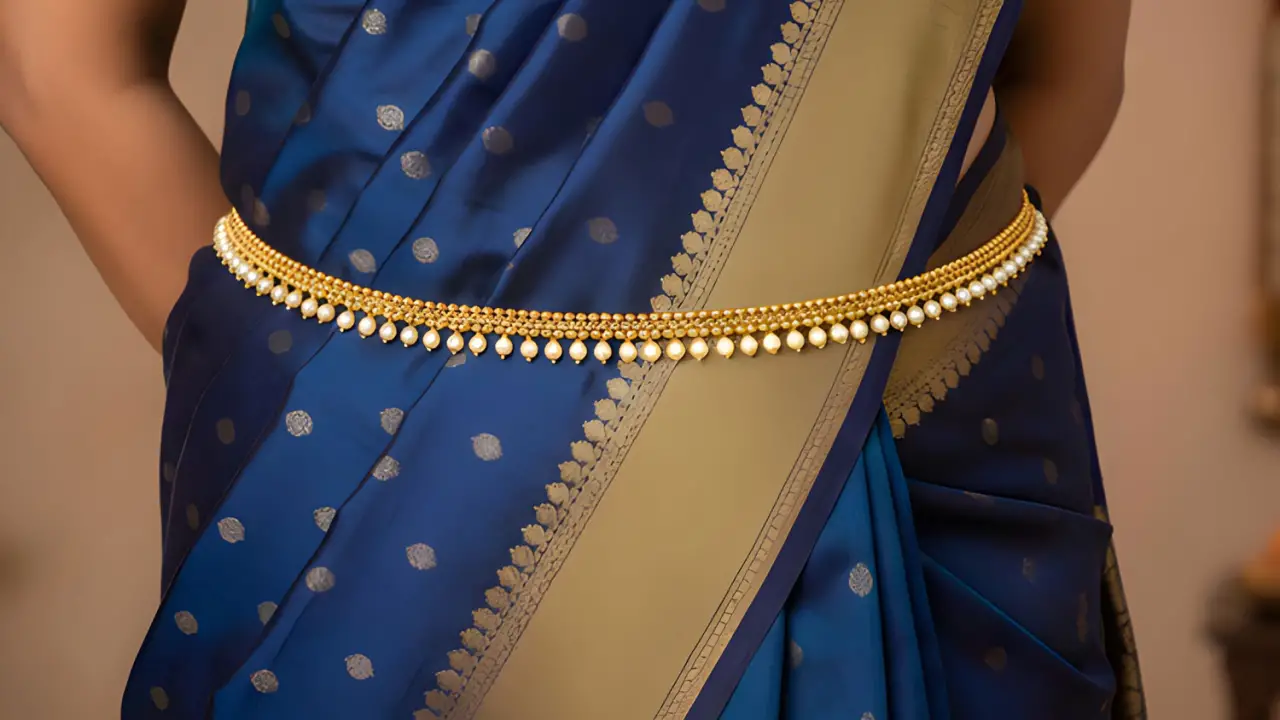
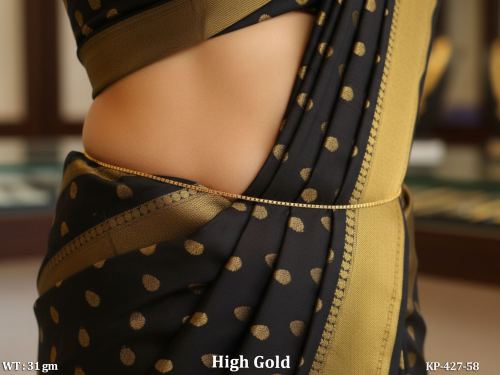
The guides we read place the belt at the natural waist, over the pleats, and not on the hips. That is the usual spot with a saree, because it defines the waist and keeps the pleats structured. Our category is called hip belt, and with some lehengas, especially those worn low, the belt can sit lower on the hips over the skirt's waistband.
So the answer depends on your outfit. Stand in front of a mirror with the belt held at the natural waist and then a little lower, and pick the place where it sits flat and does not slide. If it keeps moving, check the fit and the tightness before you change the position.
How to wear a kamarpatta with a saree
- Drape the saree completely first.
Tuck the pleats into the petticoat, bring the pallu over the shoulder and set it the way you want it.
- Pin the pleats and the pallu.
Add small pins at the waist so nothing shifts when the belt goes on and when you move.
- Fasten the belt over the fabric.
Wrap it round the waist, over the pleats and the pallu, and close the clasp at the back or side.
- Set it flat and adjust the fit.
Make it snug enough to stay put and loose enough to breathe and sit. Turn the clasp to the side so it does not catch on the blouse.
- Do a sit, bend and walk test.
Sit, bend slightly and take a few steps. If the belt rides up or pinches, loosen it or move it.
Put the belt on last because anything you do afterwards can snag it. If you add a belt before pinning the pallu, you may need to undo it to fix the drape.
Match the belt to the saree
| Saree or fabric | What tends to work |
|---|---|
| Chiffon, georgette, crepe | A slim chain or a light pearl belt, because these flowing fabrics hold a belt well and need little weight |
| Cotton and linen | A simple chain, or a slim antique-look belt for a dressier day |
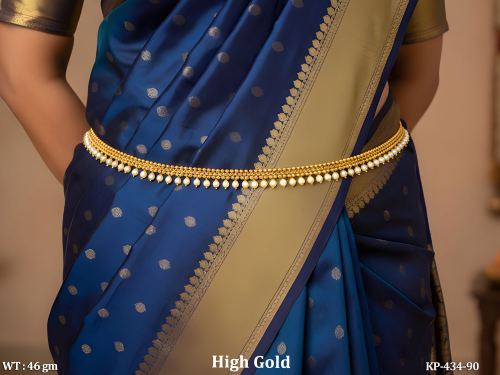
| Heavy silk or a rich border | A bolder, wider belt that matches the richness, with the other jewellery kept minimal. Stiff silk can crumple under a tight belt, so test the fit first |
| Pleated or lehenga-style drape | A belt that sits tightly over the pleats and hides the tuck line |
| Net or very sheer fabric | A light belt, fastened loosely, so the net is not dragged or caught |
For the fabric side of the choice, our guide to jewellery for cotton, georgette, organza and net sarees goes through each cloth in detail, and the colour guide helps you pick the metal tone and stones.
How to wear a kamarpatta with a lehenga
A lehenga has a waistband where the skirt is tied, and the kamarpatta goes over it. A belt worn tightly there hides the waistband and the tie, and it can also hold the pleats of the dupatta if you drape it in a lehenga style. Pin the dupatta first, then add the belt.
With a short blouse, the belt sits between the blouse hem and the skirt, so choose a width that fits that gap. With a long blouse or a jacket, a wider belt can go over the top. If your skirt sits low, the belt may be more comfortable lower on the hips, over the waistband.
Keep the rest of the jewellery in proportion. A wide, ornate belt calls for lighter earrings and a smaller necklace, and our guide to necklaces for different necklines shows how to match the neck. If you are a guest and not the bride, see what jewellery to wear as an Indian wedding guest.
Choosing the style
| Style | Look | Good with |
|---|---|---|
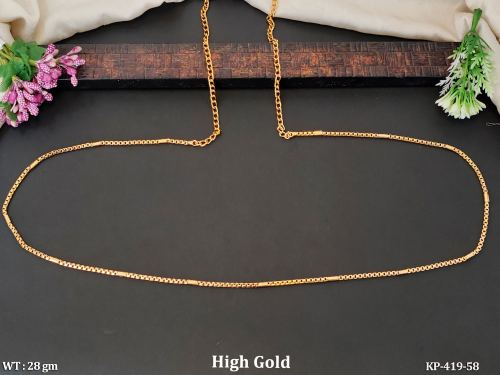
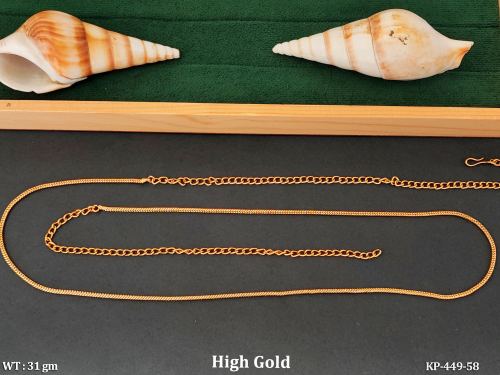
| Slim chain | A thin line of metal at the waist | Light sarees, daily wear, and a western top over jeans |
| Beaded or pearl belt | Soft, with a gentle drop of beads | Pastel and silk sarees, festive wear |
| Antique-look wide belt | Bold, with detailed motifs | Heavy sarees, bridal and festive lehengas |
| Stone-set belt | Shining, more formal | Evening wear and weddings |
Match the metal tone to the rest of your jewellery. If your blouse border or your necklace is gold-tone, the belt should be too. If the saree has a bold border, pick a belt that echoes its pattern or stays quieter than it.
Size and fit, with no standard chart
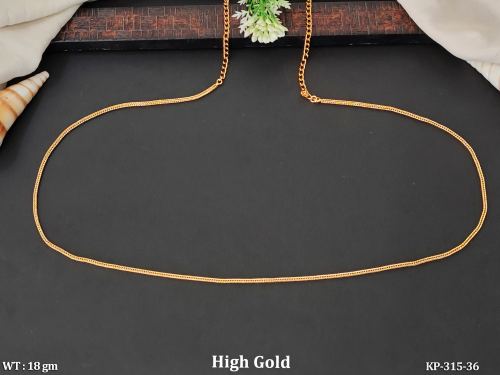
We found no standard size chart for waist and hip belts, and our product pages do not always state a length. That makes measuring more important. Use a string, as you would for a ring or a necklace.
- Measure where the belt will sit. Wrap the string round your waist or hips over the clothes you plan to wear, because the fabric adds thickness.
- Add ease. A little extra length lets you sit and breathe, and a snug belt that you can slide one finger under is a sensible target.
- Check the product's length and fastening. Look for adjustable hooks or an extender chain on the listing, and ask us through the contact page if the length is not given.
A saree adds layers at the waist, so measure over the pleats and not over bare skin. Belts do not need to be tight to stay in place, and one that is too tight is uncomfortable to sit in.
Comfort, movement and security
A kamarpatta is worn for hours at weddings and festivals, so do the sit-and-walk test before you leave. Check that the clasp is closed, that the belt does not rub against the blouse and that it does not pull on the pleats when you bend. If you are going to dance, secure the clasp and consider a small safety pin through the drape.
This is jewellery advice and not medical advice. If a belt hurts, loosen it or take it off, and speak to a doctor if you have a health concern. Heavier belts feel heavier after a few hours, so choose a lighter style for a long day.
Wearing a kamarpatta with western and fusion outfits
The waist belt has moved well beyond sarees. Fashion writers now show waist chains and belts as jewellery with denim, dresses and blazers, and a slim chain adds a quiet shine to a simple outfit. Try a slim chain over a long kurta, a belt over a plain dress, or a waist chain with a short top and high-waisted jeans. Keep it to one statement, so a belt and a heavy necklace do not compete.
Care in a few lines
Keep the belt away from perfume, water and sweat. Wipe it gently with a soft dry cloth after each wear, and store it in the pouch it came in, away from direct sunlight. Lay it flat or loosely coiled so the chain does not kink, and close the clasp so that it does not catch on other pieces. Our care guide for kundan, pearl, AD and antique jewellery covers pearls and stones.
Mistakes to avoid
- Fastening the belt before the pallu is pinned. It shifts the drape.
- Making it too tight. You will not enjoy sitting down.
- Pairing a heavy belt with heavy everything. One bold piece is enough.
- Ignoring the clasp. Turn it to the side or back, where it does not catch.
- Skipping the test. Sit, bend and walk before you leave.
Where to start looking
Our kamarpatta and hip belt page lists the current styles, and the stock changes, so look at what is listed today. If you are building a whole look, add necklace sets and maang tikka in the same metal tone. If a belt does not suit your outfit, our returns policy allows returns within 2 days.
Frequently asked questions
How do I wear a kamarpatta with a saree?
Drape the saree fully, pin the pleats and pallu, then fasten the belt over the fabric at your natural waist, as the last step. Make it snug enough to hold the pleats and loose enough to sit. Turn the clasp to the back or side.
Where do you wear a kamarpatta, on the waist or the hips?
Most guides place it at the natural waist, over the pleats. With a low-slung lehenga some people wear it lower, over the waistband, on the hips. Try both in a mirror and choose the position where the belt sits flat and does not slide.
What is the difference between a kamarpatta and a kamarbandh?
None in practice. Kamarpatta, kamar patta and kamarbandh are different spellings and names for a belt worn at the waist or hips, and shops also call it a hip belt or a waist chain. Check the listing's photographs and description for the width and style.
How do I wear a kamarpatta with a lehenga?
Pin the dupatta first, then fasten the belt over the skirt's waistband, where it hides the tie. With a short blouse it sits between the hem and the skirt. If the skirt is worn low, the belt can sit lower on the hips.
Does a kamarpatta hold the saree pleats in place?
It can help, because a belt worn snugly over the waist keeps the pleats neat. It does not replace pins, so pin the pleats and the pallu first. If the belt is loose it will not hold anything, and if it is too tight it will be uncomfortable.
How do I choose the right kamarpatta size?
There is no standard chart. Measure with a string where the belt will sit, over the clothes you plan to wear, add a little ease so you can sit and breathe, and check the length and fastening on the product page. Ask us if the length is not given.
Which kamarpatta goes with a heavy saree?
A bolder, wider belt that matches the richness of the fabric, with the rest of the jewellery kept lighter. If the saree has a strong border or heavy zari, check that the belt either echoes the pattern or stays quieter than it.
Can I wear a kamarpatta with a georgette or chiffon saree?
Yes. A slim chain or a light pearl belt works well, because flowing fabrics hold a belt easily and do not need weight. Fasten it loosely enough that it does not drag or pull the drape. Pin the pleats first, as with any saree.
Can I wear a kamarpatta with western clothes?
Yes. Fashion writers show waist chains and belts as jewellery with dresses, denim and blazers. Try a slim chain over a long kurta or a plain dress, or a waist chain with a short top and jeans. Keep one statement piece only.
How do I stop a kamarpatta from sliding down?
Check the fit first. A belt that is too loose slides, so choose a length that stays put when you walk. Wear it over the pinned pleats, where there is more grip, and try a slightly higher position at the natural waist.
Is a kamarpatta the same as a medical hip belt?
No. A kamarpatta is a piece of jewellery worn over a saree or lehenga. A medical hip belt is a support product, and we do not sell or advise on those. If you need support for a health reason, speak to a doctor or a physiotherapist.
Sources
- My Silk Love: How to wear a belt with a saree (a saree retailer's blog: drape first, belt last over the pallu, snug at the natural waist, flowing fabrics hold a belt well, keep other accessories minimal)
- Harper's Bazaar India: Your waist is the next frontier for accessorising (a fashion magazine: the kamarbandh long worn to accentuate the waist, waist chains and belts as jewellery with western wear, let the piece complement the outfit)