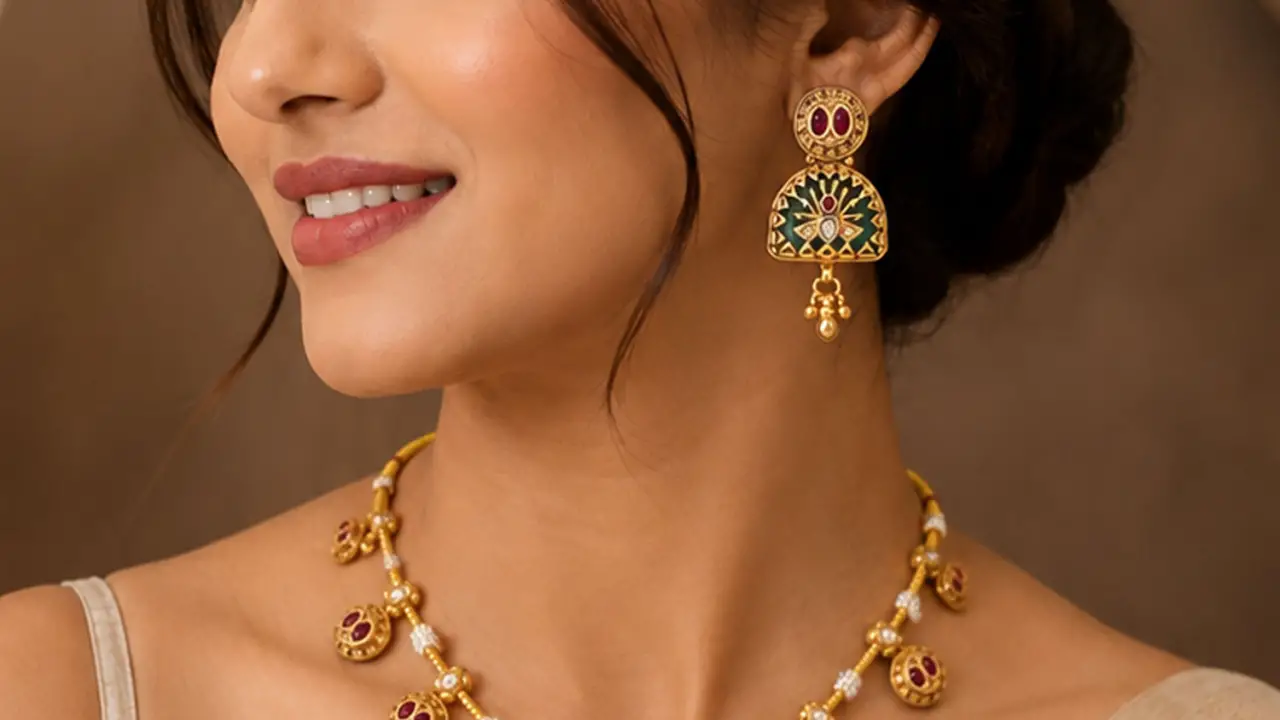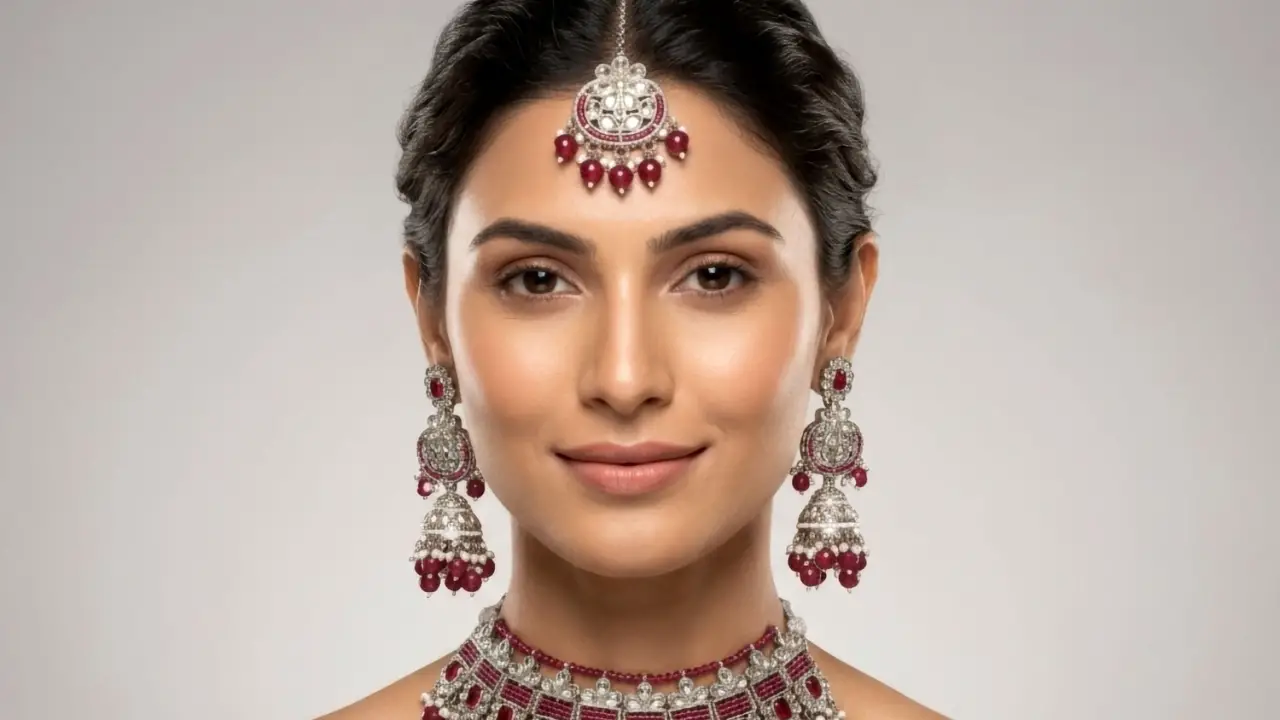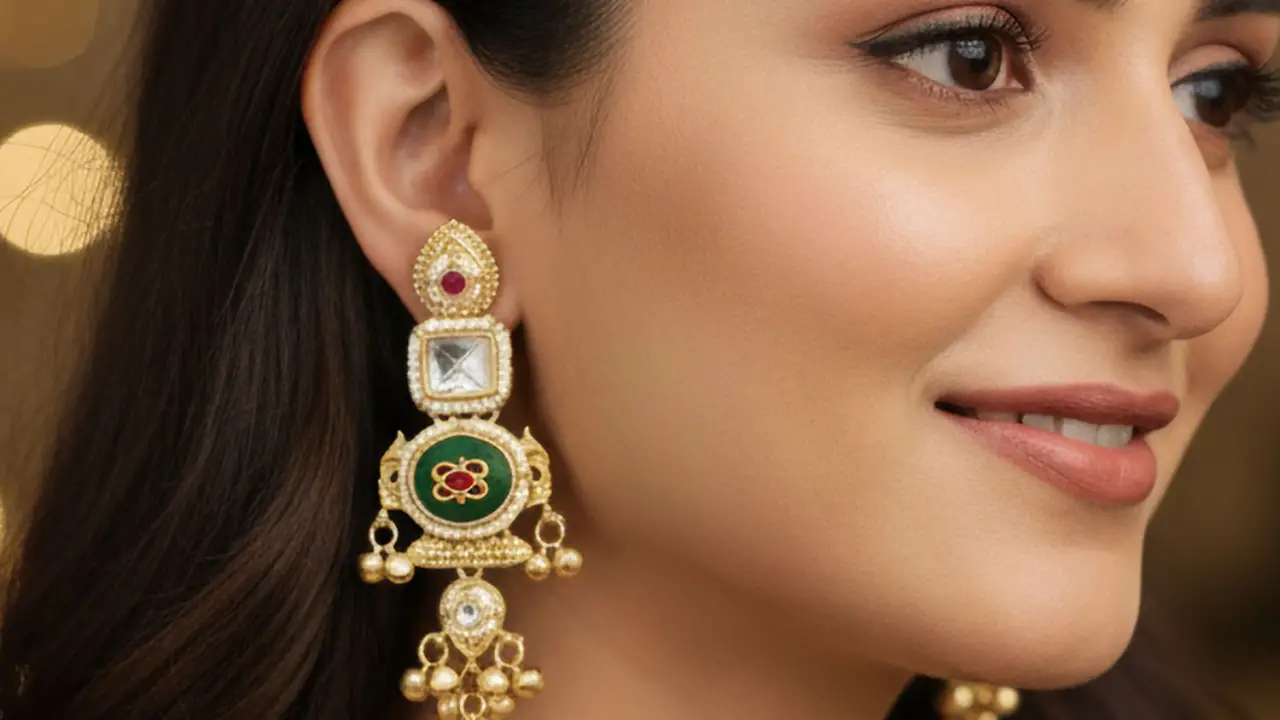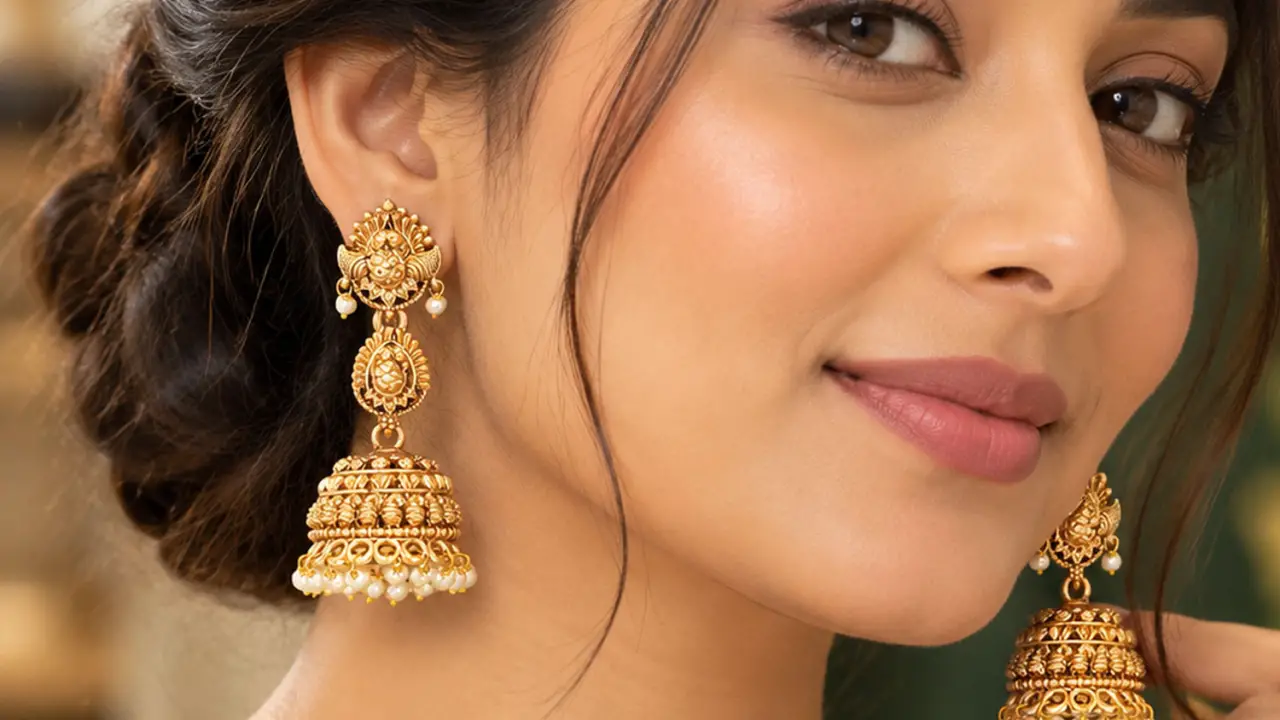
You have chosen the jhumkas. They are big, they are beautiful, and they go perfectly with the saree. Then comes the question every bride's sister, cousin and friend asks quietly in the hours before the event: how am I going to wear these for eight hours?
This guide is about how to wear heavy jhumkas so they sit well, face forward and stay comfortable for as long as you need them. It covers the weight and shape to look for, the sahara or ear chain that many people use, how to attach one, hair and dupatta tips, and a plan for breaks. It gives no medical advice and says plainly when to take the earrings off.
Short answer
To wear heavy jhumkas comfortably, pick a pair with a light, hollow or open design, use a secure back, and add a sahara (ear chain) that hooks into your hair to share the weight. Put them on last, plan a break during long events, and take them off if they hurt.
Key takeaways
- Droop usually comes from weight at the bottom of a large bell pulling on a small stud top, so size and construction matter more than the look.
- A sahara or ear chain takes some of the pull by anchoring the earring to your hair, and it also finishes the traditional look.
- Updos, braids and tucked-back hair give a chain something to hold, and open hair gives it very little.
- Wear the heaviest pair for the main hours of the event and switch to a lighter pair for the rest.
- If an earring hurts, take it off. For a lobe that has stretched or is sore, ask a professional piercer or a doctor, not a blog.
Why heavy jhumkas droop and pull
A jhumka has a top (a stud, floral or peacock motif), a connecting section and a bell with hanging pearls. Most of the weight sits in the bell, well below the lobe, and the whole thing hangs from one small post.
That explains both complaints. The weight pulls on the lobe the whole time you wear the pair, and when the top is small and the bell is large the earring tips forward and the jhumka faces the floor instead of the camera. The fixes are a pair that weighs less or balances better, support that lets the lobe carry less, and a plan for how long you wear it.
Start with the pair itself
The easiest comfort gain happens before you ever put the earrings on. Look at the pair with these questions in mind.
| What to check | Why it helps |
|---|---|
| Size of the bell | A bell that is wide and tall adds weight and swing. A medium bell with a small drop is easier to carry for long events. |
| Open or cut-work design | Filigree and cut-out patterns look rich and use less material than a solid dome, as one retailer guide also notes. |
| Size of the top | A broad top, such as a large floral or a peacock, spreads the weight and keeps the earring upright better than a tiny stud top. |
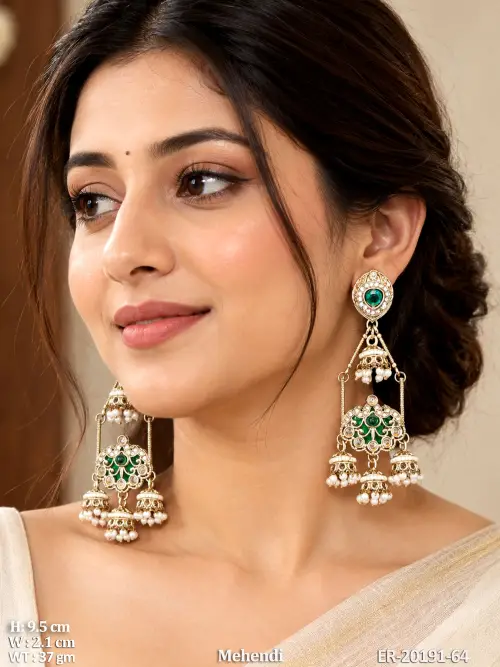
A product page will not always give a weight for each earring, so use size and construction as your guide, and look at how the earring is shown on a model. Our jhumka earrings page lets you compare sizes side by side. If you want a traditional look with a big top, pieces like the one below show how a broad motif sits at the ear.
The sahara, kaan chain or ear chain
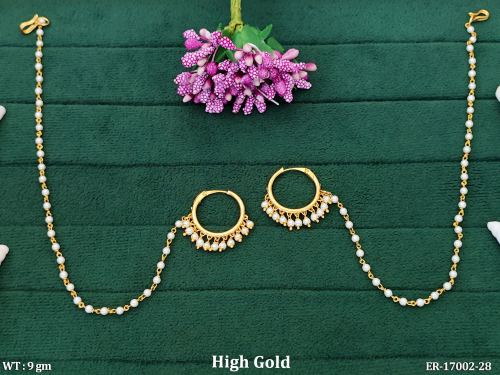
Sahara is the Hindi word for support, which tells you what the chain was meant for. Traditional jhumkas are often worn with one, especially at weddings, in classical dance and with South Indian and Maharashtrian looks.
There are two common types. Some earrings come with the chain attached, so there is nothing to assemble. Others have a small loop, and you add a separate chain or a thin thread yourself. If you buy a pair you plan to wear with a sahara, look for a visible loop or ready-made chain in the photos, and ask us on the contact page if the listing is unclear.
A sahara helps most in one situation, which is when the hair is styled with an anchor, such as a bun, a braid or a twisted section behind the ear. It helps least with loose, silky open hair, which gives a hook little to grip.
How to attach an ear chain in five steps
- Style your hair first.
Finish the bun, braid or twist and set it with spray before the earrings go on, so the products do not land on the stones.
- Put the earring on and check it faces forward.
Fasten the back, then look in a mirror and see where the bell hangs. This is the position you want to hold.
- Find the anchor point.
Choose a section of hair behind and above the ear, in the bun, the braid or a twisted piece. Leave a little slack so the chain does not tug.
- Hook or pin the chain.
Slide the hook into the hair and add a small pin through it for extra hold. If you are using a thread or a separate chain, tie or clip it to the earring loop first.
- Turn your head and test.
Look left, right and down. The earring should stay upright and the chain should lie in a soft curve, neither hanging loose nor pulling tight.
Hair chains and other ways to anchor
A hair chain runs along the hairline or across the head and can double as the anchor for a sahara. If you like that look, our hair accessories page lists the hair chains we stock, and the range changes, so check what is available first. Many guides also suggest a thin thread or a pin looped to the earring as a hands-free option, which works on the same logic. Test it at home, because a thread that holds in the mirror may slip once you move.

Backs, posts and fit
A snug, secure back keeps the post at a steady angle, which reduces the forward tilt, and screw-type or firm backs hold better than loose push-backs, according to one retailer's guide. Guides also mention earring lifters and transparent lobe patches. We do not stock either, have not tested them and make no claim about how they perform or suit your skin; if you try one, follow its instructions and stop if it irritates. Check that the post is straight and the back sits flush without squeezing.
Hair, dupatta and hijab
| Your hair or outfit | What tends to work |
|---|---|
| Bun or updo | The simplest case. Anchor the sahara into the bun, behind the ear. |
| Braid or side braid | Hook into the braid above the ear. Check the chain lies along the braid and not across it. |
| Open hair | Tuck the hair behind the ear on that side so the earring shows, and pin back a small section to anchor a chain. |
| Dupatta on the head | Pin the dupatta clear of the earring, so the fabric does not drag on it. A sahara can be hidden under the fold. |
| Hijab or scarf | Choose earrings that show through the opening, or wear the earring and the chain under the fabric and adjust the scarf for comfort. |
The main risk with fabric is snagging: fine chains and pearls catch on loose weaves, so smooth the cloth near the ear and pin it back.
Plan the hours, not only the earrings
| Part of the event | A sensible plan |
|---|---|
| Getting ready | Put the jhumkas on last, after hair, makeup, and dressing. The less time they spend on before the photographs, the better. |
| Main ceremony and photographs | This is when to wear the heaviest pair. |
| Long meal or the dance floor | Take a short break to rest your ears, or switch to a lighter pair you carry in a pouch. |
Picture a cousin's wedding with a haldi in the morning and a reception at night. She wears small studs through the day, changes into her heavy jhumkas for the evening photographs, and slips them off during dinner, with a lighter pair in her bag for the rest of the night. That is a worked example, not a rule, and you can adjust it to your own events.

Lighter ways to get the jhumka look
If the event is long, a lighter pair is a fair choice: a smaller bell, a short fringe, cut-work designs or a stud-style top with a small drop. Our earrings page lets you filter by style. You can also divide the look, with a heavy tikka or necklace and small earrings, so one piece leads. Our guides to earrings for face shapes and jewellery for an Indian wedding guest help with scale, and jewellery without piercing covers options that skip the lobe altogether.
When to take them off
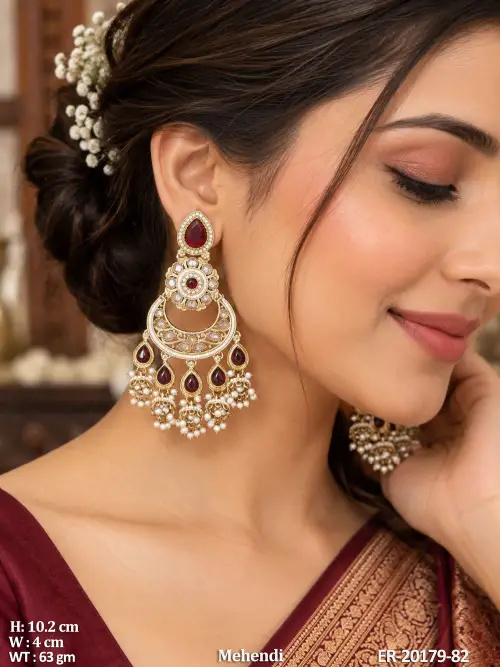
A pair that feels fine to one person feels heavy to another. If an earring pulls, burns or aches, take it off and switch to a lighter pair or none, even for a photograph. If a lobe has stretched, or is sore, red or swollen, speak to a professional piercer or a doctor. This guide covers styling and fit, and it cannot tell you what is happening with your ears. After the event, wipe the earrings with a soft dry cloth and store each pair in its own pouch; our care guide has the full routine.
Where to start looking
Start with jhumka earrings, browse all earrings for lighter drops and studs for the quieter hours, and see hair accessories for anchors. If a pair does not feel right when it arrives, our returns policy allows returns within 2 days.

Frequently asked questions
How do I wear heavy jhumkas for a whole wedding?
Choose a pair with a lighter build, use a secure back, and add a sahara into an updo or braid. Put them on last, wear them for the main ceremony and photographs, and take a short break or switch pairs during long stretches.
What is a sahara in jewellery?
A sahara, also called a kaan chain or ear chain, is a fine chain that links an earring to the hair. It finishes a traditional look, and many people also use it to share some of the weight of a heavy earring with the hair, which can ease the pull on the lobe.
How do I attach an ear chain to my hair?
Style your hair first, put the earring on, then hook or pin the chain into a bun, braid or twisted section behind and above the ear. Keep a little slack and add a small pin through the hook. Turn your head to test that the earring stays upright.
Does a sahara work with open hair?
It works poorly, because loose silky hair gives the hook nothing to hold. Pin back a small section, twist it or make a mini braid on that side to create an anchor. If you want your hair fully open, choose lighter earrings and skip the chain.
How do I stop heavy earrings from drooping forward?
Pick a pair with a broader top and a smaller bell, use a snug, secure back, and check the post sits straight. A sahara anchored in the hair also helps hold the earring upright. Test the pair at home and adjust the back until it faces forward.
How long can I wear heavy jhumkas at a stretch?
That depends on the pair and on you, so there is no fixed number. Plan the heaviest pair for the main ceremony and photographs, take a short break or switch to lighter earrings during long stretches, and remove them as soon as they feel uncomfortable.
What should I do if my earlobes hurt after wearing heavy earrings?
Take the earrings off and give your ears a rest. If the lobe stays sore, red or swollen, or has stretched, speak to a professional piercer or a doctor. This guide covers styling and fit and cannot tell you what is happening with your ears.
Can I wear heavy jhumkas with short hair?
Yes, though a hair chain is harder to use. Choose a lighter, smaller jhumka with a firm back, or twist and pin a short section behind the ear to make an anchor. Tuck the hair behind the ear on that side so the earring shows.
How do I wear heavy earrings with a hijab or dupatta?
Smooth the fabric so it does not drag on the bell, and pin it clear of the earring. With a hijab, either show the earring through the opening or wear it under the fabric. Fine chains and pearls snag on loose weaves, so go slowly.
Can I wear heavy jhumkas every day?
Most people keep them for occasions and wear lighter pairs day to day. Heavy earrings are designed for events and photographs. If you love the jhumka shape for daily wear, look for a smaller bell, a short fringe and a lighter build.
How do I pick a lighter jhumka that still looks rich?
Look at cut-work or filigree designs, a short fringe of pearls, a medium bell and a broad top motif. These give the traditional look with less material. Check the photographs on a model to see how the pair sits and how far it hangs.
Sources
- BlueStone: How to wear heavy earrings comfortably (a jeweller's blog: secure backs, lightweight and cut-work designs, saving the heaviest pair for key moments; health claims in that article were not used)
- Aureus Boutique: Hacks for wearing heavy bridal earrings (a boutique blog: hair support chains, lighter materials, pacing the heaviest pair; its patch, tape and numbing-cream claims were not used)