You put on a choker, then a longer chain, then a pendant, and in the mirror it looks like a knot. Or you stand in front of a saree and wonder whether a choker sits right with that blouse. Layering is easy to like and easy to get wrong, because the fix is rarely one more necklace.
This guide explains how to layer necklaces and style a choker with sarees, kurtis and western outfits. It starts with the length names, then gives a three-layer formula, a method to avoid tangles and a few ways to use what you already own.
Short answer
To layer necklaces, wear two or three pieces of clearly different lengths, with a gap of a few centimetres between them. Vary the weight, so one piece leads and the others support. Put the shortest on first, keep all clasps at the back, and untangle each piece before you start.
Key takeaways
- A choker sits snug at the base of the neck, and most guides give it about 14 to 16 inches (36 to 41 cm).
- Three layers of different lengths and weights are an easy starting point, with one piece as the centre.
- Tangling comes from chains that are too close in length, so space them out and mix their style.
- The neckline decides what works: a choker suits open and boat necks, a long mala suits high necks and kurtis.
- You can layer a set you already own by wearing the choker with a long mala instead of buying a new piece.
Necklace length names, in plain words
Retailers use a standard set of names, and it helps to know them because they decide how pieces stack. The ranges below are approximate and brands differ by an inch or two, so use them as a map and check a product's own size.
| Name | Approx. length | Where it sits |
|---|---|---|
| Choker | 14 to 16 in (about 36 to 41 cm) | Snug at the base of the neck |
| Princess | 17 to 19 in (about 43 to 48 cm) | Just below the collarbone |
| Matinee | 20 to 24 in (about 51 to 61 cm) | Between the collarbone and the bust |
| Opera | 28 to 36 in (about 71 to 91 cm) | On the bust or a little below |
| Rope | 36 in and above (about 91 cm and above) | At the waist or lower, often doubled |
Many Indian sets and malas fall between these names, so measure your own neck with a piece of string and see where each piece lands. If your size is unsure, our guide to necklaces for different necklines shows how length meets the blouse.
Choker or necklace: what is the difference?
Length is the main difference, as above. In practice a choker also behaves differently. It does not move, so it is the stable base of a layered look. A longer necklace swings, so it needs space. That is why a choker is usually the first layer and a mala or pendant the last.
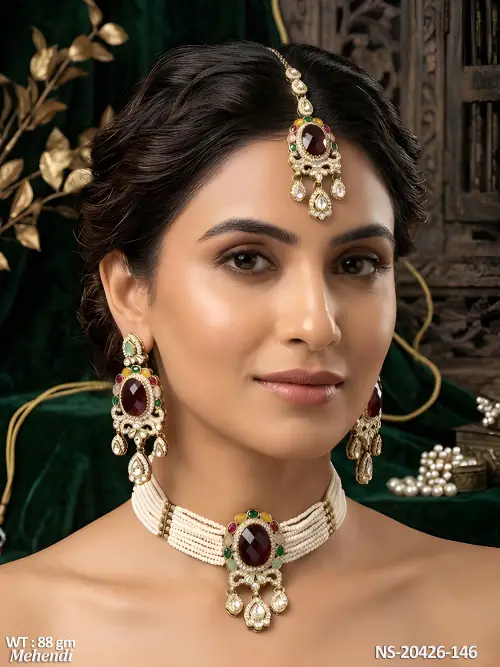 From the shopMehendi Finish Stone-Studded Necklace Set with Earrings for Women₹1,460View the piece →
The three-layer formula
Most good layered looks have three pieces, and each has a job. Think of it as three lengths and three weights.
| Layer | Length | Job | Weight |
|---|---|---|---|
| First | Choker or short princess | Frames the neck and acts as the base | Medium, a stable piece |
| Second | Princess or matinee | A bridge between the first and third layers | Light, a thin chain or a small pendant |
| Third | Matinee or opera | The statement, the one the eye goes to | Heavier, a mala or a long set |
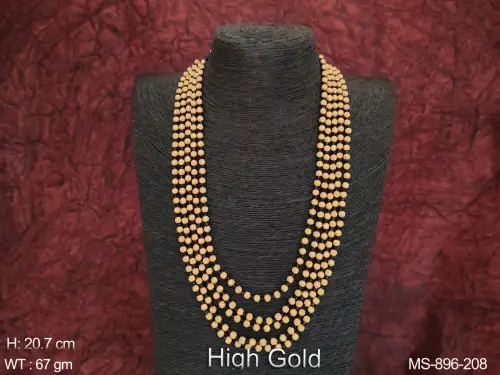
Keep a gap of a few centimetres between the lengths, because pieces that hang at nearly the same point rub, curl and tangle. Choosing different styles also helps. A beaded mala sits more calmly over a flat choker than another beaded piece would, and a fine chain sits more calmly under a chunky one.
Start with two layers if three feels like a lot. A choker with a long mala is a complete look, and many people stop there.
How to layer necklaces without tangling
- Lay the pieces out and straighten each one.
Hold every chain by its ends and let it hang until it is free of kinks. A knot in the box becomes a bigger knot on the neck.
- Order them from short to long.
Pick the three, then line them up by length, with the choker first and the longest last.
- Put on the shortest first and fasten it at the back.
Check that it sits flat and the clasp is at the nape, not on the side.
- Add the next piece, then the longest.
Keep every clasp at the back and let each piece fall in front of the one before it.
- Stand, turn and tilt your head.
If two pieces slide together when you move, change one length, swap one for a different style, or drop a layer.
When you take them off, undo the longest first, separate the pieces and put each one back flat. That one habit does more for tangles than any accessory.
Choker and layers by outfit
| Outfit | What tends to work |
|---|---|
| Saree with a boat or round neck | A choker that sits on the base of the neck, with a mala for length if the blouse is plain |
| Saree with a deep or V neck | A princess or matinee length that follows the neckline, with a small choker above it if you want layers |
| Lehenga with a sweetheart or off-shoulder blouse | A short layered set, so the neck and collarbone are the focus |
| Kurti or anarkali with a high neck | A long mala or a pendant set, and skip the choker, which fights the collar |
| Kurti with a round or keyhole neck | A short pendant or a simple strand, and add one longer piece if the print is plain |
| Shirt or western top | One fine chain, or a choker over a plain tee if you like the look |
For colours and metal tones with each saree or lehenga shade, our colour guide is a good companion, and the guide to jewellery with kurtis, anarkalis and suits covers high necks in more detail.
How to wear a choker with a saree
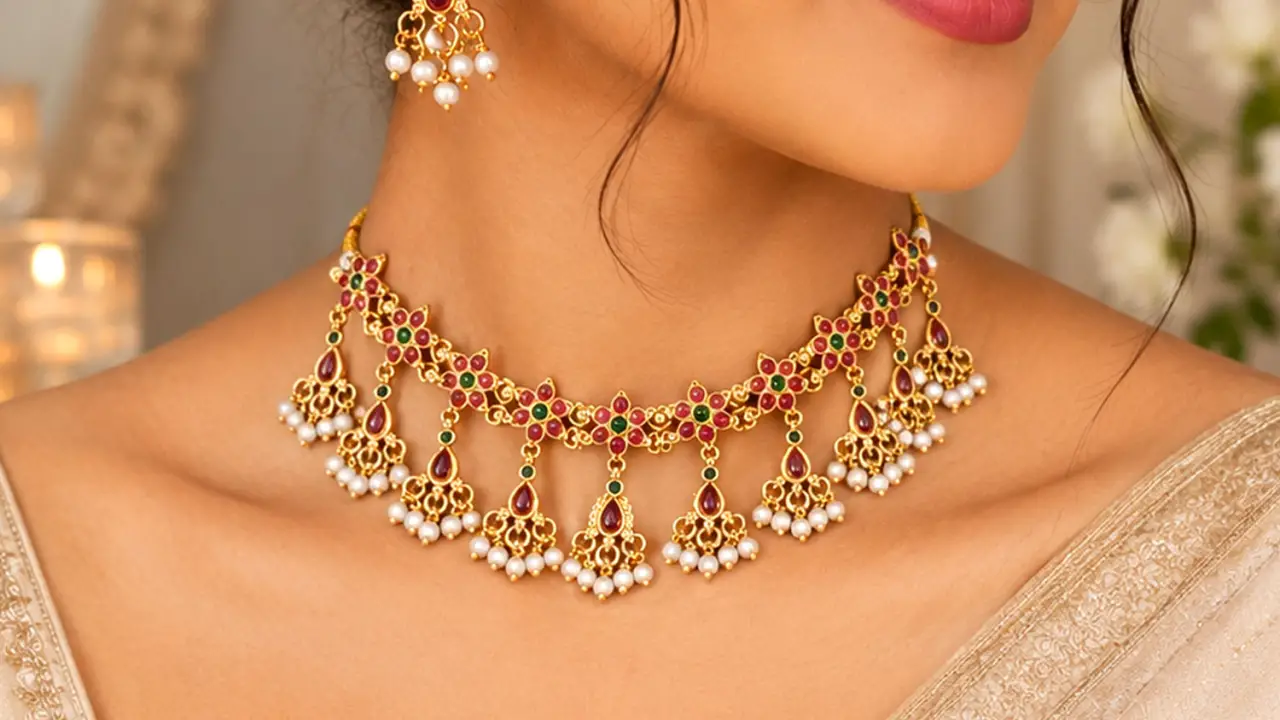
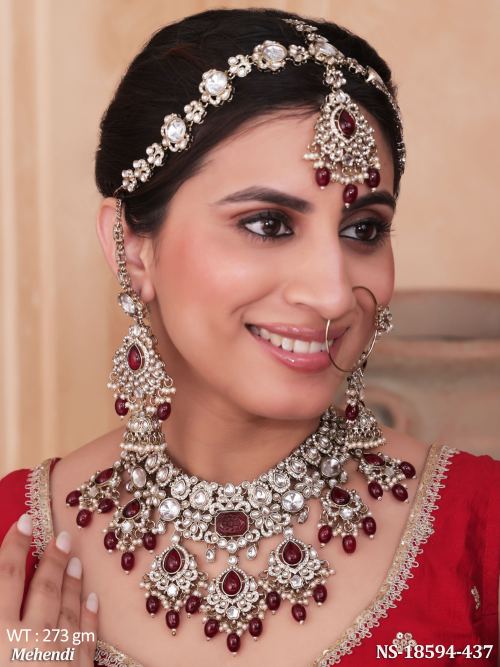
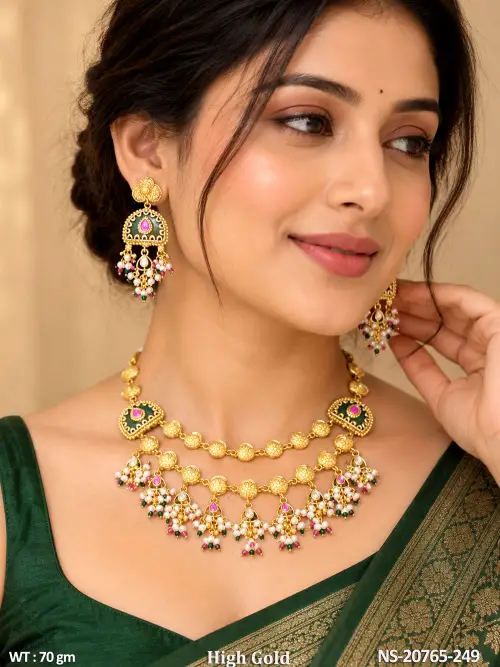
A choker sits well when the blouse neckline is low and open, because the choker fills the space between the chin and the neckline. With a boat neck, the choker sits above the line of the blouse, so choose a design that does not collide with it. With a high-neck blouse, a choker can look crowded, and a pendant or a mala is a calmer choice.
Match the weight of the choker to the weight of the saree. A heavy choker suits a heavier fabric, while a delicate chiffon or cotton carries a lighter one better. If the pallu is pinned near the shoulder, make sure it does not rest on the choker and drag it sideways.
A choker with a kurti or a western outfit
With a kurti, a choker works if the neckline is open enough, such as a boat neck or a deep round neck, or if the kurta has a wide scoop. With a high neck or a mandarin collar, it is cleaner to skip the choker and wear earrings and a bracelet instead. With a plain western top, a choker over a scoop or square neck adds a clear line, and it looks lighter if you skip the earrings or keep them small.
Layering pearls
Pearl pieces layer well because the colour is soft and the shapes repeat. Try a pearl choker with a longer strand and one slim gold-tone chain. Keep the beads of different sizes, so the strands look like separate pieces and not one thick rope. Put pearls on last, after perfume and hairspray, and our care guide for kundan, pearl, AD and antique jewellery explains how to keep them clean.
Layer with a set you already have
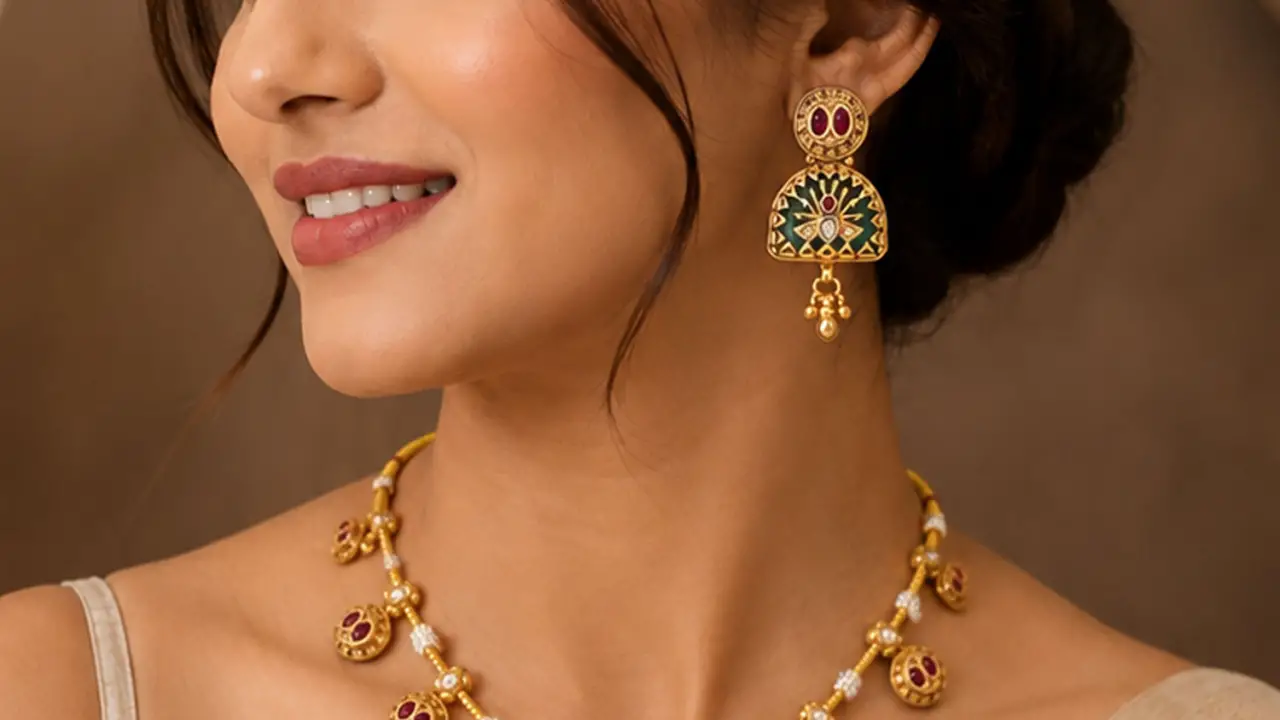
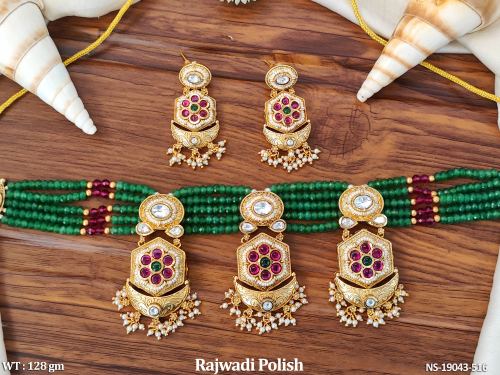
You do not need to buy separate pieces to layer. Picture a short temple-style set in your drawer, with its matching earrings. Wear its choker as the first layer, add a plain mala or a thin chain as the second and keep the earrings small. The set supplies the focal piece, and the extra length makes it look new.
That is a worked example, and you can try it with any set. If you want to add something, a long mala is the easiest addition, and our beaded malas and pendant sets are made to sit over a shorter piece.
Layering with a mangalsutra
If you wear a mangalsutra daily, treat it as a fixed piece and build around it. Most people let the mangalsutra stay as the longest layer, and keep a fine chain or a short strand above it. Whether and how to wear one is a personal and family choice, and there is no rule here beyond keeping the combination comfortable and not too heavy.
What earrings go with layers
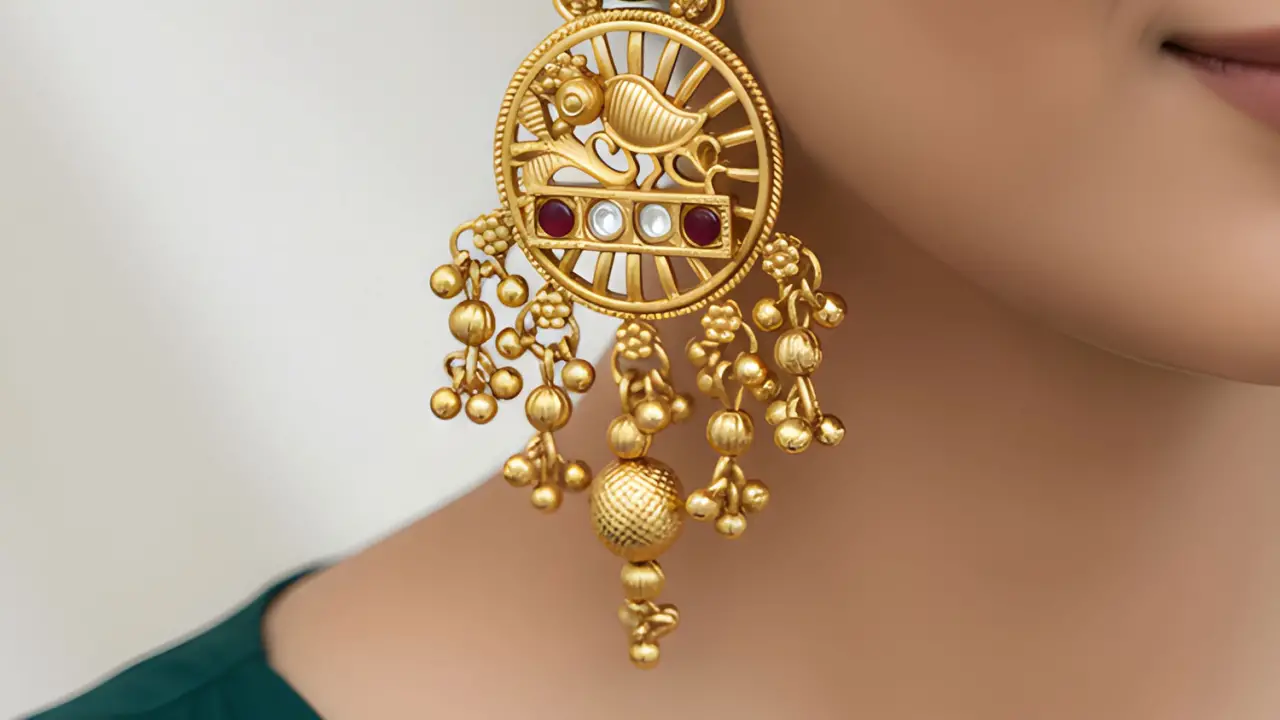
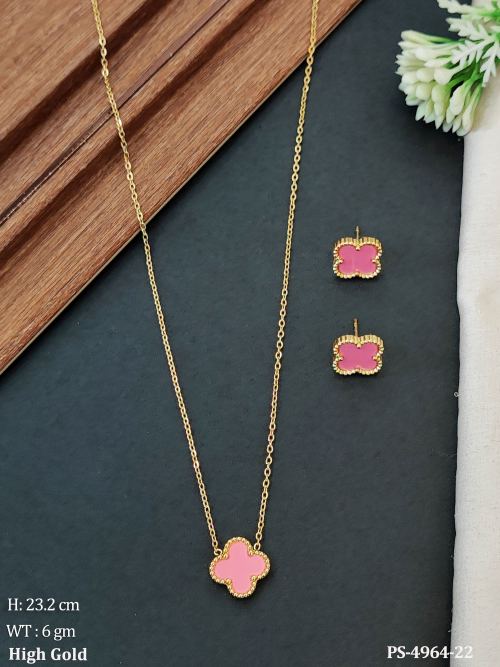
Layered necklaces are already busy, so keep the earrings quieter. Studs or small drops work with two or three layers, and a larger pair works better with a single necklace or a choker alone. If both are large, one of them is competing, and it helps to take one off before you leave. Our stud earrings are a good match for a layered neck.
Daily wear or weddings
For the office, two light layers are plenty, and our office-wear jewellery guide shows how to keep the neck quiet. For a wedding or a festival, go heavier, with a choker, a matinee piece and a long set, but keep one piece as the lead. A layered look should read as one idea, and not three necklaces competing for attention.
Mistakes to avoid
- Layering two pieces of the same length. They sit on top of each other and tangle.
- Making every layer a statement. Choose one to lead.
- Pairing a choker with a high collar. It crowds the neck.
- Mixing metal tones by accident. It is fine as a choice, and it looks careless if you did not plan it.
- Forgetting the back. Clasps and chains at the back catch on hair and dupattas, so check them in a mirror.
Where to start looking
Start with necklace sets for a choker base, add a pendant set or a mala for the second layer, and see the choker necklaces page for shorter designs. Our stock of chokers changes, so look at what is listed today and build the look around the style. If a piece does not suit you, our returns policy allows returns within 2 days.
Frequently asked questions
How do I layer necklaces?
Pick two or three necklaces of clearly different lengths, with a gap of a few centimetres between them. Vary the weight so one piece leads. Put the shortest on first, keep every clasp at the back, and untangle each chain before you start.
How many necklaces can I layer at once?
Two or three is an easy range. A choker with a long mala is a complete look, and three layers suit weddings. More than that is possible, but it needs wider gaps and a clear lead piece, otherwise the neck looks crowded.
Can I layer necklaces of the same length?
It is harder, because chains that hang at the same point rub and tangle. If you want to, choose very different styles, such as a flat choker and a strand of beads, or use a chain extender on one piece to change its length by a little.
How do I stop layered necklaces from tangling?
Space the lengths out, mix the chain styles, put all clasps at the back, and straighten each piece before wearing. Take them off longest first and store each piece flat. Chains that differ in thickness tangle less than several thin chains of the same kind.
What is the difference between a choker and a necklace?
A choker is a short necklace, about 14 to 16 inches by most retailers' guides, that sits snug at the base of the neck. A necklace usually hangs lower, on or below the collarbone. Brands differ by an inch or two, so check the product's own size.
How do I wear a choker with a saree?
Choose a choker when the blouse neckline is open, such as a deep round, V or boat neck, and let it fill the space under the chin. Match its weight to the fabric. With a high-neck blouse, a pendant or a mala usually looks calmer than a choker.
Can I wear a choker with a kurti?
Yes, with an open neckline such as a boat or a wide scoop. With a high neck or a mandarin collar the choker crowds the neck, so wear a long mala or a pendant instead. Keep the earrings small when the choker is a full collar.
What length is a choker?
Most jewellery guides put a choker at about 14 to 16 inches, or roughly 36 to 41 centimetres. The same length sits differently on each person, so hold a piece of string around your neck to see where it falls before choosing.
How do I layer pearl necklaces?
Use different lengths and different bead sizes, so the strands look like separate pieces. A pearl choker with a longer strand and one slim chain is a simple start. Put pearls on last, after perfume and hairspray, and wipe them gently afterwards.
Can I layer a pendant with a choker?
Yes. Let the choker sit at the base of the neck and the pendant hang lower, on a chain that is at least a few centimetres longer. A small pendant is the easier choice, because a large one competes with the choker and may rub against it.
Which earrings go with a layered necklace?
Studs or small drops, because a layered neck is already busy. A larger pair suits a single necklace or a choker alone. If both the necklace and the earrings are large, take one piece off before leaving the house so one of them can lead.
Sources
- Giva: A complete guide for choosing necklace length (a brand blog: length names and approximate ranges; centimetre figures are our conversions)
- Blue Nile: Layering necklaces (a jeweller's blog: vary the lengths, contrast delicate with thicker chains, mix chain styles; only the first part of the page was read)