A good bridal jewellery checklist saves a family from the two most common wedding-shopping mistakes: buying the same kind of piece twice and finding out on the morning of the wedding that nothing was bought for the feet, the waist or the hair. The pieces are many, they are bought at different times, and each one has to sit well with the others.
This checklist goes from head to toe: head and hair, ears and nose, neck, arms and hands, waist and feet, plus the sindoor box and the small things you carry. For every piece it says where it sits, what to decide, what to coordinate and where you can borrow or skip. It also explains the traditional sixteen adornments, called solah shringar, and why no two lists of them agree.
Short answer
A head-to-toe bridal jewellery checklist usually covers a maang tikka or matha patti, earrings, a nath, one to three necklaces, bangles or kada, a kamarpatta, payal and a sindoor box. Families add or drop items by region and community, so start from the outfit and your own tradition.
Key takeaways
- Work from the outfit first. The neckline, the dupatta and the blouse decide which necklaces and earrings can work.
- Choose one lead piece per zone: head, neck and hands. Everything else supports it.
- The sixteen adornments have many versions, so use them as inspiration.
- Buy for comfort over many hours. Earrings and nath are the pieces most often changed at the last minute.
- Decide early who carries the jewellery on the day and who has the small repair kit.
The bridal jewellery checklist at a glance
The right column is the question to settle before you buy.
| Piece | Where it sits | Decide before buying |
|---|---|---|
| Maang tikka or matha patti | Hook at the parting, pendant on the forehead | Hairstyle and how much hair will hold it |
| Earrings (jhumka, chandbali, bali) | Ears, often with a hair chain for support | Weight, since you wear them for hours |
| Nath | Nose, pierced or clip-on | Size of the ring and which side it is worn |
| Necklaces | Choker, mid-length and long layers | Neckline of the blouse or choli |
| Haath phool | Back of the hand, joined to rings | Whether your outfit and mehendi suit it |
| Bangles, kada or chooda | Wrists and forearms | Wrist size, and what the family traditionally wears |
| Bajuband | Upper arm | Sleeve length of the blouse |
| Kamarpatta | Waist, over the saree or lehenga | Fit over the fabric and the dupatta pins |
| Payal | Ankles | Sound, comfort and skirt length |
| Sindoor box | Carried, not worn | Size and whether it will be gifted or used |
What solah shringar means, and why the lists differ
One widely quoted version lists sindoor, maang tikka, hair styling, bindi, kajal, earrings, nath, necklace, armlet, bangles, hathphool, mehendi, waistband, anklets, perfume and the bridal outfit. That is the list in Exotic India's article on bridal jewellery, and Utsavpedia calls the maang tikka a prime accessory for brides.
The Hindi Wikipedia article on solah shringar notes that several classical and medieval writers, among them Keshavdas, Jayasi and Nagendranath Vasu, enumerated the sixteen differently, and that the contents changed with place and time. So when a website tells you the sixteen, it is giving you one version. Treat it as a map of the areas to think about, not a rulebook, and follow what your family does.
Head and hair: maang tikka, matha patti and hair pieces
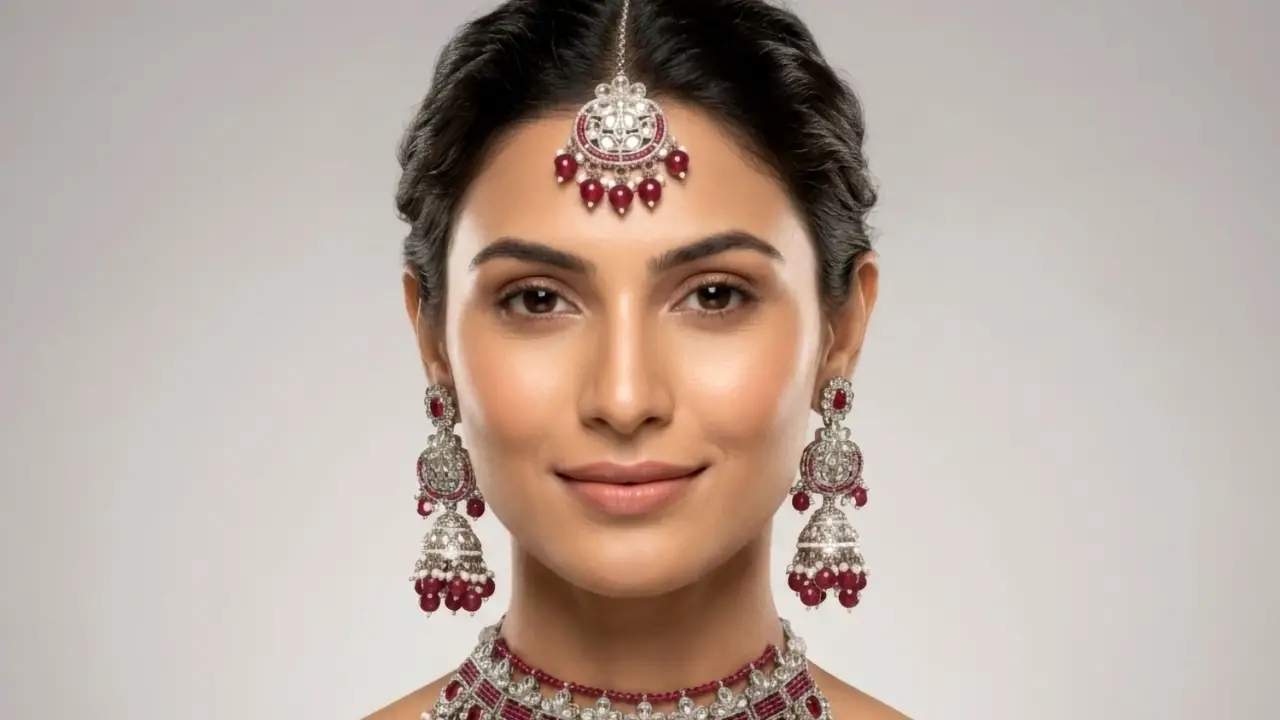
A tikka is the first piece that sits near your face, so choose it before the earrings. A single pendant maang tikka is the simplest. A matha patti keeps the central pendant and adds side chains along the hairline. Some regions have their own versions, such as the round borla in Rajasthan.
Decide your hairstyle first. A bun or braid holds a heavier tikka, while open hair needs a lighter one and a good pin. Our guide to wearing a maang tikka covers pinning, face shapes and hairstyles in detail.
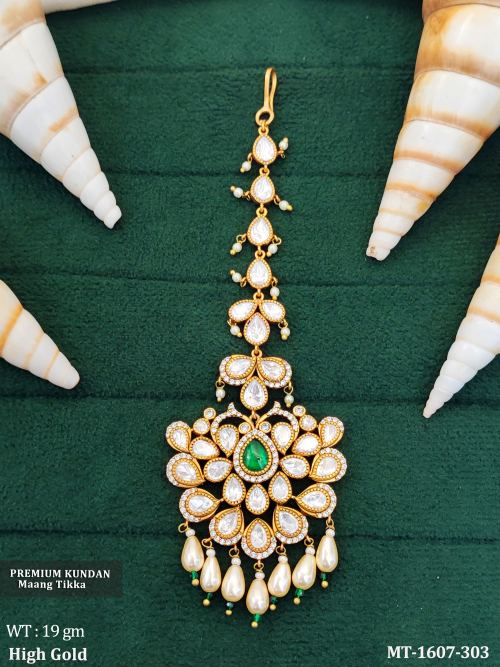
To browse more, see maang tikka designs.
Ears and nose: earrings and nath
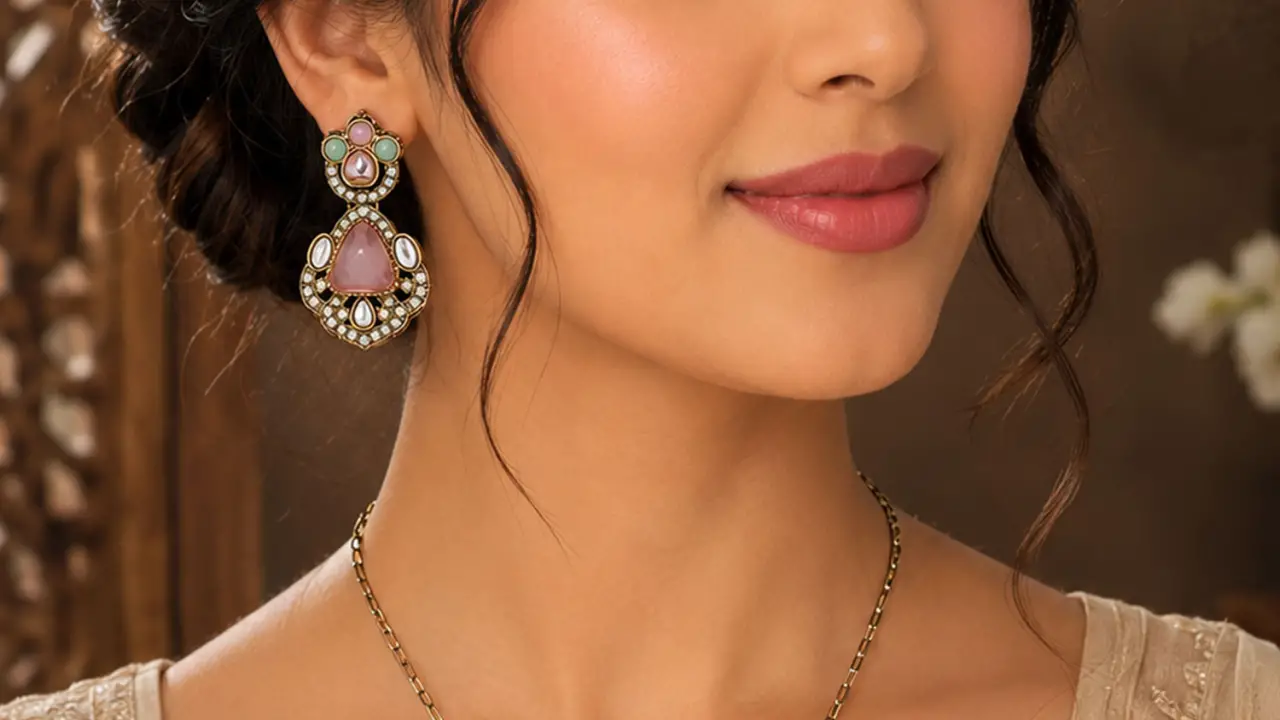
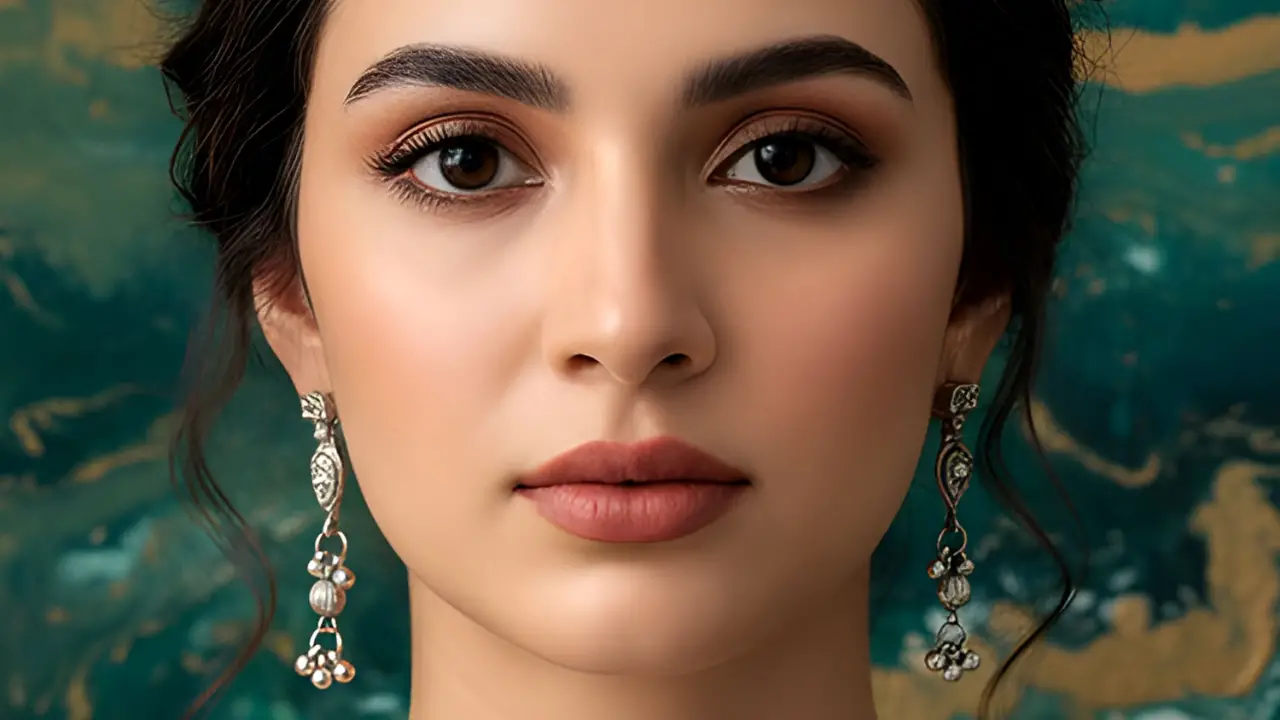
Bridal earrings are worn for the longest hours, so weight matters more than size. A sahara or ear chain takes the load off the lobe.
The nath is the piece with the most regional variety. It can be a small ring with a single pearl, a broad crescent in the Maharashtrian style, or a large Rajasthani or South Indian ring with a chain to the hair. Exotic India notes that each culture and region has its own way of wearing it. If your nose is not pierced, clip-on versions exist, and our guide to jewellery without piercing explains how to choose one that stays put.
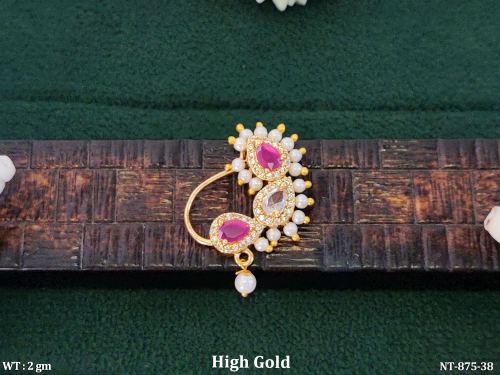
Browse more in nath and earrings.
Neck: how many necklaces and in what lengths
Most families think of three layers. A short one close to the neck, a mid-length piece that falls to the collarbone or just below, and a long haar that reaches the waist. You do not need all three. Two well-chosen layers that sit apart look richer than three that crowd each other.
| Layer | Role | Works with |
|---|---|---|
| Short (choker or close-fitting) | Frames the neck, sits above the neckline | High or boat necklines |
| Mid-length (necklace set) | The lead piece with matching earrings | Round, V or sweetheart necklines |
| Long (haar, rani haar, mala) | Adds length down the front of the outfit | Plain or lightly worked blouses and dupattas |
Let one layer lead and keep the others quieter. A necklace set with earrings gives you a matched pair in one decision. For help with necklines, see which necklace suits which blouse neckline.
The mangalsutra, sold separately from these sets, is worn in many communities and not in others. Follow your own family's custom and add it to the list only if it applies to you.
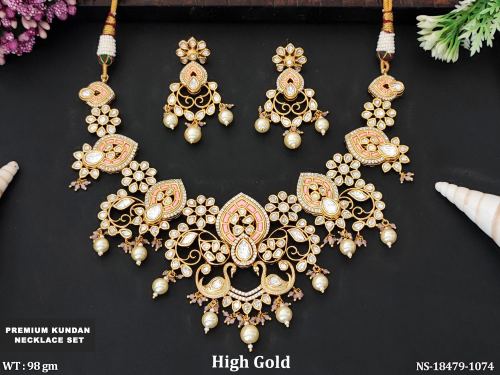
Look through necklace sets for matched pairs.
Arms and hands: bangles, kada, haath phool and bajuband
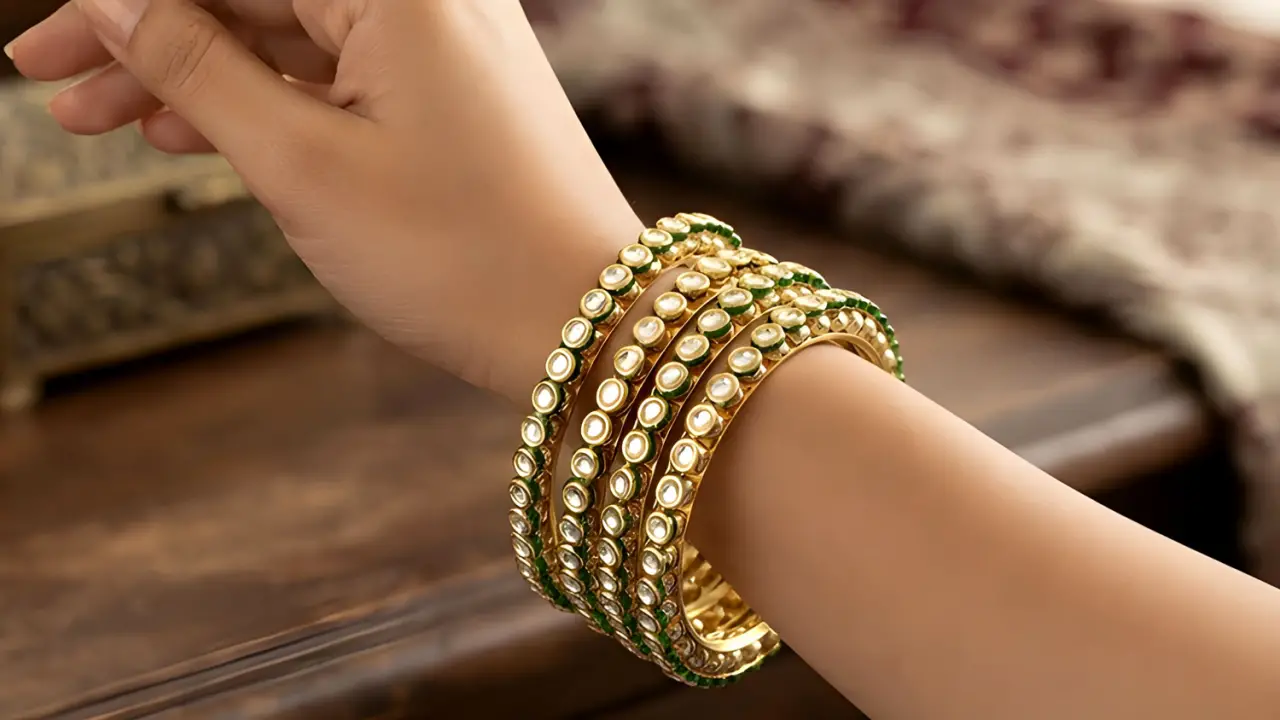
In many families the bride wears a set of bangles that either match the necklace or contrast with the outfit, and some regions have their own tradition, such as the chooda in many Punjabi families. Check with your family before buying.
Bangles must pass over the widest part of your closed hand, so measure that. A set of four gives a stacked look, while a kada is a single bold statement. If you plan to wear a haath phool, check that the finger rings and the bracelet do not catch on the lehenga or on fresh mehendi. Exotic India links the hathphool with Rajasthan and the bajuband with Maharashtra and South India, which shows how much the choices differ by region.
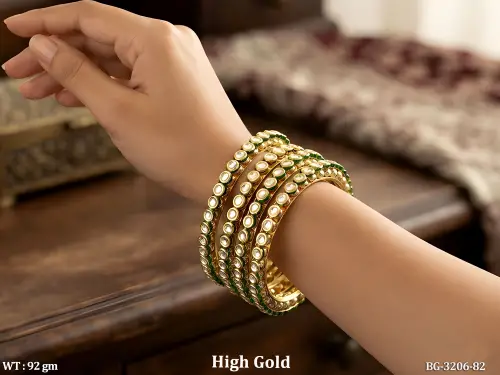
Browse bangles, kada and finger rings.
Waist and feet: kamarpatta and payal
A kamarpatta (hip belt) sits over the saree pleats or at the lehenga waist and gives the outfit shape. Check how it fastens over your fabric. Wear it once with the outfit first.
Payal, or anklets, finish the look from below. Exotic India says anklets are usually silver in tradition. Try walking in them first.
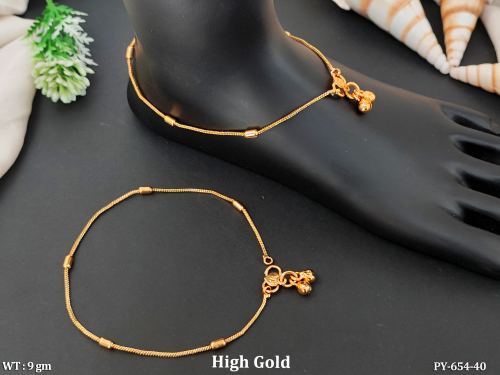
See kamarpatta (hip belt) and payal for the full range.
The box items: sindoor box and small things to carry
A sindoor box is the one item on the list that is carried and used and not worn. In some families it is gifted to the bride or by the bride, which makes it a gift decision as much as a jewellery one.
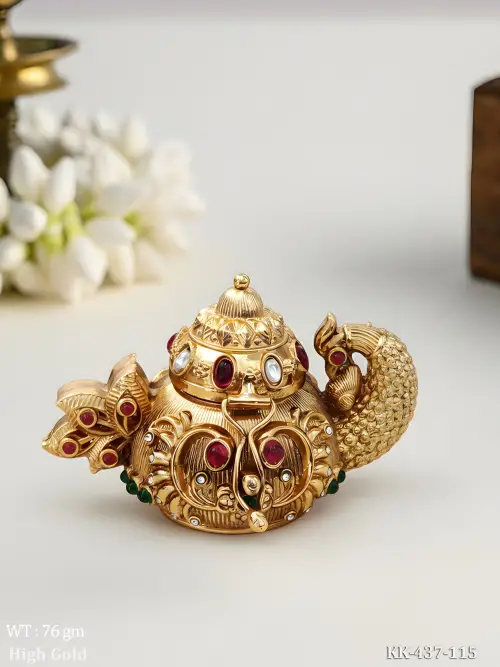
Pack a small repair kit as well: spare pins, a clasp extender, a few hooks, tissue to wipe the stones, and a small pouch for each set. More on sindoor boxes. For ready-made coordinated sets, the dulhan set range puts several pieces together, and it is worth a look if you prefer one decision to ten. It is a smaller selection than the other categories, so check what is available early.
Which pieces for which function
Few families dress the bride in every piece at every event. This is a planning suggestion, not a custom.
| Function | Usually the lead piece | What can wait |
|---|---|---|
| Haldi and mehendi | Lighter earrings and a simple necklace | Nath, haath phool and kamarpatta |
| Sangeet | Statement earrings or necklace | Heavy head pieces |
| Wedding ceremony | The full list your family follows | Nothing you plan to wear |
| Reception | A different necklace or earrings from the ceremony | Nath, bajuband and head pieces |
Our guide to jewellery for haldi, mehendi and sangeet goes through the first two in detail.
Colour and metal tone
Choose one metal tone for the whole look. Gold-tone is the usual choice for red, maroon and bright lehengas, while silver-tone and oxidised pieces suit pastel and cooler colours. Our colour guide for sarees and lehengas has a longer chart for bridal and wedding colours.
Picture a bride in a maroon lehenga with a gold border. She keeps the tikka and necklace in warm gold, picks pearl earrings to keep the face light, and adds green stones only in the bangles.
Budget logic without a price list
Put your budget into zones before you shop. Give the most to the piece that will be seen the most, usually the necklace set or the tikka and nath, and spend less on the pieces that sit lower or hide under fabric. Borrow or skip pieces you will wear once, and keep the budget for things you will wear again.
Artificial jewellery is made for the look and the wear, and it is a fair choice for a wedding where you want a full head-to-toe look and the freedom to pick different pieces for each function. It is not meant as a store of value. If your family wants to give or receive gold, plan that separately from this list.
Packing and carrying on the day
- Dress in order. Hair and tikka first, then earrings, then necklaces, bangles, kamarpatta and payal.
- Name a carrier. One trusted person holds the bag during the functions so nothing is left on a chair.
- Do a rehearsal. Wear the whole look once, a week before.
Common mistakes to avoid
- Buying before the outfit is final. A change of blouse neckline can make a necklace useless.
- Leaving buying to the last week. Time to fix a size or a clasp makes a difference. If a piece does not suit you, our returns policy allows returns within 2 days.
Frequently asked questions
What is the list of bridal jewellery in India?
Commonly a maang tikka or matha patti, earrings, a nath, one to three necklaces, bangles or kada, a kamarpatta and payal. Some families add a haath phool, bajuband or mangalsutra. The list differs by region and community, so check what your family follows.
What is solah shringar?
It is the traditional set of sixteen adornments associated with a bride, such as sindoor, bindi, maang tikka, nath, bangles and anklets. Sources do not agree on one fixed list, and it changed with place and time, so treat any version as one tradition.
How many necklaces should a bride wear?
There is no set number. Many brides wear two or three layers of different lengths, such as a choker, a mid-length set and a long haar. Let one layer lead and keep the others quieter so that the neckline and outfit are not crowded.
Which jewellery should be bought first?
Start with the lead necklace set and the outfit it must suit. Then match the tikka and earrings to it. The smaller pieces are easier to add later.
Can artificial jewellery be used for the wedding?
Yes, for the look and the wear. Many brides use it for one or more functions. It is made for appearance and not as an investment, so if your family also wants gold, keep that as a separate plan next to this checklist.
What jewellery should the bride's sister or friend wear?
Usually a lighter version of the look: earrings and one necklace, with fewer head pieces and no full set that competes with the bride.
How do I match jewellery with a bridal lehenga?
Pick one metal tone, then repeat one or two colours from the lehenga in the stones. Choose the necklace by the blouse neckline and keep the earrings in proportion to it.
How far ahead should I buy bridal jewellery?
Buy once the outfits are final, and leave enough time before the wedding for a trial wear, a size fix and a return if needed. Earlier is calmer, but only after the blouse and dupatta are decided.
How should bridal jewellery be carried on the wedding day?
Keep each set in its own labelled pouch, in one bag held by a trusted person. Pack spare pins, a clasp extender and tissue.
What should a bride wear at the reception?
Many brides change the necklace and earrings to suit a different outfit and keep the head pieces and nath lighter or leave them out. Choose a look you can move in.
Are there regional additions to the list?
Yes. Exotic India mentions the hathphool for Rajasthan and the bajuband for Maharashtra and South India, and Utsavpedia mentions the round borla in Rajasthan. Many communities also have their own naths, neck pieces or bangle traditions, so ask the elders in your family.
Do I need a nath if my nose is not pierced?
No. A nath is optional, and clip-on versions exist for those without a piercing. Try the clip at home first.